


More Than Outright Winners: The Full Spectrum of Golf Markets
I once spent an entire Masters week betting nothing but outright winners. Four selections, four losers — the best finish was a tie for fourteenth. Meanwhile, a friend who had split his stake across a matchup, a top-ten finish and a first round leader bet cashed two of his three wagers and ended the week ahead. He did not pick the winner either. He just played more of the board.
Golf betting markets are wider and more varied than most punters realise. The sport offers one of the most diverse menus of wager types in the UK sportsbook landscape, stretching from outright tournament winners through head-to-head matchups, top-finish positions, first round leaders, group winners, nationality markets and an expanding universe of proposition bets. Yet despite that breadth, outright markets still account for 95% of all golf betting volume in the UK. The remaining 5% is where the less crowded, often less efficiently priced opportunities live.
The sheer scale of interest makes this worth understanding. The Masters ranks as the fourth largest individual betting event globally for major operators, sitting behind only the Grand National, the Super Bowl and the Champions League final. That kind of handle concentration means outright prices are sharp — thousands of bettors and sophisticated modellers hammer the odds until they are close to fair. The alternative markets receive a fraction of that scrutiny, which is precisely why they deserve your attention.
This guide maps every golf betting market available to UK punters, explains how each one works, and identifies the situations where each type offers a structural advantage. Whether you are a pure outright bettor looking to diversify or a complete beginner working out where to start, the market breakdown below gives you the vocabulary and the logic to make more informed choices.
The Outright Winner Market and Why It Dominates Volume
Greg Ferris, the managing director for sports at Entain, captured the emotional pull of the outright market perfectly when he described the Masters as an event that “brings out the fan in all of us” and creates “the perfect stage for patriotic punting and exciting new markets.” That emotional gravity is exactly why the outright winner market dominates. Picking the tournament champion feels like the purest expression of sports betting — one name, one trophy, one payout. It is also, statistically, the hardest golf bet to win.
In a typical 156-player PGA Tour field, the pre-tournament favourite is priced somewhere between 6/1 and 12/1, implying a win probability of roughly 8% to 14%. The median player in the field sits at 100/1 or longer, implying below 1%. Those numbers reflect a genuine structural reality: golf tournaments have more possible winners than almost any other sporting event. A football match has two teams (or a draw). A horse race has eight to twenty runners. A golf tournament has 156.
Outright prices are set through a combination of statistical modelling, market intelligence and liability management. Operators begin with a tissue price — an initial estimate derived from world rankings, recent form and course history — then adjust as money flows in. Because outright golf handles dwarf other market types, the price discovery process is extensive. By the time the first tee shot is struck on Thursday morning, outright prices at the major UK operators are among the most efficient in all of sports betting.
One dimension that affects outright value enormously is the difference between tours. PGA Tour betting volume runs roughly 100 times higher than LIV Golf volume, which means PGA Tour outright prices are shaped by far more market activity. DP World Tour events fall in between. The practical implication is that PGA Tour outright markets are the hardest to beat because they are the most heavily traded, while smaller-tour outright markets offer more frequent mispricings for prepared punters.
Timing also matters. Ante-post prices — available days or weeks before a tournament — are less efficient than day-of prices because they do not yet reflect withdrawal news, practice round observations, or weather forecasts. Sharp bettors who have done their course fit homework can lock in ante-post value that evaporates by Wednesday. For a deeper analysis of how outright pricing mechanics work and where value tends to hide, our dedicated outright betting guide walks through the detail.

Top Finish Markets: Betting on Positions Rather Than Victory
The moment I stopped needing my selections to win tournaments was the moment my golf betting became profitable. Top finish markets — where you back a golfer to finish inside the top five, top ten, or top twenty — are the structural answer to the problem of outright volatility. You are still picking individual players, still applying form and course fit analysis, but the threshold for success is dramatically lower.
Top five markets are the tightest of the three tiers. A golfer priced at 25/1 outright might be offered at 5/1 for a top-five finish, reflecting the much higher probability of landing inside five positions versus one. The margin on top-five markets tends to be higher than on outright markets because operators know that recreational punters are drawn to the “easier” bet, and that willingness to pay inflated prices reduces the value available. Still, for players priced in the 40/1 to 80/1 outright range, top-five prices can represent genuine value because the market underestimates the probability of a strong but unheralded golfer stringing together four solid rounds.
Top ten markets expand the landing zone further. A player with a 2% chance of winning outright might have a 15% to 20% chance of finishing inside the top ten. The odds reflect this — typically 3/1 to 7/1 for mid-ranked players. Top ten is my preferred positional market because it balances probability against payout effectively. A top-ten each-way bet, where the “place” is settling inside a specific positional band, does not exist as a standard product — but some operators offer top-ten place terms within outright each-way markets through extended places at majors, which effectively creates a hybrid.
Top twenty markets offer the widest net and the shortest odds. They are most useful at major championships, where the depth of field means that finishing inside the top twenty is a genuine achievement that filters out roughly 85% of starters. At weaker-field events, top-twenty finishes are too probable for most players to offer meaningful odds.
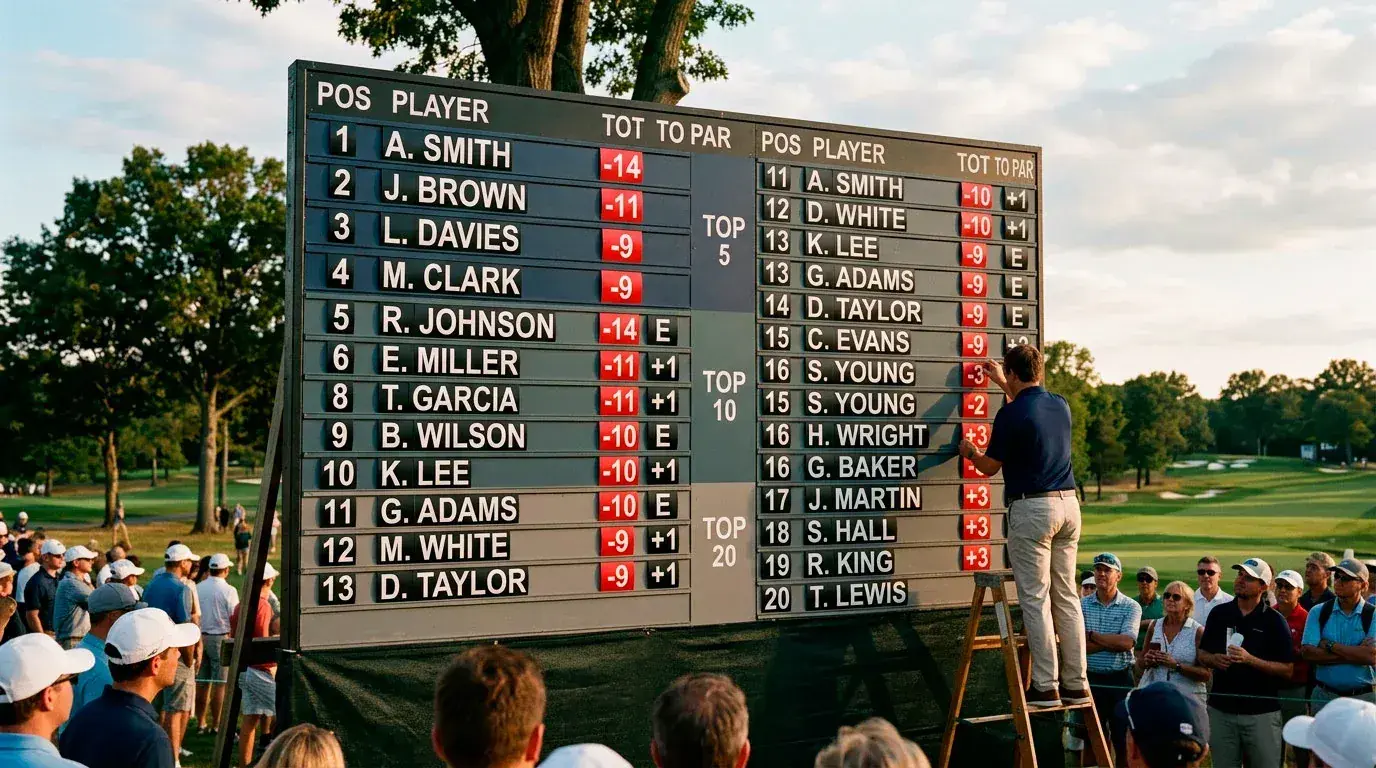
The risk specific to all positional markets is the dead heat. If four players tie for tenth in a top-ten market, dead heat rules apply and the payout is divided. I have seen dead heats reduce an expected return by 60% or more, and in golf — where tied finishing positions are routine — this is not a marginal concern. Factor dead heat probability into your stake sizing or accept that positional bets carry a hidden variance that the headline odds do not advertise.
Head-to-Head and Matchup Bets: Golf Reduced to Two Players
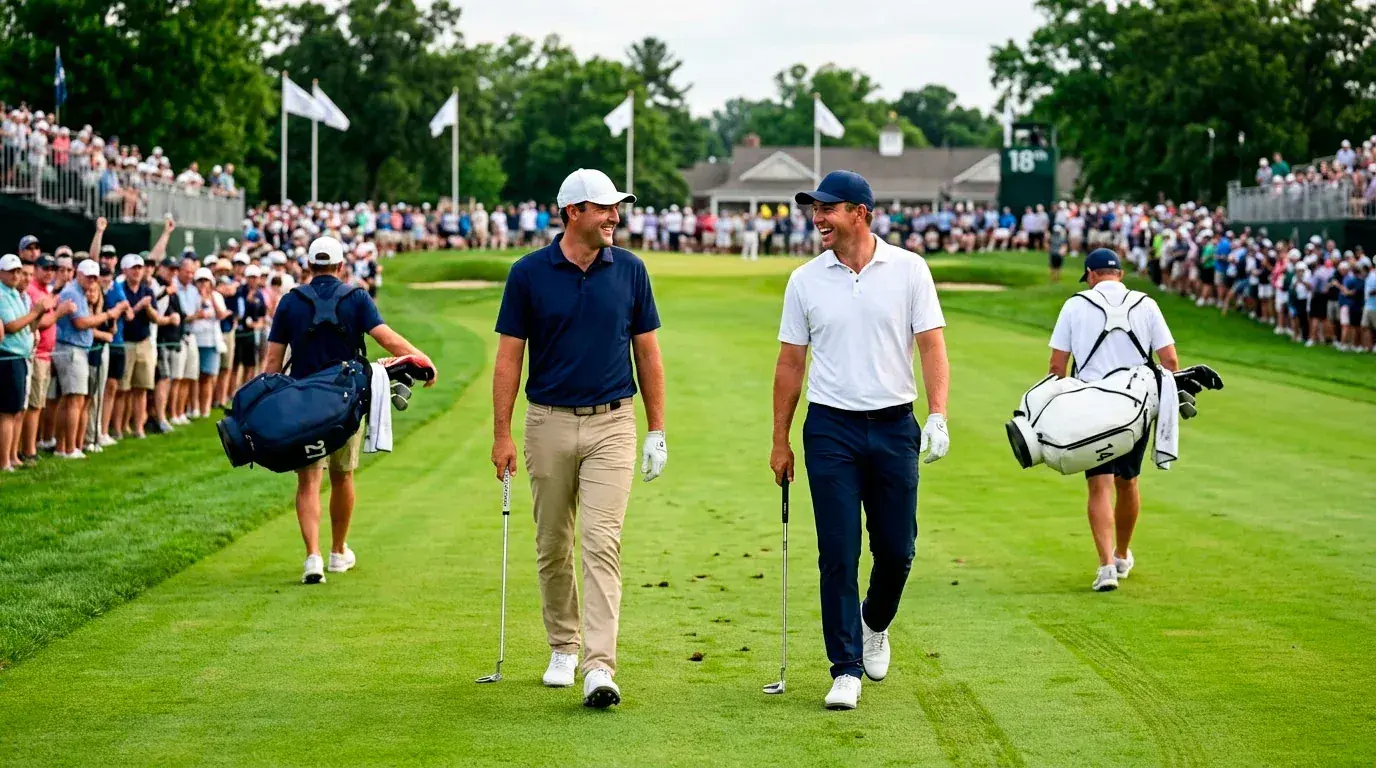
A 156-player field can feel overwhelming when you are trying to model probabilities. Matchup bets solve that by reducing the problem to its simplest form: which of these two golfers will finish ahead of the other? No leaderboard, no cut line, no dead heats against the rest of the field — just a direct comparison between two named players over the same 72 holes.
Two-ball matchups are the standard format. The operator pairs two golfers and prices each side, typically with a margin that makes one player a slight favourite (priced around 4/5 to 5/6) and the other a slight underdog (around evens to 11/10). If both players make the cut, the one who finishes on the lower aggregate score wins the matchup. If one player misses the cut and the other makes it, the player who made the cut wins regardless of final position. If both miss the cut, most operators settle based on the score at the point of elimination — typically the 36-hole mark.
Three-ball matchups add a third player and a draw option. These are usually offered for individual rounds rather than the full tournament, reflecting specific tee-time groupings. The pricing is wider because three outcomes create a larger margin window for the operator. Round matchups — settling after 18 holes rather than 72 — add a layer of variance because a single bad hole carries more weight in an 18-hole sample than it does across four rounds.
What makes matchup betting analytically powerful is that it isolates the relative comparison and removes the absolute performance noise. You do not need to know whether your player will shoot 68 or 72 — you need to know whether he will shoot lower than one specific opponent. That question is answerable with a smaller dataset and fewer variables. Head-to-head Strokes Gained comparisons, recent form trajectories and course fit differentials between the two players are usually sufficient to form a view. I find that the analytical edge in matchup betting is higher than in outright markets precisely because the problem is more constrained.
The main drawback is liquidity. Matchup markets attract less volume than outright markets, which means prices move quickly when sharp money lands. If you wait until Thursday morning to place a matchup bet, the value may already be gone. Early-week engagement is important.
First Round Leader and Round-Specific Bets
There is something deeply satisfying about a bet that resolves in six hours rather than four days. The first round leader market asks a single question: who will post the lowest score on Thursday? The answer arrives by early evening, and either your bet has won or it has not. No weekend anxiety, no Sunday collapses, no watching a five-shot lead evaporate on the back nine.
FRL markets typically price the favourite at around 16/1 to 25/1, with the tail stretching beyond 200/1 for lower-ranked players. Those prices look similar to outright markets, but the probability distribution is different. In outright betting, elite players have a genuine statistical edge that compounds over four rounds. In a single round, variance is much higher — a hot putter or a fortunate tee-time draw (avoiding the worst of the wind, for example) can propel a mid-tier player to the top of the leaderboard. That elevated randomness is both the appeal and the risk of FRL betting.
Dead heat frequency is notably higher in FRL markets than in outright markets. Multiple players sharing the first-round lead happens at roughly one in every three PGA Tour events. When three players tie at six under par after round one, your FRL bet is settled under dead heat rules, which divides your payout proportionally. A 20/1 selection that ties with two others returns as if it were roughly 6.67/1 — still profitable, but a fraction of the headline number.
Round-specific bets extend the concept beyond Thursday. Some operators offer markets on who will lead after round two, round three, or who will shoot the lowest round on any given day. These markets are less liquid and often carry wider margins, but they respond strongly to weather information. If Friday’s morning wave faces calm conditions while the afternoon wave faces a forecasted storm, round-two leader prices for morning starters become undervalued. Weather-aware punters exploit this regularly during links tournaments where wind shifts between waves can swing scoring averages by three or four strokes.

Group Betting and Nationality Markets
If a 156-player outright field feels unmanageable and a two-player matchup feels too narrow, group betting sits in the middle. Operators divide the field into groups of five to ten players — sometimes by world ranking band, sometimes by draw or tee-time section — and ask you to pick which player in the group will finish highest in the overall tournament standings. It is outright betting with a smaller denominator.
The analytical advantage is obvious. Instead of modelling 156 players, you are modelling five to ten. The research is concentrated, the comparisons are direct, and the variables are fewer. I find group betting particularly useful at major championships, where the four events collectively generate roughly a third of the year’s total golf betting volume and operator attention is focused on outright and each-way markets. Group markets at majors are often set up later in the week, priced with less rigour, and traded with less volume — three conditions that favour prepared punters.
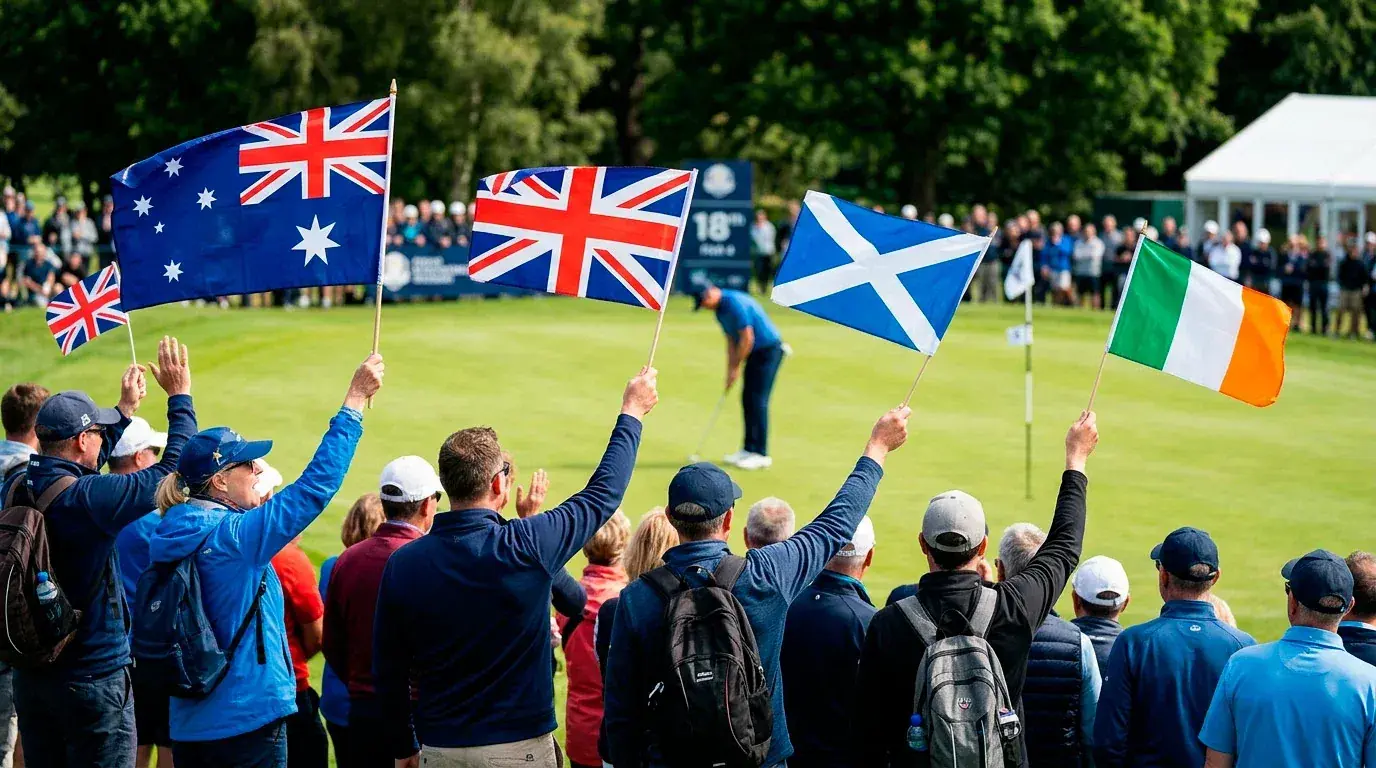
Nationality markets are a variant that appeals to the patriotic instinct. “Top British golfer” is the most common offering at UK operators, asking you to pick which player from the British contingent will finish highest regardless of their position in the overall leaderboard. At The Open Championship, where British players make up a significant portion of the field, this market generates heavy two-way action and prices tend to be tight. At US-based events with only a handful of British players in the field, the market is thinner and the pricing can be looser.
The risk with both group and nationality markets is that the payout structure is less favourable than outright markets relative to the probability of winning. A group of eight players gives you roughly a 12.5% base probability of randomly picking the winner (before adjusting for ability), but the prices rarely reflect fair odds — they typically imply 10% or lower after margin. The edge comes from your analytical superiority over the operator’s pricing, not from the raw structure of the market.
Prop Bets and Bet Builders: The Fastest-Growing Segment
The fastest-growing corner of the golf betting market is not a specific wager type — it is a toolkit. Bet builders, which allow punters to combine multiple selections from the same event into a single accumulator with a combined price, have reshaped how recreational bettors engage with golf. And the proposition bets that feed into those builders are multiplying every season.
Traditional golf props include hole-in-one (will any player ace a specific par three during the tournament), make or miss the cut for a named player, and over/under on a player’s total birdies across four rounds. These markets have existed for years, but the bet builder format has given them new life by allowing combinations. You can now build a wager that combines “Player A to make the cut” with “over 14.5 total birdies for Player B” and “a hole-in-one on the 12th” into a single bet with a blended price. The appeal is the same as any accumulator — small stake, large potential return — but the risk compounds because every leg must win.
From a pure value perspective, bet builders are structurally disadvantageous to the punter. Each component carries its own margin, and those margins multiply when combined. A three-leg builder where each leg has an implied margin of 5% produces a combined margin closer to 15%. The operator profits from the compounding. However, the individual prop markets that feed into builders are sometimes mispriced because they receive less analytical attention. A “make the cut” line set at -160 (implied 61.5%) for a player whose form and course fit data suggest a 70% cut-making probability is a value proposition, even if it is buried inside a builder alongside less favourable legs.
The prop I have found most consistently mispriced is the over/under on individual birdies. Operators set these lines based on recent tour averages, but birdie rate is heavily course-dependent. A player with a tour-average birdie rate might massively exceed that rate on a course with four reachable par fives and several short par fours. If the line does not adjust for course-specific scoring patterns, the over becomes a value play.

One caution: prop markets and bet builders carry thinner liquidity and wider spreads than outright or matchup markets. Prices can shift rapidly based on small amounts of money, and some operators limit stakes on builder combinations that are flagged as correlated. If two of your builder legs are logically linked — say, “Player A to finish top ten” and “Player A over 16.5 birdies” — the operator may cap your maximum stake or refuse the combination entirely. Correlation adjustment is the bookmaker’s response to legs that are not independent events, and it is worth checking before you build.
