

The Price of Patience
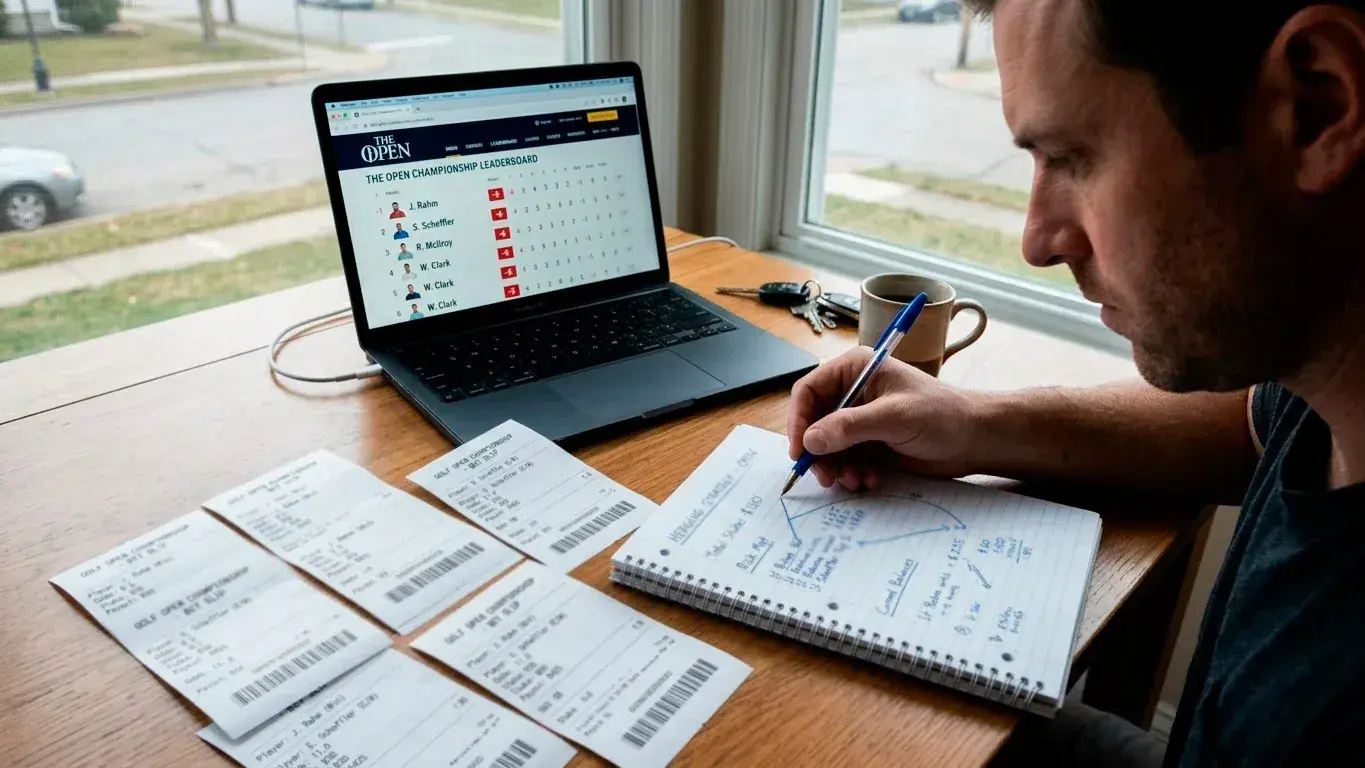
In January 2024, I placed a Masters ante-post bet on a player at 66/1. By the Tuesday of tournament week, the same player was available at 28/1 — still long, but more than half the price I had secured three months earlier. My selection missed the cut, so the bet lost regardless, but the exercise confirmed something I had suspected for years: the ante-post golf market rewards patience more consistently than almost any other timing strategy in sports betting.
The Masters is the fourth-largest single betting event in the world for major operators like Entain, sitting behind only the Grand National, the Super Bowl, and the Champions League final. That status drives enormous liquidity into tournament-week pricing, which compresses odds on popular selections and inflates them on overlooked ones. But weeks and months before the tournament, the ante-post market is quieter, thinner, and — crucially — less efficient. The prices available in January for an April major can be substantially longer than those available on the Wednesday before the first round.
This guide explores how ante-post pricing works in golf, the withdrawal risk that comes with early commitment, and where season-long futures markets create additional opportunities. If you are planning around specific tournaments, the Masters betting guide applies these principles to the biggest single event on the golf betting calendar.
Ante-Post vs Tournament-Week Pricing
The mechanics behind the ante-post price advantage are rooted in supply and demand. When a bookmaker opens an outright market for a major championship six months in advance, the volume of money flowing into that market is a fraction of what it will be during tournament week. With less money to balance, the bookmaker sets wider prices across the field — partly because the margin needs to compensate for the uncertainty of pricing so far in advance, and partly because the competitive pressure from other operators is weaker when most punters are not yet looking at the market.
The Masters generates 40% of all major championship golf wagers. The four majors combined account for roughly a third of all golf bets placed in a calendar year. That concentration of activity means tournament-week prices are shaped by massive public money flows that push popular selections shorter and force bookmakers to tighten the entire market. In January, none of that pressure exists. The same player who will be 25/1 on Masters Wednesday might be available at 50/1 or longer in the ante-post market.

Not every ante-post price is better than the tournament-week price. Players whose form improves dramatically between the ante-post window and tournament week will shorten, meaning the early price was indeed better value. But players who suffer injuries, lose form, or face unexpected competition from late-qualifying entrants may actually drift to longer prices by tournament week. The ante-post bettor is making a bet on value at the time of placement, not a prediction of future price movement.
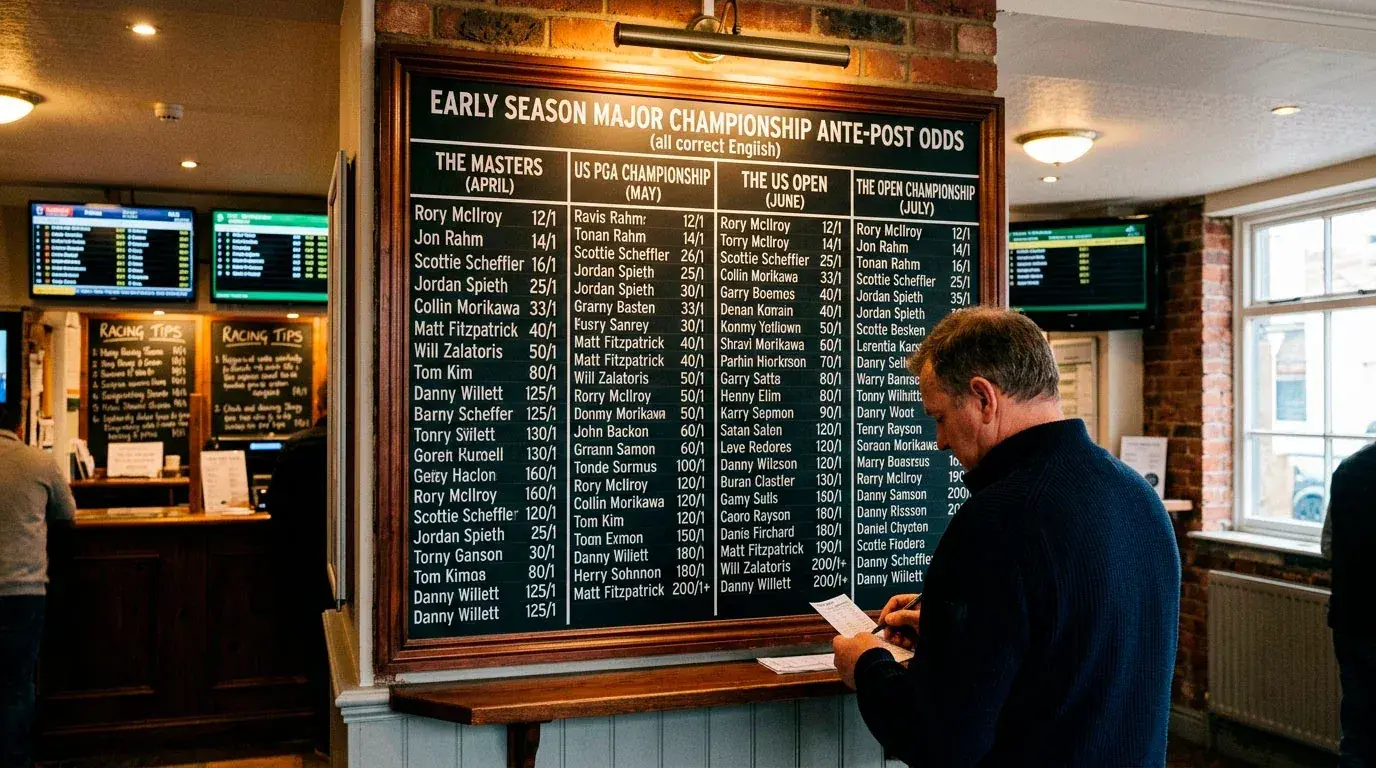
The key question is whether the price available now adequately compensates for the additional risks you are assuming by betting early. Those risks — withdrawal, form loss, injury — are real, and they need to be priced into your assessment. A 66/1 ante-post price that would be 28/1 during tournament week is only good value if the probability of a withdrawal or significant form decline does not erode that price advantage below the tournament-week equivalent.
Withdrawal Risk and Non-Runner Rules
The single most important rule in golf futures betting is the non-runner policy, and it varies between operators in ways that can turn a clever ante-post bet into an expensive lesson. I lost my first ante-post wager not because my player performed poorly, but because he withdrew from the tournament entirely — and the bookmaker’s terms stated clearly that ante-post bets on non-runners are losing bets. My stake was gone without a ball being struck.
Most UK bookmakers treat golf ante-post bets as “all in, run or not.” If your player does not start the tournament — for any reason including injury, illness, personal reasons, or qualifying failure — the bet loses and the stake is not returned. This is the default position across the industry, and it applies to the vast majority of golf futures bets placed more than 48 hours before the first round.

Some operators offer “non-runner, money back” terms on selected markets, typically closer to the tournament date. These bets refund the stake if the player withdraws before the event begins, but they come at a cost: the odds are shorter than the equivalent ante-post price to compensate for the bookmaker’s additional risk. The question is whether the withdrawal protection is worth the price reduction. For a player with a clean health record and a confirmed commitment to the event, the ante-post price without protection is usually the better mathematical proposition. For a player with a history of late withdrawals or a known injury concern, the protected price may offer better risk-adjusted value.
Withdrawal frequency varies by tournament and by player profile. Major championships have the lowest withdrawal rates because the prestige and prize money incentivise participation even through minor injuries. Regular tour events see higher withdrawal rates, particularly during busy stretches of the schedule where players manage their workload. As a rough guide, I estimate a 3-5% withdrawal probability for major championship ante-post bets on established players and 8-12% for regular tour events. These probabilities should be factored directly into the expected value calculation.
Timing your ante-post bets to balance price advantage against withdrawal risk is part of the skill. Betting in January for an April major captures the widest prices but carries the longest exposure to withdrawal risk. Betting two to three weeks before the event still offers prices longer than tournament-week levels while reducing the withdrawal window significantly. My personal sweet spot for major championship futures is six to eight weeks before the event — long enough that prices have not yet compressed, short enough that withdrawal risk is manageable.

Season-Long Futures Markets
Beyond individual tournament futures, UK sportsbooks offer season-long markets that most golf punters overlook entirely. FedExCup winner, Race to Dubai champion, PGA Tour Player of the Year, and Rookie of the Year are all available as futures markets, typically from the start of the calendar year.
Season-long markets carry a distinctive pricing characteristic: they are extremely wide early in the year and narrow dramatically as results accumulate. In January, the FedExCup market might price 30 or more players at 20/1 or longer, with the favourite around 8/1 to 10/1. By July, the field has separated, the favourite might be 2/1, and only a handful of contenders remain at double-digit prices. The value window is early, and the patience required is substantial — you are tying up capital for months with no interim payout.

The analytical approach for season-long markets differs from individual tournament analysis. Tournament futures reward course-specific skills and current form. Season-long futures reward consistency, schedule management, and the ability to peak during high-value events. A player who finishes 15th in twenty events might accumulate more FedExCup points than a player who wins twice but misses five cuts. Identifying which players are likely to grind out consistent results across the full season — rather than which players are most likely to win any single event — is the core skill for this market.
Hedging opportunities arise naturally as the season progresses. If you placed a FedExCup ante-post bet at 40/1 in January and your player sits third in the standings by August, you can lock in profit by backing other contenders at shorter prices, creating a position where you profit regardless of the final outcome. This kind of portfolio management is not possible with individual tournament bets, and it adds a strategic dimension that appeals to bettors who think in terms of positions rather than single-outcome wagers.