


Why Golf Is the Thinking Punter's Sport
I placed my first golf bet nine years ago — a speculative each-way wager on a mid-ranked Swede at the Scottish Open. He finished seventh, the place part paid out, and I was hooked. Not because I won big, but because the process felt completely different from anything I had experienced betting football or horse racing.
Here is the fundamental contrast. A Premier League match gives you two teams, ninety minutes, and a handful of outcomes. A sprint at Ascot is decided in under two minutes. A golf tournament hands you 156 players, four rounds across four days, and thousands of possible finishing orders. That complexity is exactly what makes golf wagering so rewarding — and so punishing if you approach it the way you would a Saturday accumulator.
Golf sits as the third most popular sport for betting in Britain, with 15% of active punters placing wagers on it regularly. What makes the segment stand out is stake weight: 14% of golf bettors spend more than £200 per month — nearly double the rate seen in football. The people who bet on golf tend to research heavily, stake deliberately, and treat it more like an investment exercise than a flutter.

Over the past decade, the UK golf betting market has transformed from a niche corner of the sportsbook into a sophisticated space. The data tools are sharper, the markets deeper, and the audience more informed than ever. This guide is the resource I wish I had found when I started — a comprehensive walkthrough of every dimension of golf wagering in Britain, from market mechanics and each-way structures to strategy frameworks built on real performance data.
Whether you are placing your first golf bet or refining a process you have been running for years, the aim is the same: give you the knowledge to make every wager deliberate rather than hopeful. No shortcuts, no magic tips — just the analytical framework that separates informed punters from the crowd.
What This Guide Covers at a Glance
- The UK sports betting market exceeds $11 billion in annual revenue, with golf ranking as the third most popular sport among British punters — and carrying one of the highest average stakes per bettor
- Outright and each-way markets account for 95% of golf wagering volume; understanding place terms and extended places at majors is essential
- A data-driven strategy built on Strokes Gained analysis, course fit, and current form consistently outperforms narrative-based selection
- The four major championships generate one-third of all annual golf betting activity, with The Masters alone responsible for 40% of major-related wagers
- The UKGC regulatory framework and PGA Tour Integrity Program provide robust protections, but responsible staking and self-imposed limits remain every punter's responsibility
The UK Golf Betting Landscape
The average golf bettor does not bet often, but when they do, the stakes are meaningful. The numbers paint a picture of a segment punching well above its weight inside the broader UK betting market.
$11.2 Billion
UK sports betting market revenue in 2024, projected to exceed $21 billion by 2030
15%
Share of UK bettors who regularly wager on golf — third behind football and horse racing
13.5 Million
Average monthly active online betting accounts across Britain
Britain's sports betting market generated $11,237.9 million in revenue in 2024, projected to reach $21.3 billion by 2030 at a compound annual growth rate of 11.4%. That is not a mature market coasting — it is an industry still accelerating. Online gambling accounts averaged 13.5 million active users per month in the fourth quarter of 2024–2025, and 48% of all UK adults reported placing some form of bet within the previous four weeks. Betting is woven into the sporting culture.
Golf's 15% share brings higher average stakes and longer engagement cycles than almost any other sport. A football bet is placed and settled within ninety minutes. A golf wager stretches from Monday ante-post markets through to a Sunday afternoon playoff, keeping the punter engaged all week. For operators, that sustained engagement translates into loyalty that quick-fire football betting struggles to match.
Globally, 108 million people are now involved in golf across R&A-affiliated countries — a figure that grew by nearly three million in a single cycle. England alone has 4.2 million on-course golfers, the fourth-largest market in the world. The first half of 2025 saw over 5.75 million handicap scores recorded in England, a 29% increase year-on-year, with April 2025 almost doubling the figures from April 2024.
Golf participation and betting are feeding each other. John Bushell, Managing Director of Sporting Insights, described the trend bluntly — the continued rise in participation points to evolving access points into the game. Simulators, driving ranges, and short-course formats are bringing new players onto courses, and those new players are discovering betting markets alongside their handicap cards. Britain saw a record number of played rounds in 2025 — the highest since 2005 — and the betting market has expanded in lockstep.

More golfers means more people with genuine knowledge of course conditions, player form, and tournament dynamics — the exact knowledge that makes golf betting analytical rather than speculative. I have seen this first-hand at corporate golf days and amateur club events, where conversations shift seamlessly between swing mechanics and each-way value at the next major. The crossover between playing golf and betting on golf is tighter than in any other sport.
The UK Gambling Commission oversees every licensed operator, imposing standards on fair odds, responsible gambling tools, and market transparency that most other jurisdictions have not matched. British golf bettors operate in one of the safest and most competitive markets on the planet.
Understanding Golf Betting Markets
A single PGA Tour event can generate dozens of individual markets — from tournament winner to whether a specific player will make a hole-in-one on Thursday. That breadth is part of what makes golf wagering appealing, but it can paralyse a newcomer. Every golf betting market available to UK punters falls into one of four broad categories, and understanding the logic behind each is the first step toward informed selection.
Outright Winner
Back a golfer to win the entire tournament. The purest bet, the longest odds, and the backbone of golf wagering.
Each-Way
Split your stake between a win bet and a place bet. Returns on finishing inside the place terms, even without winning outright.
Matchups
Head-to-head or three-ball bets on which golfer finishes higher. Reduces the field to just two or three competitors.
Props and Specials
First round leader, top nationality, make/miss the cut, hole-in-one, and build-your-own bet combinations.

Outright — a bet on a golfer to win the tournament. Typically 80/1 to 200/1 for mid-ranked players due to large field sizes.
Each-Way — a two-part wager: a win bet and a place bet. The place portion pays a fraction of the outright odds if the golfer finishes inside the specified positions.
Dead Heat — when golfers tie for a finishing position affecting bet settlement, the payout is divided proportionally among tied players.
Outright and Each-Way: The Core of Golf Wagering
Outright markets dominate golf wagering in Britain — they account for 95% of all golf bets placed across UK sportsbooks. The reason is straightforward: the outright winner market is the most liquid, the most widely covered by operators, and the most emotionally compelling. Backing a player to lift the trophy is the simplest narrative in sport.
The challenge is that a standard PGA Tour field often exceeds 150 starters, and even the best golfer in the world converts outright victories in roughly 10–15% of his starts. That mathematical reality is why each-way betting exists — it gives the punter a second route to profit through a place finish, which is statistically far more achievable.
Example: Implied Probability at 30/1
A golfer priced at 30/1 has an implied probability of winning of 3.2%. That means the market considers this player a roughly one-in-thirty chance. If your own research suggests a 5% or higher chance, you have identified what analysts call a value bet — a wager where the potential return exceeds the assessed risk.

The Masters drives more betting volume than any other single golf tournament, and that liquidity spills into each-way terms, which become especially generous during major championship weeks. For a complete breakdown of every golf betting market available in the UK, the dedicated markets guide covers the full range.
Matchups, Props, and Specials
Matchup bets — also called head-to-heads — strip the field down to two golfers and ask which one finishes higher. I have always found these appealing because they remove the variance of the wider field entirely. You do not need your player to beat 155 others; you just need him to beat one opponent. That narrower scope makes analysis more precise and results more predictable over a meaningful sample.
Three-ball bets work across grouped pairings playing together in the same round. First round leader markets ask who holds the lead after eighteen holes on Thursday — a market with notoriously high dead heat frequency. Top finish bets let you wager on a golfer finishing inside the top five, ten, or twenty, offering a more granular version of each-way place betting with its own odds.
Props and specials cover everything from hole-in-one markets to "top nationality" wagers. Bet builders allow punters to combine multiple selections into a single wager at enhanced odds, though the correlation between golf selections makes these riskier than they appear. I treat props as entertainment bets rather than part of any serious strategy, though the make/miss the cut market is one exception that deserves genuine research attention.
Each-Way Betting Essentials
If one concept defines golf wagering in Britain, it is the each-way bet. I cannot count how many times a fellow punter has told me they "had a good week on the golf" only for the story to end with a place finish rather than a winner. That is the beauty of each-way — it turns a near-miss into a payout. Given that outright markets represent 95% of golf betting volume, the each-way structure is effectively the mechanism that keeps the majority of golf punters in profit over any given season.
An each-way bet is two bets in one. The first is a win bet at the full advertised odds. The second is a place bet at a fraction of those odds — usually one-quarter or one-fifth — paid out if your golfer finishes inside a specified number of positions. When you place a £10 each-way bet, your total outlay is £20: £10 on the win, £10 on the place. If the golfer wins, both parts pay. If the golfer finishes inside the place terms but does not win, only the place part pays. If the golfer finishes outside the places, you lose the full £20.
Worked Example: £10 Each-Way at 40/1, 1/5 Odds, 8 Places
Total stake: £10 each-way = £20 total (£10 win + £10 place).
Place fraction: 1/5 of the outright odds. So 40/1 becomes 8/1 for the place part.
Scenario A — golfer wins: Win part pays £10 x 40 = £400, plus £10 stake returned = £410. Place part also pays £10 x 8 = £80, plus £10 stake returned = £90. Total return: £500. Profit: £480.
Scenario B — golfer finishes 5th (inside 8 places): Win part loses (£10 gone). Place part pays £10 x 8 = £80, plus £10 stake returned = £90. Total return: £90. Profit: £70.
Scenario C — golfer finishes 12th (outside 8 places): Both parts lose. Total return: £0. Loss: £20.

The place terms vary by tournament and operator, but the standard structure for a full-field golf event with 156 starters is typically five places at one-fifth the odds. During major championships and high-profile events, operators routinely extend those terms to eight, ten, or even twelve places as a promotional incentive — and that extension changes the mathematics significantly.
Extended Place Terms at Majors
During The Masters, The Open, the PGA Championship, and the US Open, most UK sportsbooks extend each-way terms — commonly eight places at 1/5 odds, sometimes ten or twelve. These extended terms dramatically increase expected value at longer prices. Always check the specific terms before placing your wager, because they vary between operators and events.
The crucial skill is knowing when each-way offers genuine value. Backing a 6/1 favourite each-way is almost always poor — the place fraction returns little and you double your stake for minimal insurance. The sweet spot falls in the 25/1 to 80/1 range, where the place portion generates meaningful profit even without the outright win. For a deeper dive into each-way mathematics and the situations where it outperforms outright, the dedicated guide walks through every scenario.
Interactive tool
Golf each-way calculator
Each-way is two bets in one: a win and a place. Enter the price, the place terms and where your golfer finishes, and see exactly what comes back — and how extended major places change the maths.
Payout by finishing position
- Return if he finishes 5th £90.00
- Profit at that finish +£70.00
- If he wins (1st) £500.00
- If he places (2nd–8th) £90.00
- Place part pays at 8/1
Building a Strategy That Survives Contact with Reality
Early in my golf betting career, I had a system: scan the pre-tournament previews, pick the names that "felt right," and back them each-way. It worked often enough to feel like skill. Then a thirteen-week losing run forced me to confront an uncomfortable truth — I had no system at all. I had vibes. The sharper approach is building a card with intention and direction, and that is exactly what a strategy framework gives you.
The foundation rests on three pillars: course fit, current form, and course history. Each pillar answers a different question. Course fit asks whether a player's skill profile matches the venue's demands. Current form asks whether the player is performing well right now, regardless of where he is playing. Course history asks whether the player has demonstrated an ability to score at this track before. No single pillar is sufficient alone, but together they dramatically narrow the field of viable selections.
Strokes Gained — a statistical framework the PGA Tour introduced in 2011, with detailed sub-categories added from 2016 — is the analytical engine behind all three pillars. Rather than counting raw statistics like birdies or fairways hit, it measures how many shots a golfer gains or loses relative to the field in four areas: off the tee, on approach, around the green, and putting. Two golfers can have identical scoring averages while possessing completely different skill profiles — one gains strokes through elite iron play, the other through dominant putting — and those skills carry different value at different courses.
Pre-Tournament Research Checklist
- Course fit — identify which Strokes Gained categories the venue rewards most heavily, then filter for golfers who excel in those areas
- Current form — assess performance over the last six to ten starts, weighting recent tournaments more heavily than those from three months ago
- Course history — check past results at this venue and at courses with similar design characteristics
- Field strength — evaluate the depth of the field, because a mid-ranked player's chances improve significantly when top-tier golfers are absent
- Weather forecast — wind speed and direction can reshape the value of certain tee-time draws and favour specific player profiles
The temptation is to rely on narrative instead of data — to back the player who "always plays well in Scotland" or who "seems due a win." Narrative feels like knowledge, but it crumbles under scrutiny when the numbers tell a different story.
Data-Driven Approach
Selections based on Strokes Gained profiles matched to course demands. Uses quantifiable thresholds to identify value. Repeatable process across any tournament. Slow to adopt trends, fast to discard sentiment. Strength: consistency over a full season.
Narrative Approach
Selections based on storylines, reputation, and perceived momentum. Relies on pattern recognition without statistical backing. Often right in the short term, unreliable across a sample. Vulnerable to confirmation bias and recency effects. Strength: occasionally identifies intangibles data misses.

I am not suggesting you ignore narrative entirely — sometimes a player is in a purple patch that the numbers have not fully captured. But data should be the primary filter, and narrative should break ties between statistically similar candidates, never override a clear quantitative signal. For the complete data-driven framework with worked examples, the strategy guide goes deeper into every step of the process.
In-Play Golf Betting
The first time I placed a live golf bet mid-round was a Sunday at the BMW PGA Championship. The overnight leader triple-bogeyed the fourth hole, his outright odds drifted from 5/2 to 12/1 in minutes, I took the price, and the back nine played out in my favour. That kind of opportunity does not exist in football or tennis, where a single event moves the market before you can react. Golf gives you time.
A typical golf round takes four to four-and-a-half hours, with meaningful action on eighteen separate holes. Compare that to a football match where odds shift every thirty seconds during open play. Golf's slower pace gives in-play bettors a genuine window to analyse leaderboard movements, assess course conditions in real time, and place considered wagers — rather than scrambling to click before the price disappears.
Online betting accounts for 78.47% of all UK sports betting revenue, with in-play the fastest-growing segment. UK online gross gaming yield grew 7% year-on-year through Q4 2024–2025, reaching £1.45 billion for the quarter, and in-play markets have been a major driver of that acceleration. Golf is ideally suited to live wagering — each hole is a discrete event that shifts odds, whether a birdie on a par five, a bogey from a bunker, or an eagle putt that lips out. The leaderboard updates gradually, rewarding attentive punters over impulsive ones.
Markets Typically Available In-Play
Tournament winner (outright odds updated hole-by-hole), round leader, top finisher (top 5/10/20), head-to-head matchups (round and tournament), next hole birdie/bogey, and make/miss the cut markets during rounds one and two. Availability varies by operator and tournament — major championships carry the widest range of in-play options.
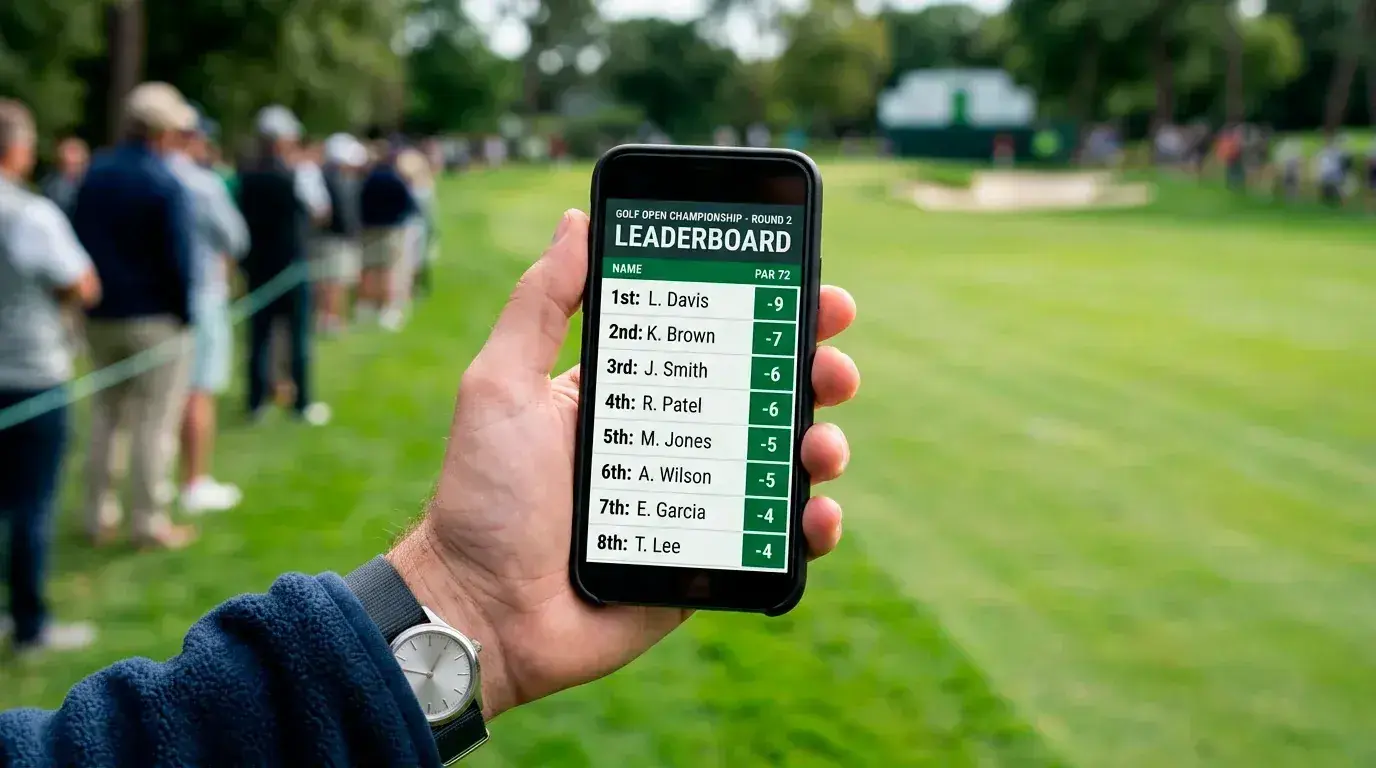
The practical appeal is that live betting rewards knowledge you already have. If you have done your pre-tournament research — assessed course fit, checked form, identified value — you are watching with an analytical lens. When a contender stumbles early, you can evaluate whether the stumble reflects a genuine problem (swing issues, poor conditions on early holes) or a temporary blip on an otherwise solid card. That real-time judgment is the edge in-play offers, and it is unavailable in pre-tournament markets. The dedicated in-play guide covers timing windows, cash-out strategies, and the market mechanics of live golf wagering.
Major Championships and the Golf Betting Calendar
The four major championships dominate the golf betting calendar with a gravitational pull that no other events can match — and the betting market reflects that with extraordinary force.
$77 Million+
Combined prize fund across the four major championships in 2025
40%
Share of all major-related golf bets generated by The Masters alone
One-Third
Proportion of total annual golf betting volume concentrated across the four majors
The four majors collectively account for more than a third of all golf bets placed across an entire calendar year. That concentration means a handful of weeks carry disproportionate weight in the annual cycle, and understanding the character of each major is essential for serious punters.
The Masters
Augusta National, Georgia. April. Prize fund: $21 million. Invitational field of roughly 90 players. The most bet-upon golf tournament in the world — a springtime tradition that captures imaginations and brings out bettors who wager on golf only once a year.
PGA Championship
Rotating US venues. May. Prize fund: $19 million. Full professional field of 156. The broadest qualification criteria of any major create the strongest overall field and a deeper, more competitive betting market.
US Open
Rotating US venues. June. Prize fund: $21.5 million. Brutal course setups penalise wayward driving, tilting betting analysis heavily toward Strokes Gained: Approach and fairway accuracy metrics.
The Open Championship
Rotating UK links. July. Prize fund: $17 million. Britain's own major — and where UK punters hold the deepest knowledge advantage. Links golf is a different discipline: firm, fast fairways, unpredictable coastal winds, and course management skills that many American-based players have not developed.

The Masters generates 40% of all bets placed on golf majors, making it the single most important event for both punters and operators. Entain ranks it as the fourth-largest betting event in the world, behind only the Grand National, the Super Bowl, and the Champions League final. That level of liquidity means the outright markets during Masters week are among the most efficient in golf — which can make finding value harder, as the prices are tighter, the public money heavier, and the sportsbooks running sharper models than at any other point in the year.
The other three majors present different betting landscapes. The PGA Championship's rotating venues make it harder to rely on course history — you are often working with a course that last hosted the event a decade ago. The US Open's severe setups reward defensive, bogey-avoidance golf, shifting the statistical profile of likely contenders toward different Strokes Gained categories. And The Open introduces weather as a variable that can determine which half of the draw gets favourable conditions, making tee-time analysis a genuine consideration.

The Ryder Cup — held every two years, next at Adare Manor in 2027 — operates on a different betting model with team-format markets: match betting on individual sessions, overall winner, top points scorer, and whether the event will be decided before Sunday's singles. The Ryder Cup generates enormous public money, often pushing the odds on the home team to prices that do not reflect the actual competitive balance.
The April-to-July stretch — Masters, PGA Championship, US Open, The Open — is the peak season for golf betting in Britain. Market depth, data availability, and promotional each-way terms are all at their annual peak. Outside this window, the DP World Tour and FedEx Cup playoffs offer consistent weekly action at lower volumes.
Data and Technology in Golf Betting
Five years ago, my pre-tournament research involved reading a few previews and trusting my memory of who played well at similar courses. Today, I open a spreadsheet with Strokes Gained splits across four categories, filter by form windows, cross-reference course demands, and build a shortlist before looking at the prices. The difference is not talent — it is technology. The data infrastructure supporting modern golf analysis has fundamentally changed what is possible for individual punters.
Strokes Gained — a statistical method introduced by the PGA Tour in 2011 that measures a golfer's performance relative to the field average on every shot. Sub-categories (Off-the-Tee, Approach, Around-the-Green, Putting) were added from 2016, enabling granular skill-level analysis rather than reliance on blunt counting statistics.
ShotLink — the PGA Tour's proprietary tracking system that uses a network of radars, lasers, and cameras positioned around the course to record the location and trajectory of every shot hit during a tournament. ShotLink provides the raw data that powers Strokes Gained calculations.
Greens in Regulation — the percentage of holes on which a golfer reaches the putting surface in the expected number of strokes (par minus two). A traditional statistic that measures approach play quality but lacks the comparative nuance of Strokes Gained.
Bogey Avoidance — the percentage of holes played without recording a bogey or worse. Particularly relevant for tournaments with severe course setups, such as the US Open, where minimising mistakes matters more than maximising birdies.
Before Strokes Gained, available statistics were counting numbers — driving distance, fairways hit, putts per round. These told you what happened but not how much it mattered. A golfer who ranked first in driving distance might have been gaining two strokes per round off the tee or half a stroke — the raw figure did not tell you. Strokes Gained converts every output into a common currency of shots gained or lost, enabling direct comparison between driving, putting, and iron play. For course-specific analysis, that is invaluable.
The ecosystem of data tools has expanded rapidly. The PGA Tour's statistics portal provides Strokes Gained data at no cost, though the presentation is not optimised for betting analysis. Third-party platforms offer filterable databases, course-specific projections, and model-driven probability estimates that translate directly into implied odds. The DP World Tour and LIV Golf have their own platforms, though the depth varies — PGA Tour's ShotLink system remains the gold standard for shot-level precision.
Where to Find Free Strokes Gained Data
The PGA Tour's official statistics site publishes Strokes Gained data for every measured tournament. DataGolf offers model-based projections and historical SG breakdowns with free-tier access. Fantasy golf platforms often publish accessible SG summaries during tournament weeks. For DP World Tour events, the tour's own site provides performance data, though the granularity is lower than PGA Tour offerings due to differences in tracking technology.

The temptation with data is to overcomplicate the process. I have seen punters build models with forty input variables that perform worse than a simple three-factor screen because they are fitting noise rather than signal. The most effective use of golf data in a betting context is targeted: identify the two or three Strokes Gained categories that matter most at this week's course, filter the field for players who rank highly in those categories, and cross-check against form and history before comparing your assessment to the market price. Sophistication comes from asking the right questions of the data, not from drowning in it.
Responsible Gambling and UK Regulation
Two summers ago I spoke with a golf punter who described himself as "disciplined." He staked two percent of his bankroll per bet, never chased losses, and tracked every wager. Then he admitted he had quietly increased his deposit limits three times in six months because "the process was working." He was profitable, technically — but the escalation pattern was a warning sign he had not recognised. Responsible gambling is not just about losing streaks; it is about recognising when winning itself distorts your behaviour.
The UK Gambling Commission oversees every licensed operator, enforcing standards that protect punters from both predatory practices and their own worst instincts. The Gambling White Paper (2023, now being implemented in stages) introduced enhanced affordability checks, stricter advertising rules, and expanded requirements for operators to identify and intervene with at-risk customers. For golf bettors, this means your sportsbook is legally obligated to offer deposit limits, loss limits, session time alerts, and self-exclusion tools.
The Gambling Survey for Great Britain found that 2.7% of UK adults scored 8 or higher on the Problem Gambling Severity Index — roughly 1.4 million people meeting the threshold for problem gambling. Among 18-to-24-year-olds, 21.9% showed at least some indicators of gambling-related harm. These are not abstract figures. They represent real people whose relationship with betting has crossed from entertainment into damage.
Golf betting carries its own specific risk profile. The long-odds nature of outright markets means losing streaks are not just possible but statistically inevitable — even a sharp punter with a genuine edge can go weeks without a winning outright selection. If you do not have a staking plan and a loss limit that you actually enforce, those losing runs can erode both bankroll and judgment faster than you expect.
Do
- Set a weekly or monthly betting budget and treat it as non-negotiable
- Use the deposit limit and loss limit tools that every UK-licensed operator provides
- Track every bet — including losses — in a spreadsheet or app to maintain an honest picture of your results
- Take breaks between tournaments, especially after a heavy losing week
Don't
- Chase losses by increasing stakes after a bad run — this is the single most common path to problem gambling
- Bet under emotional influence, whether frustration from a losing streak or overconfidence from a winning one
- Treat promotional free bets as "house money" — they still influence your betting behaviour and risk perception
- Ignore the signs of escalation: raising deposit limits, betting on events you have not researched, or feeling anxiety when you do not have an active bet
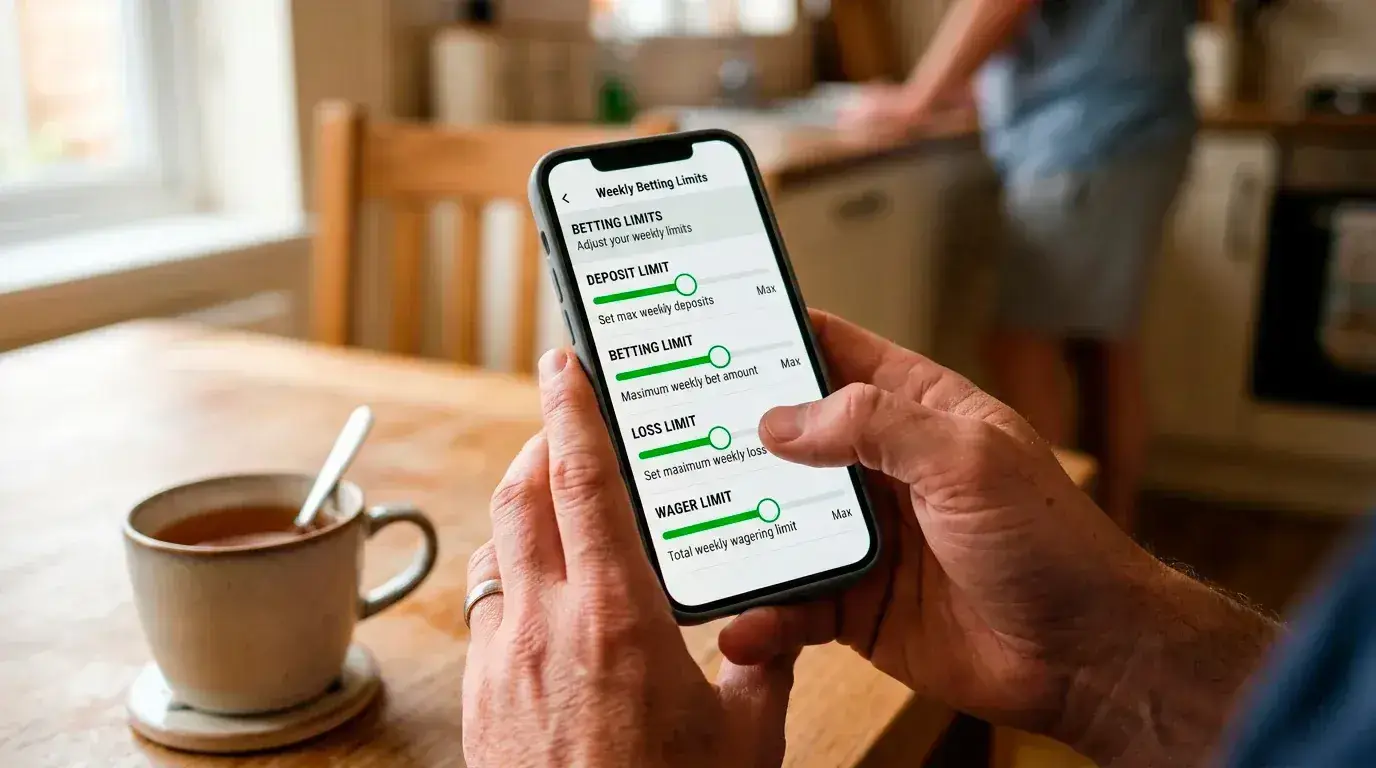
On the integrity side, golf has invested heavily in protecting the sport from betting-related corruption. The PGA Tour's Integrity Program, strengthened by its partnership with IC360's ProhiBet monitoring system, can impose fines up to $500,000 and lifetime bans on players who breach betting rules. That infrastructure matters for punters too — it means the results you are betting on are subject to genuine, well-resourced scrutiny. The combination of a strong regulatory framework under the UKGC and robust integrity monitoring within the sport itself makes golf in Britain one of the most transparently governed betting environments available.
Golf Betting Questions UK Punters Ask Most
How does each-way betting work in golf?
An each-way bet is two separate bets combined: a win bet and a place bet. A £10 each-way wager costs £20 total — £10 on the golfer winning at full odds, and £10 on finishing inside the place terms at a fraction of those odds (typically one-fifth or one-quarter). Standard place terms for a full-field event are usually five places, though this extends to eight, ten, or twelve places during major championships. If your golfer wins, both parts pay out. If the golfer finishes inside the places but does not win, only the place part returns. Each-way betting is particularly valuable in golf because of the large field sizes — with 156 starters, identifying a golfer who can finish in the top eight is far more achievable than picking an outright winner.
What are the most popular golf betting markets?
Outright winner markets dominate, accounting for 95% of all golf wagers placed across UK sportsbooks. Beyond outright, popular markets include each-way betting, head-to-head matchups, top finish bets (top five, ten, or twenty), first round leader, and make/miss the cut. Prop markets and bet builders have grown in popularity, allowing punters to combine selections at enhanced odds. Market depth varies between operators and tournaments — major championships carry the widest range of options.
What is the best type of golf bet for beginners?
Each-way betting on players in the 25/1 to 80/1 range is the most forgiving entry point. The structure means you profit from a top-five or top-eight finish without needing an outright win, which dramatically improves your probability of return. Head-to-head matchup bets are another strong starting point because they reduce the field to two golfers, simplifying the analysis to a direct comparison. Outright bets at very long odds carry extremely high variance and can lead to extended losing runs that discourage beginners before they develop the analytical skills for long-term profitability.
How do dead heat rules affect golf bets?
A dead heat occurs when two or more golfers tie for a position that determines bet settlement — most commonly at the boundary of each-way place terms. Your stake is divided by the number of tied golfers, and the payout is calculated on that reduced stake. Dead heats are more frequent in golf than in most sports because stroke-play scoring produces ties regularly, particularly after the first round when many players share the same score. Always factor dead heat risk into expected returns, especially for top-finish and each-way bets near the place-term boundary.
What statistics should I use to analyse golfers for betting?
Strokes Gained is the most valuable statistical framework for golf betting analysis. It measures how many shots a golfer gains or loses relative to the field in four areas: Off-the-Tee (driving), Approach (iron play), Around-the-Green (short game), and Putting. The power of Strokes Gained is that it enables direct comparison across skill categories, which is essential for matching player profiles to specific course demands. Traditional statistics like greens in regulation and scrambling percentage have supplementary value but lack the comparative depth. Start with Strokes Gained: Tee-to-Green — which combines all categories except putting — as your primary filter, then drill into the sub-categories most relevant to the course you are analysing.
How does live (in-play) golf betting work?
In-play betting lets you wager while a round or tournament is in progress, with odds updating in real time as the leaderboard changes. Available markets typically include updated outright odds, round leader, head-to-head matchups, top finisher, and next-hole specials. Golf is uniquely suited to live betting because each round takes over four hours, with incremental leaderboard shifts rather than sudden, irreversible changes. That tempo gives you time to assess the situation and place considered wagers. The primary risk is overtrading — set firm limits before the round begins.
What are the best golf tournaments to bet on?
The four majors — The Masters (April), PGA Championship (May), US Open (June), and The Open (July) — generate roughly one-third of all annual golf wagering volume, with The Masters alone accounting for 40% of bets placed on golf majors. Beyond the majors, the Players Championship and the three FedEx Cup playoff events attract deep markets and generous each-way terms. For UK punters, The Open holds particular value because familiarity with links golf and British weather conditions provides a genuine knowledge edge. The Ryder Cup, held every two years, offers distinct team-format betting markets. Regular DP World Tour events carry thinner markets but can present value because less public attention means softer odds and less efficient pricing.
