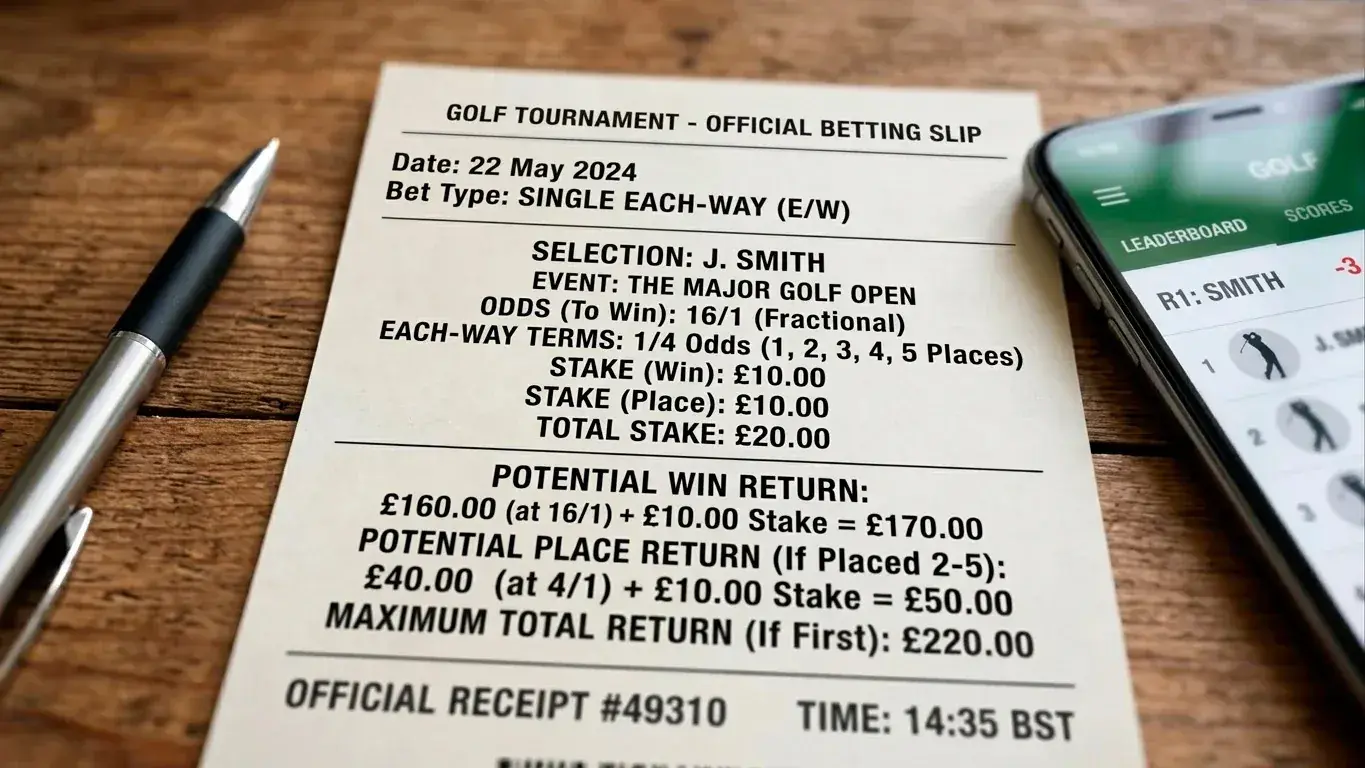


The Toughest Test in Golf — and in Golf Betting
My worst-ever golf betting week was a US Open. I had four selections across outright and top-finish markets, and every single one missed the cut. The thick rough swallowed approach shots, the narrow fairways punished even minor misses, and the greens ran so fast that three-putts were epidemic. I lost my entire weekly budget in 36 holes. That experience taught me a lesson I have never forgotten: the US Open is not just a difficult tournament for the players — it is a uniquely difficult tournament for bettors, and the standard analytical approach must be adapted or abandoned.

The combined prize pool across all four majors surpassed $77 million in 2025, with the US Open contributing $21.5 million — the largest purse of any major. That financial heft reflects the USGA’s position as one of golf’s two governing bodies and its determination to make the US Open the definitive test of professional golf. For bettors, the key insight is that the USGA deliberately manipulates course conditions to produce higher scoring, more attrition, and more variance. Understanding how that manipulation works is the foundation of any profitable US Open strategy.
USGA Setup and Its Betting Impact
The USGA does not simply host a tournament at a venue — it transforms the venue into something its members would barely recognise. Fairways are narrowed to 25 to 28 yards (compared to 35 to 40 yards at a typical PGA Tour event). The rough is grown to four to six inches of thick, tangled grass that penalises offline shots severely. Greens are firmed and quickened to speeds that make even the best putters uncomfortable. And pin positions are tucked into corners that demand pinpoint approach shots under extreme pressure.

These setup choices have direct implications for betting analysis. The narrowed fairways mean that driving accuracy becomes the dominant SG category, overriding the distance advantage that matters at most other events. The ShotLink system provides the data to quantify this shift precisely: at a standard PGA Tour event, SG: Off-the-Tee correlates with finishing position at roughly 0.35. At a US Open setup, that correlation drops to around 0.20 for distance but rises to 0.45 for accuracy. The numbers tell you to weight accuracy over power, and punters who ignore that shift consistently overvalue bombers and undervalue precision drivers.
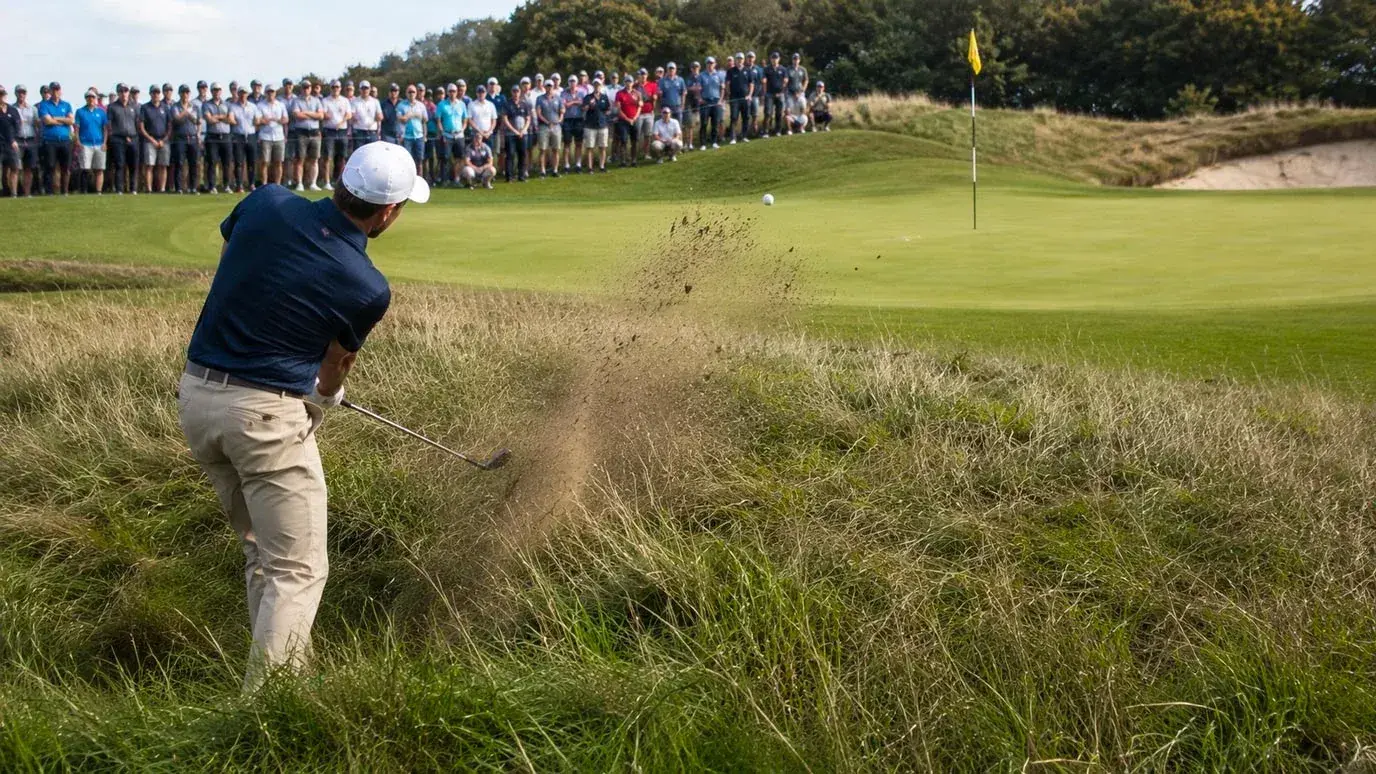
The thick rough amplifies the importance of SG: Around-the-Green. When approach shots miss greens — and they miss more frequently at the US Open than at any other major — players must scramble from lies that range from manageable to nearly impossible. A player who ranks in the top 20 on tour for SG: Around-the-Green has a structural advantage at the US Open that is worth two to three strokes over the field per tournament. That advantage is often underpriced because the market focuses on ball-striking metrics and treats short-game skill as a secondary consideration.
The elevated scoring also affects market dynamics. Winning scores at the US Open regularly sit at even par or a few strokes under, compared to 15-under or 20-under at a typical PGA Tour event. This compression of the scoring range means that more players remain in contention deeper into the tournament, which increases the probability of an upset and lengthens the odds on favourites. I have found that favourite-longshot bias — the tendency for markets to overprice favourites and underprice longshots — is more pronounced at the US Open than at any other major, making it a rich hunting ground for punters who target the 40/1 to 100/1 range.
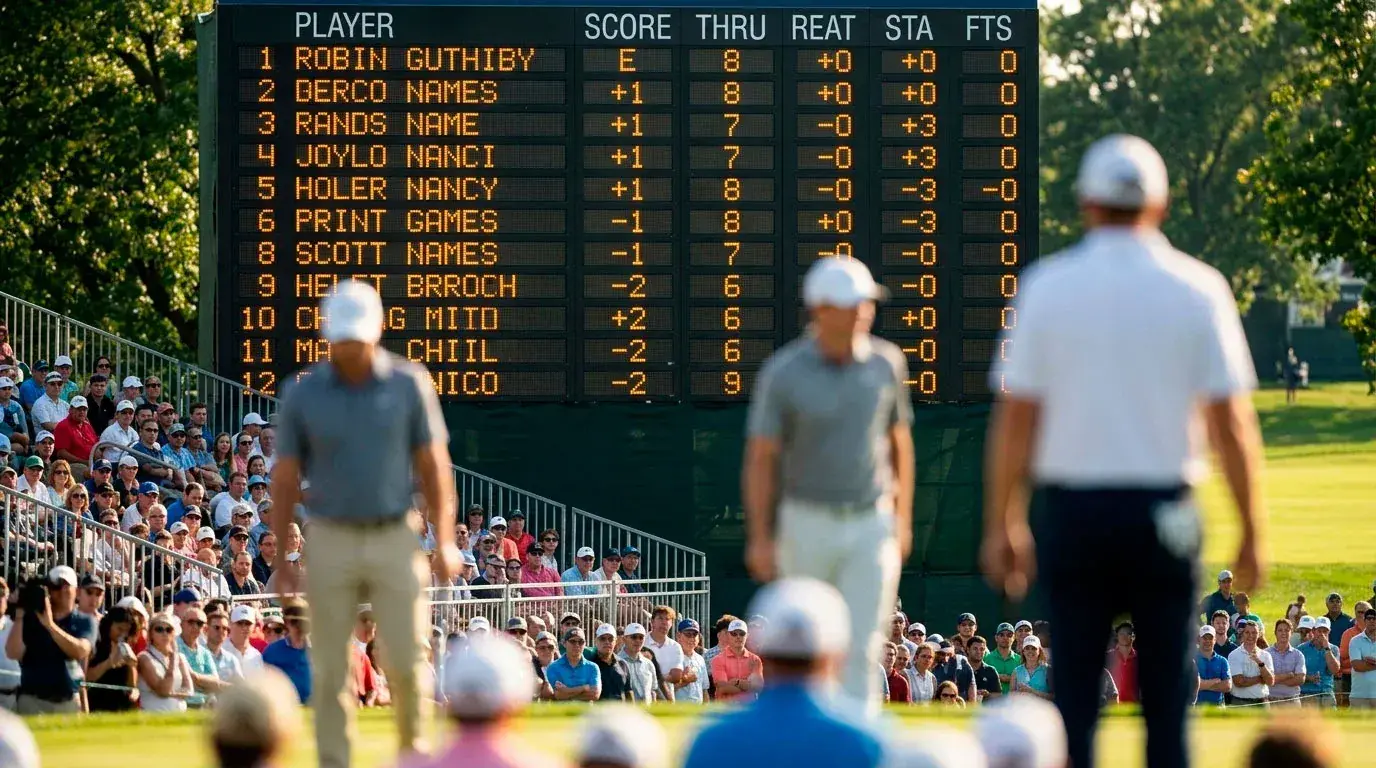
Surviving US Open Conditions
Mark Darbon, the R&A’s Chief Executive, once expressed his belief that golfers “should be well compensated for what they do” because they “inspire and excite millions of golfers all around the world.” At the US Open, the compensation feels particularly well-earned. The physical and mental demands of four rounds under USGA conditions test players in ways that regular tour events cannot replicate, and the ability to survive those conditions — not just perform, but survive — is the key selection criterion.
Survival at the US Open means avoiding the big numbers. A triple-bogey at a regular event costs three strokes; at the US Open, it can cost five or six because the scoring environment is so tight that recovering those strokes is nearly impossible. Bogey avoidance — the percentage of holes played without making bogey or worse — is the single most predictive traditional statistic for US Open performance. Players who keep bogeys off the card stay in contention, while aggressive players who chase birdies and accept bogey risk tend to fall apart over 72 holes.
I build my US Open shortlist around a simple filter: take the top 30 players in bogey avoidance over the preceding 24 rounds, overlay the top 30 in SG: Approach, and identify the overlap. That overlap group — typically 10 to 15 players — forms my candidate pool. From there, I check course-specific history and ante-post pricing to find the best value. This method has produced a US Open top-20 finisher in five of my last seven selections.
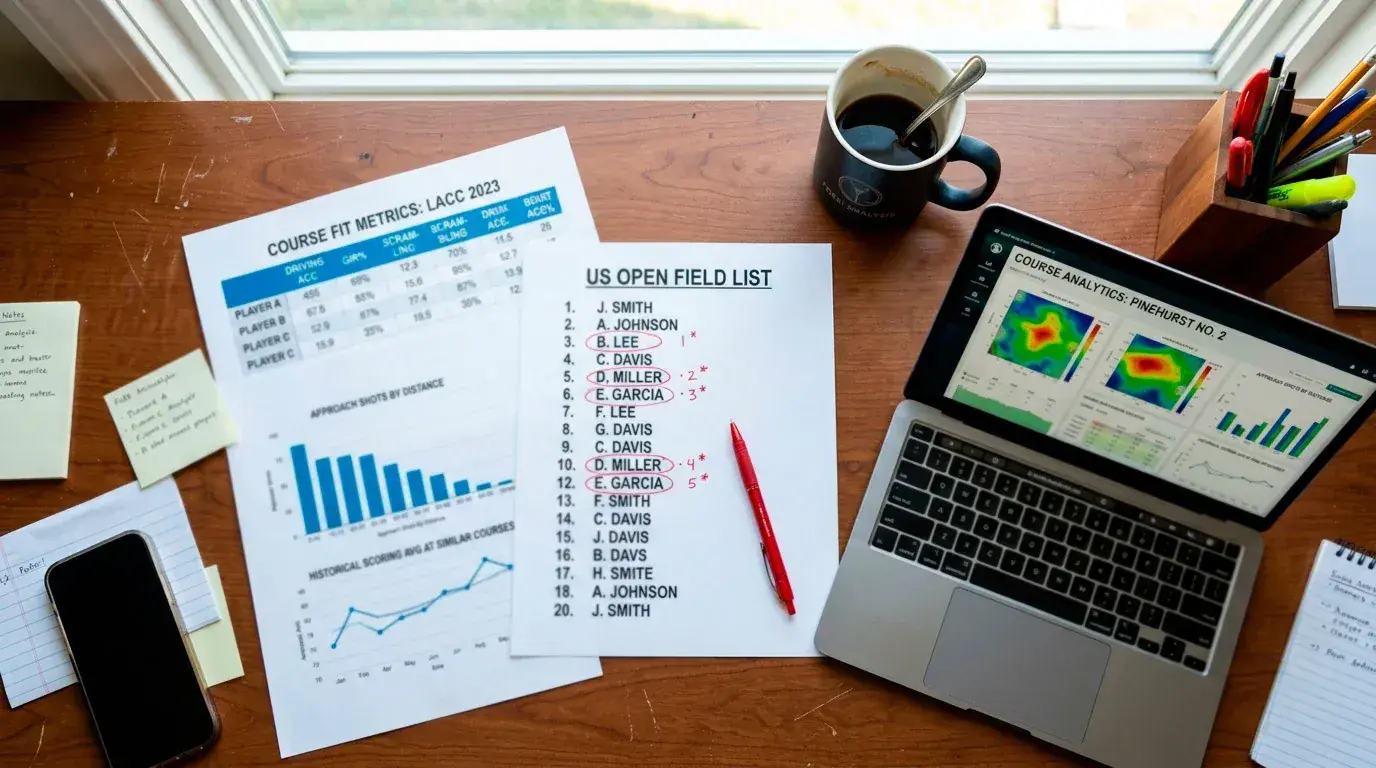
A UK Punter’s US Open Market Approach
The US Open is played in June, which means tee times fall during UK afternoon and evening hours. Live betting opportunities are available throughout, and the four-to-five-hour time window between the first and last groups creates extended windows for in-play wagering. I typically take an ante-post position early in the week, then use in-play markets on Thursday and Friday to hedge or add to my position based on first-round scoring patterns.
Each-way betting at the US Open rewards a different type of selection than at the Masters or The Open. Because the scoring is tighter and the leaderboard is compressed, the place part of an each-way bet lands more frequently at the US Open than at low-scoring events. A player priced at 50/1 who finishes tied for eighth has earned a place payout, and the probability of that outcome is higher at the US Open than at an event where the winner shoots 20-under and the top five are separated by ten strokes. I lean more heavily toward each-way bets at the US Open than at any other major, specifically targeting players in the 33/1 to 80/1 range whose profiles match the survival criteria I described above.
The make-the-cut market is also unusually valuable at the US Open. The USGA’s punishing setup ensures that 20% to 25% of the field misses the cut, compared to 15% to 20% at a standard PGA Tour event. Identifying overpriced players who are likely to crumble under US Open conditions and backing them to miss the cut has been a quiet but consistent profit centre in my annual betting calendar.