


Shrinking the Field to Find the Edge
The bet that changed how I approach golf wagering was not an outright winner at long odds — it was a three-ball bet on a Thursday morning in Memphis. I had watched one of the three players hit the range for twenty minutes on the tournament’s practice channel, liked what I saw, and backed him to beat his two playing partners at 6/4. He shot 66, the other two shot 71 and 73, and I collected in four hours. The profit was modest. The lesson was transformative: why bet against 155 opponents when you can bet against two?
Outright markets dominate UK golf betting — 95% of all golf wagers are placed on the tournament winner. But the outright market asks you to identify one player from a field of 120 to 156 who will beat everyone over 72 holes. Group betting inverts the problem. Instead of predicting who wins the entire tournament, you predict who plays best within a small, defined subset of the field. The analytical requirements are different, the variance is lower, and the edges — when they exist — resolve faster.
Golf is the third most popular sport for betting in the UK, with 15% of active bettors placing golf wagers, yet group betting remains one of the least discussed market types. This guide explains how three-ball and tournament group winner markets work, what makes them distinct from standard matchups, and how settlement rules affect your returns. For the closely related head-to-head format, golf matchup bets covers that ground in detail.
Three-Ball Markets Explained
I remember the first time the PGA Tour expanded its partnership with IC360, integrating the ProhiBet monitoring solution into its Integrity Program. Andy Levinson, then VP of Tournament Administration, described it as “a valuable new component in helping the TOUR maintain a safe and responsible gaming environment.” That partnership matters for three-ball markets specifically because per-round group bets depend on accurate, verifiable scoring data — and the integrity infrastructure ensures the data feeding these markets is trustworthy.
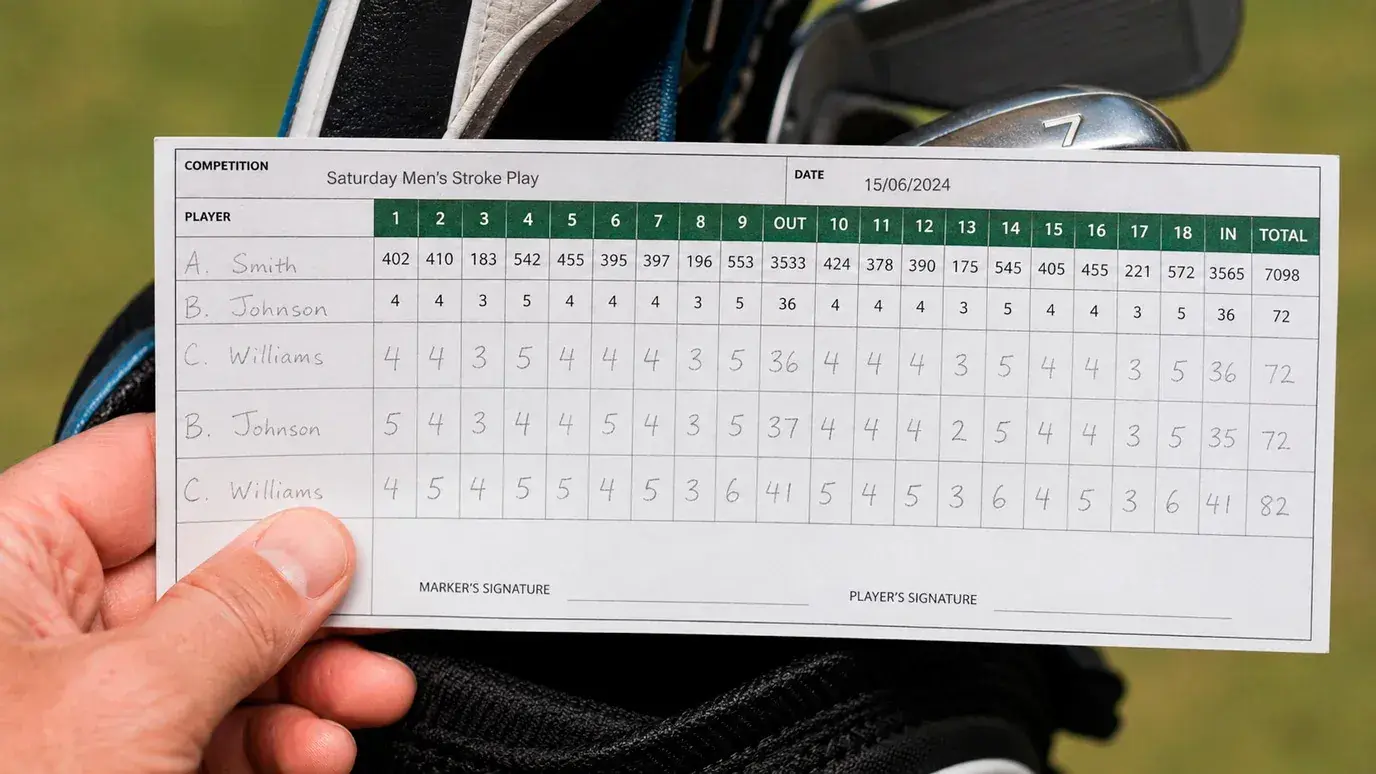
A three-ball bet is simple in concept. Three players are grouped together — typically their actual on-course playing group for a given round — and you bet on which of the three will post the lowest score for that round. Prices are set based on each player’s form, course fit, and recent round-by-round performance. A typical three-ball market might price the favourite at 6/5, the second choice at 9/4, and the outsider at 5/2.
The critical advantage of three-ball betting is the reduced sample size. In an outright market with 156 players, you need your selection to outperform the entire field. In a three-ball, you need your selection to outperform exactly two opponents. This dramatically reduces the impact of random variance — a single hot round from an unknown player cannot derail your bet if that player is not in your group. The skill-to-luck ratio tilts toward skill in a three-player contest far more than in a 156-player field.
Three-ball markets are typically available only for rounds one and two, when the full field plays in designated groups. After the cut, pairings are determined by position on the leaderboard, and most sportsbooks switch to two-ball (head-to-head) formats for weekend rounds. This means three-ball betting is primarily a Thursday-Friday product, which suits punters who prefer to concentrate their activity at the start of the tournament rather than waiting for Sunday drama.
The analytical approach differs from outright analysis in a specific way: recent round-one and round-two performance matters more than overall tournament finishing position. A player who consistently starts well but fades on weekends might be a poor outright bet but an excellent three-ball selection for Thursday. Round-specific Strokes Gained data — SG for rounds one and two versus rounds three and four — is the sharpest tool for this market, and it is available through PGA Tour statistical platforms for anyone willing to dig into the numbers.
Tournament Group Winner Markets
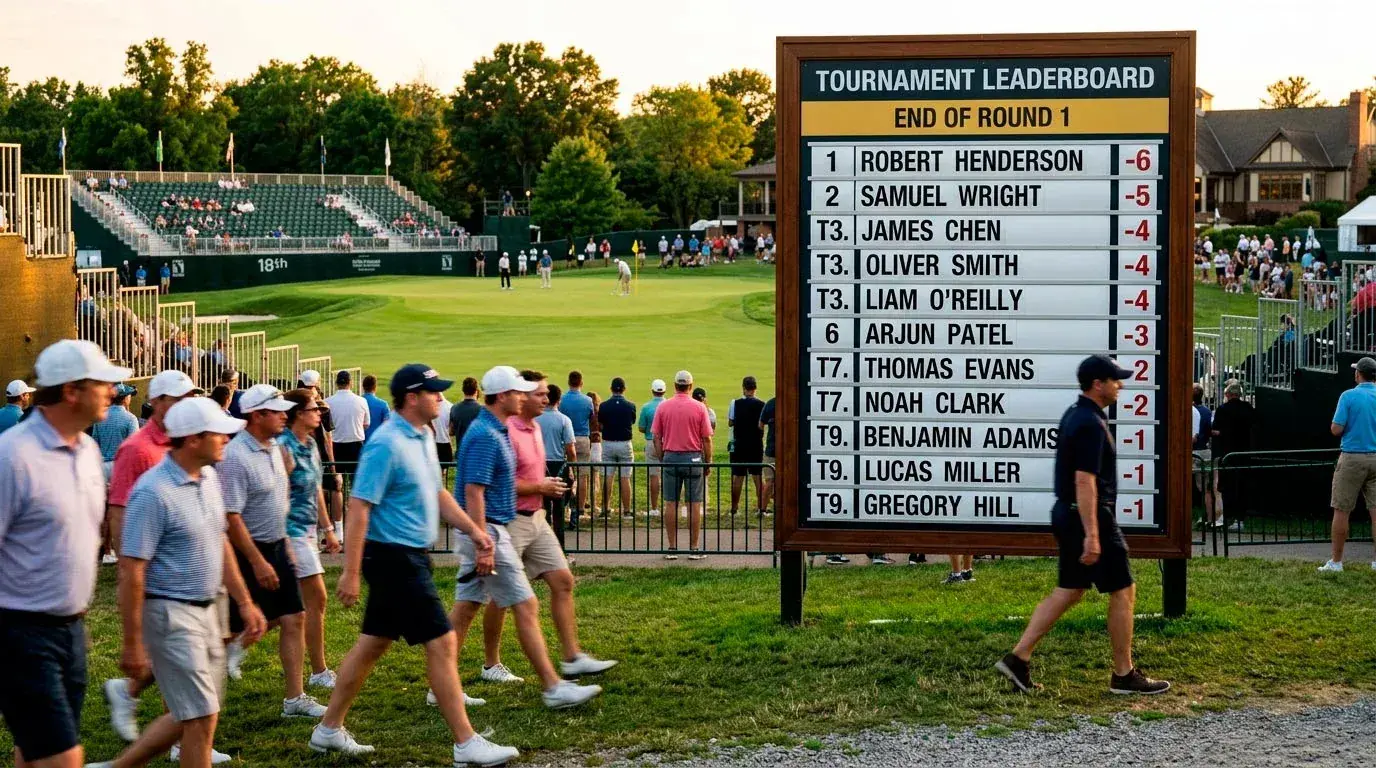
Tournament group winner markets take the reduced-field concept further. Instead of the on-course playing group, the sportsbook divides the entire field into groups of four to eight players — sometimes based on world ranking, sometimes geographically, sometimes arbitrarily — and offers a market on which player in each group will finish highest on the overall tournament leaderboard.
These markets operate on the same principle as three-ball bets but over the full 72 holes. Your selection does not need to win the tournament; they need to finish above three to seven other named players. The variance reduction is less dramatic than in a three-ball — 72 holes introduces more randomness than 18 — but the fundamental advantage of competing against a small defined subset rather than the entire field remains.
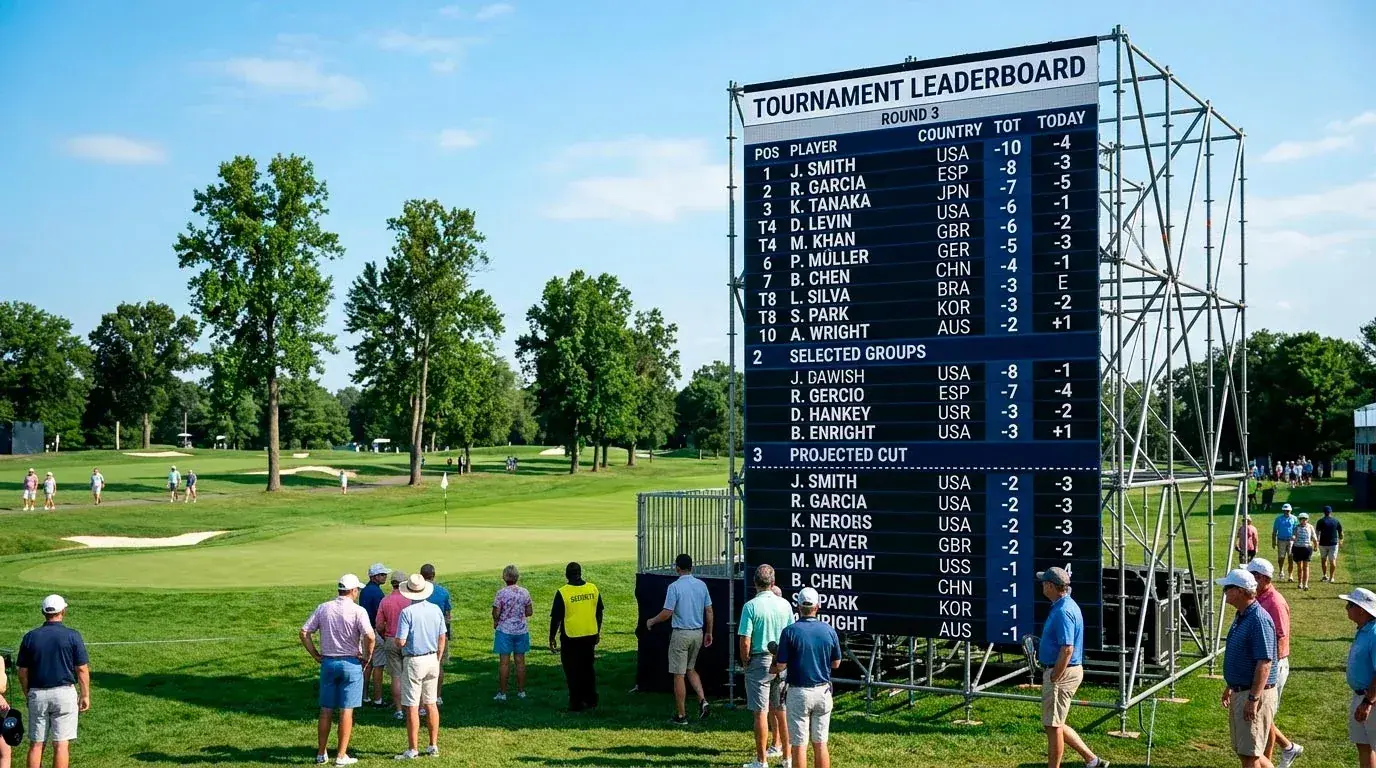
Pricing in tournament group markets tends to be less efficient than in three-ball markets. Three-ball prices are informed by well-understood round-by-round data; tournament group prices require the bookmaker to assess relative probability across an artificially constructed group over four rounds. The groupings themselves create analytical opportunity. If a bookmaker places three long hitters and one short-game specialist into the same group on a course that rewards approach play over driving distance, the short-game specialist may be underpriced because the bookmaker’s model weighted world ranking rather than course fit.
Availability varies significantly by operator and by tournament. Major championships generate the widest tournament group coverage — some UK sportsbooks offer 20 or more tournament groups for the Masters or The Open. Regular PGA Tour events might produce five to ten groups, while DP World Tour events often have none. If tournament group betting is a core part of your strategy, checking market availability across multiple platforms before each event is essential.
Dead heats occur more frequently in tournament groups than in three-ball markets, because tied finishing positions in a 72-hole tournament are more common than tied scores in a single round. When two players in a group finish on the same tournament score, dead-heat rules apply — your payout is divided by the number of tied players. A four-player group where your selection ties for the best position with one other player returns half the full winning payout. Understanding dead-heat mathematics is essential before committing to this market regularly.

Settlement and Dead-Heat Risk
Settlement rules in group betting are where the details matter, and where different operators diverge in ways that directly affect your returns. I learned this the hard way when a three-ball bet I thought I had won was settled as a dead heat because two of the three players tied on the same round score, and the sportsbook did not use countback to separate them.
Most three-ball bets are settled on the official round score. If two or all three players post the same score, dead-heat rules apply. Some operators use a countback method — last nine holes, last six, last three, last hole — to separate tied players, which reduces dead-heat frequency. Others do not, which means any tied score results in a dead heat regardless of how the round unfolded. The difference in settlement approach can change the effective value of a bet by 10-15% on a closely matched group, so checking the operator’s specific rules before placing a three-ball wager is a non-negotiable step.

Withdrawal rules vary similarly. If a player in your three-ball group withdraws before completing the round, some operators void the bet entirely and refund your stake. Others reduce the group to a two-ball and recalculate the payout. Still others settle the withdrawal as a loss for the withdrawn player and pay out on the remaining two as normal. These differences are not academic — player withdrawals happen in every tournament, and the rule that applies to your bet can turn a winning position into a void or a loss.
For tournament group winner markets, dead heats on overall tournament position follow standard dead-heat calculations. If your player ties for the best finishing position within the group with one other player, you receive half the payout. With two other players, one third. These fractional payouts compound with the already tighter pricing of group markets, so the effective return on a dead-heat outcome is often disappointing relative to the original price.
My approach to managing dead-heat risk in group betting is to factor an estimated dead-heat frequency into the price assessment before placing the bet. In three-ball markets, I estimate a 15-20% chance of at least one tie in any given group. For tournament group winners over 72 holes, I estimate 25-30%. I adjust the bookmaker’s price by the dead-heat probability to derive an effective price, and only bet if the effective price still represents value against my assessed probability.