


The Major That Keeps Moving
Every other major has a fixed identity. The Masters belongs to Augusta, The Open rotates among a known rota of links, and the US Open is defined by USGA severity. The PGA Championship is different. It rotates between venues that share no common thread beyond being large enough to host a major — and that rotation is both the challenge and the opportunity for bettors.
The combined prize fund across all four majors exceeded $77 million in 2025, with the PGA Championship contributing $19 million of that total. The purse is significant, the field is strong, and the market interest from UK punters is substantial. But where other majors allow punters to build course-specific models that carry over year after year, the PGA Championship demands a fresh analytical framework every time it moves to a new venue. That extra work deters casual punters and rewards those willing to do the research.
I approach the PGA Championship as a puzzle to be solved from scratch each year. The course profile changes, the key Strokes Gained categories shift, and the type of player who contends can vary dramatically from one edition to the next. That variability means less market efficiency, because bookmakers face the same analytical challenge punters do — and when everyone is less certain, prices are softer.
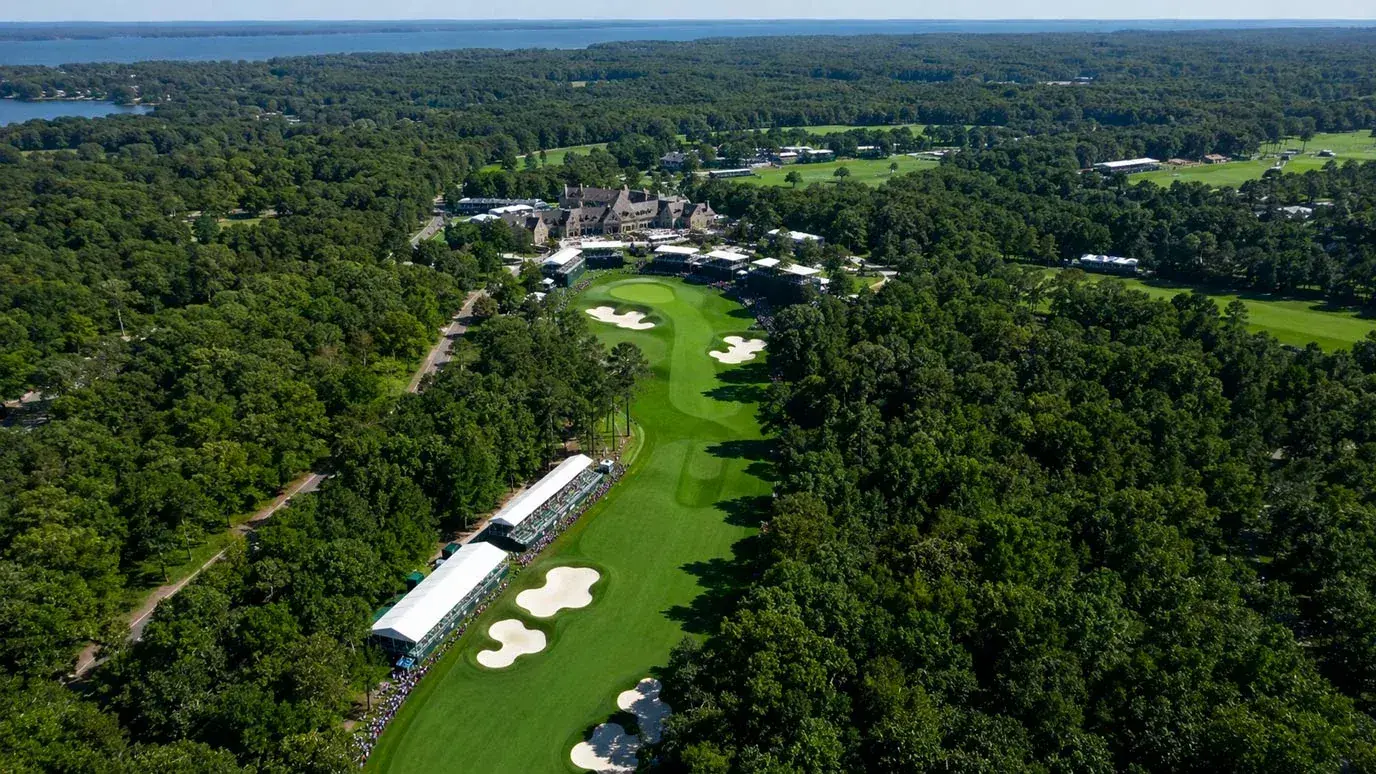
Rotating Venues and Course Analysis
When I heard the PGA Championship was heading to a course I had never studied, my first instinct was frustration. My second was excitement — because an unfamiliar venue means the market has less information to work with, and information asymmetry is where value lives.
The PGA of America selects host venues from a diverse pool: Valhalla (a long, soft parkland in Kentucky), Oak Hill (a classic Donald Ross layout in New York), Quail Hollow (a modern, punishing track in North Carolina), and several others. Each demands a different player profile. Valhalla rewards bombers who can overpower wide fairways. Oak Hill rewards precision and bogey avoidance on narrow, tree-lined holes. Quail Hollow rewards complete players who can handle dramatic elevation changes and a brutal closing stretch.
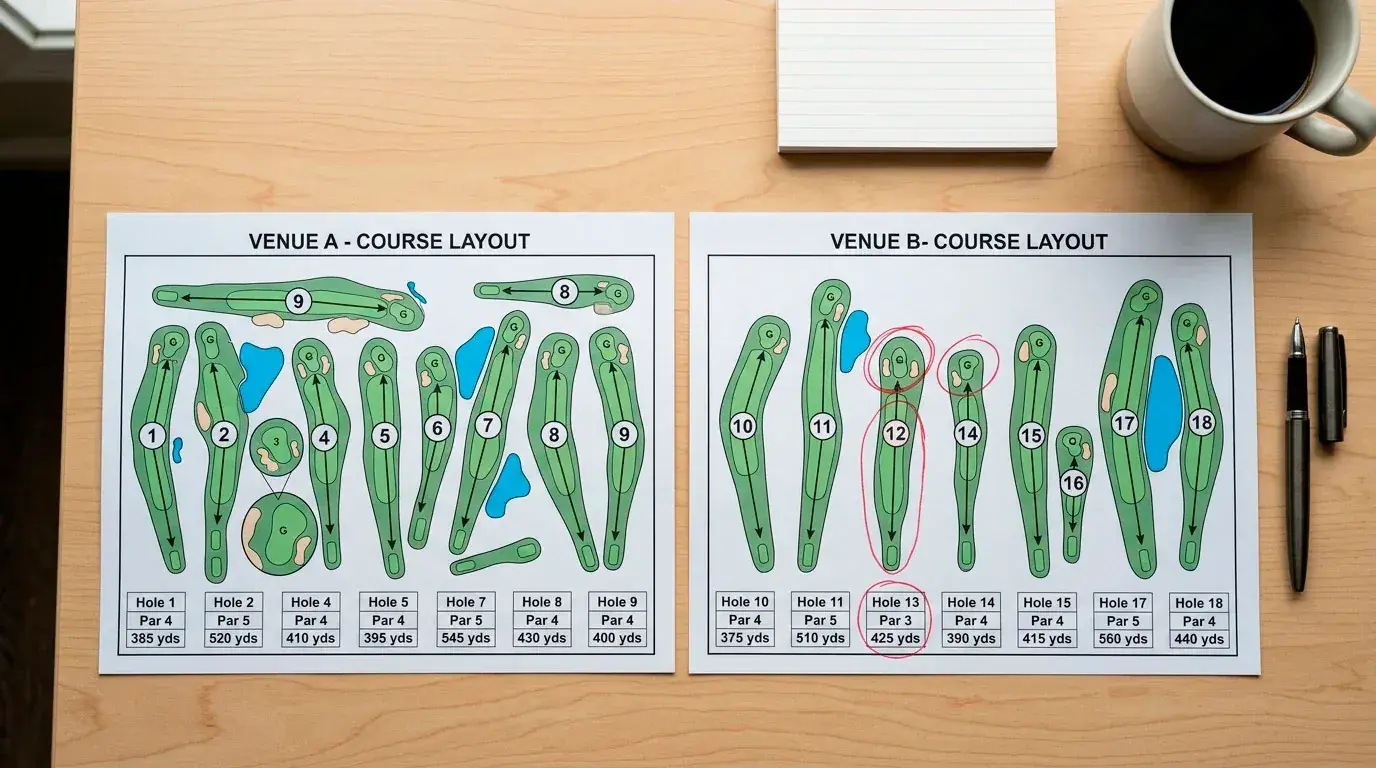
My research process for each PGA Championship venue starts with the Strokes Gained data from the PGA Tour. The system has tracked granular SG categories since 2016, and that depth of data allows me to map the venue’s demands against each player’s strengths. I pull yardage, fairway width, green size, and green-complex severity from course guides, then identify which SG categories correlate most strongly with success at comparable tracks. If the venue is long and wide, SG: Off-the-Tee (specifically distance) is weighted heavily. If it is tight and demanding, SG: Approach and bogey avoidance take priority.
The ShotLink system — using radars, lasers, and cameras to track every shot on the PGA Tour — provides the raw data for this analysis. Without ShotLink, course-fit modelling for rotating venues would be largely guesswork. With it, I can compare how a venue’s statistical fingerprint matches historical data from similar tracks, even when the PGA Championship is visiting a course for the first time. The key is identifying comparable venues in the PGA Tour schedule that share similar yardage, fairway width, and Strokes Gained demand profiles, then using performance at those tracks as a proxy for expected PGA Championship performance.

PGA Championship Betting Angles
Three specific angles have produced consistent returns for me at the PGA Championship over the past seven years, and each exploits a different market weakness.
The first is the venue-rotation discount. Because the PGA Championship moves to a new course (or returns to one after a gap of several years), bookmakers cannot rely on deep course-history databases. This means their pricing models lean more heavily on general form metrics — world ranking, recent results, seasonal Strokes Gained averages — and less on course-specific data. Punters who do the work to profile the specific venue can identify players whose general form underrepresents their suitability for that particular track. I have found this edge to be worth two to three percentage points of implied probability on well-researched selections.

The second angle is the “cold venue” effect on big names. Top-ranked players carry short prices regardless of venue because the market assumes elite quality transfers universally. But certain course types penalise specific weaknesses. A player who ranks second in the world but struggles with accuracy off the tee will be overpriced at a PGA Championship venue that demands precise driving. The market gives too much credit to reputation and not enough to course-skill matching.
The third angle is the timing of PGA Championship odds. Because the venue is announced well in advance but the detailed course setup is not finalised until shortly before the event, ante-post prices released months early carry wider margins than at fixed-venue majors. I typically place an initial position ante-post at the broader price, then reassess once the course setup details emerge. If the setup confirms my original thesis, I hold. If it undermines it, I accept the loss and move on. This two-stage approach has protected me from several PGA Championship bets that would have lost had I committed my full stake at the early price.
Beyond these three angles, the PGA Championship’s field composition offers a subtler edge. The PGA of America extends invitations through a wider range of qualifying criteria than the other majors, including places for club professionals and PGA of America section champions. These players occupy spots in the field but realistically have no chance of contending, which inflates the field count without increasing the number of genuine competitors. The effective field at a PGA Championship is typically 20 to 30 players smaller than the headcount suggests. Adjusting probability estimates for this effective field size — rather than the official one — produces slightly shorter true odds on contenders, which occasionally reveals value when the bookmaker prices against the full listed field.

Weather is a final consideration worth noting. The PGA Championship is played in May, and its rotating venues mean that conditions range from the humid heat of the American South to cooler, windier setups in the Mid-Atlantic or Midwest. May weather is less predictable than the stable summer conditions of the US Open or the British coastal patterns of The Open, adding another layer of uncertainty that benefits punters who monitor forecasts closely and delay final bet placement until conditions are clear.