

The Variable Nobody Prices Correctly
Royal Liverpool, 2023 Open Championship. I had spent two weeks building a model that weighted links-golf skills, recent form, and course history. On Wednesday evening I glanced at the weather forecast, saw 25 mph winds predicted for the Thursday afternoon wave, and rebuilt half my card in ninety minutes. That Thursday, the morning wave averaged 2.3 strokes fewer than the afternoon wave. Three of my four pre-tournament selections were in the favourable draw. Weather did not just influence the result — it restructured the entire probability landscape before a ball was struck.
The Strokes Gained framework was introduced by the PGA Tour in 2011, with additional granular categories — SG: Off-the-Tee, Approach, Around-the-Green — arriving from 2016. That system transformed how we analyse player ability, but it captures performance under the conditions that existed, not under the conditions that will exist. A player’s Strokes Gained profile on a calm Tuesday practice round tells you very little about how he will perform on a Saturday with 30 mph gusts and horizontal rain. Weather is the variable that sits outside the statistical record and inside every tournament result.
This guide breaks down how wind, rain, and draw bias affect golf betting, with specific thresholds and practical approaches for factoring conditions into your selections. For a broader look at matching players to courses, course-fit analysis provides the complementary framework.
Wind and Scoring Impact
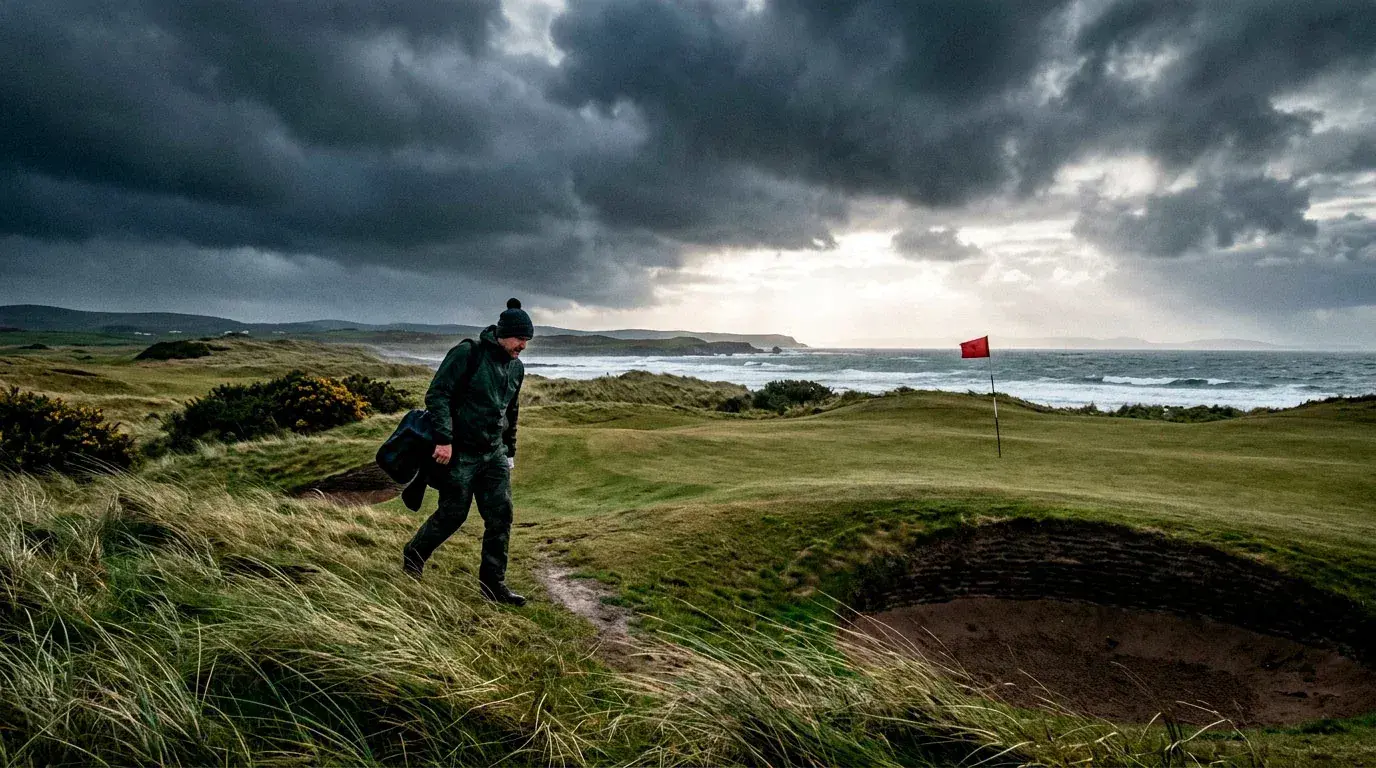
Every golfer knows wind changes the game. What fewer bettors appreciate is the non-linear relationship between wind speed and scoring. At 10 mph, a field of tour professionals adjusts without significant scoring inflation. At 15 mph, scoring averages rise by roughly half a stroke per round. At 20 mph and above, the relationship steepens sharply — scoring inflation accelerates because wind at that speed does not just add difficulty to good shots, it turns marginal shots into disasters. A slightly offline drive that would find the rough in calm conditions finds a fairway bunker in a crosswind, or worse.
The Open Championship 2025 carried a prize fund of $17 million — the winner collecting $3.1 million — but the fund remained flat from the previous year for the first time since 2012. What made that tournament compelling from a betting perspective was not the prize money but the conditions. Links golf amplifies weather effects because the open terrain offers no protection from wind. Parkland courses with tree-lined fairways buffer wind speed at ground level; links courses channel and accelerate it. A 20 mph forecast on a links course plays more like 25 mph on exposed holes.

Player skill differentiation under wind follows a pattern I have tracked across five years of Open Championship data. Long hitters who rely on high ball flights suffer most in strong winds — the ball hangs in the air longer, giving the wind more time to act. Players who flight the ball low, who can hit controlled three-quarter shots and shape trajectory on demand, see their relative advantage increase as wind speed rises. Driving distance becomes less important; driving accuracy and trajectory control become more important. This reshuffles the outright market in ways that Strokes Gained averages — computed across a mix of calm and windy conditions — do not fully capture.

For practical purposes, I treat 15 mph as the threshold above which wind becomes a primary factor in my analysis, and 20 mph as the threshold above which it becomes the dominant factor. Below 15 mph, standard Strokes Gained analysis applies with minimal adjustment. Between 15-20 mph, I increase my weighting on wind-performance indicators — specifically, historical scoring on windy courses and trajectory control metrics. Above 20 mph, I start from scratch, building the card around wind specialists rather than adjusting a pre-existing model.
Draw Bias: Morning vs Afternoon
Draw bias is one of the few genuinely predictable edges in golf betting, and it is consistently underpriced by bookmakers because the outright market is set before the draw is published. Strategic data partnerships are expanding across the sports industry, and the PGA Tour’s data infrastructure continues to grow — yet the draw bias edge persists because most casual bettors do not check which wave their selections are in.
The mechanism is straightforward. At most PGA Tour and Open Championship events, the field is split into two waves for the first two rounds. Half the field plays morning-afternoon on Thursday-Friday; the other half plays afternoon-morning. If weather conditions differ significantly between morning and afternoon — which they frequently do at coastal and links venues — one wave enjoys a scoring advantage through no merit of its own.
The advantage can be substantial. At links courses where afternoon sea breezes routinely increase wind speed by 10-15 mph over morning conditions, the morning-Thursday wave might average 2-3 strokes better over 36 holes. In an outright market where a single stroke can separate 10th place from 30th, a 2-3 stroke draw advantage is enormous. It does not guarantee a favourable result, but it shifts the probability curve meaningfully toward players in the better draw.

Timing is critical. Tee-time draws are typically published on Tuesday or Wednesday before the tournament begins. Weather forecasts for Thursday and Friday become increasingly reliable from Tuesday onward. The window for acting on draw bias information is narrow: once the draw is published and the weather forecast is clear, sharp bettors move quickly, and the outright prices begin to adjust. The best draw-bias value comes from placing bets immediately after the draw is confirmed but before the broader market reacts.
Not every tournament produces actionable draw bias. Inland parkland courses with sheltered layouts show minimal wave-to-wave variation. Desert courses with predictable afternoon heat may show a mild draw effect, but nothing comparable to links venues. I focus my draw-bias analysis on four event categories: The Open Championship, Scottish Open, and any tournament at an exposed coastal or links venue; and selected PGA Tour events at courses with known afternoon wind patterns, such as TPC Sawgrass or Pebble Beach.

Factoring Weather Into Selections
My process for integrating weather into a tournament card has three stages, and the timing of each stage matters as much as the analysis itself.
Stage one happens on Sunday or Monday before the tournament week: initial research without weather consideration. I build a preliminary card based on Strokes Gained profiles, course fit, and recent form. This card represents my “neutral conditions” selections — the players I would back if weather were not a factor. The purpose of this stage is to separate the analytical signal from the weather noise. If a player does not make the card under neutral conditions, weather alone should not push them onto it.
Stage two happens on Tuesday and Wednesday: weather overlay. I check the multi-day forecast for the tournament venue, focusing on wind speed, wind direction, precipitation probability, and temperature swings between morning and afternoon. If the forecast is benign — light winds, dry, consistent temperatures — the neutral card stands. If the forecast shows significant weather, I filter the card through two questions: does this player’s skill profile suit these conditions, and is this player in the favourable draw?
Stage three happens on Thursday morning: final confirmation. Weather forecasts improve in accuracy the closer you get to the event. A Wednesday forecast of 20 mph winds on Thursday afternoon might become 25 mph by Thursday morning, or it might soften to 15 mph. I make final adjustments to stakes and, occasionally, add or remove a selection based on the updated forecast. This is also when I check for any course setup changes — moved pins, altered hole locations — that might interact with the expected conditions.
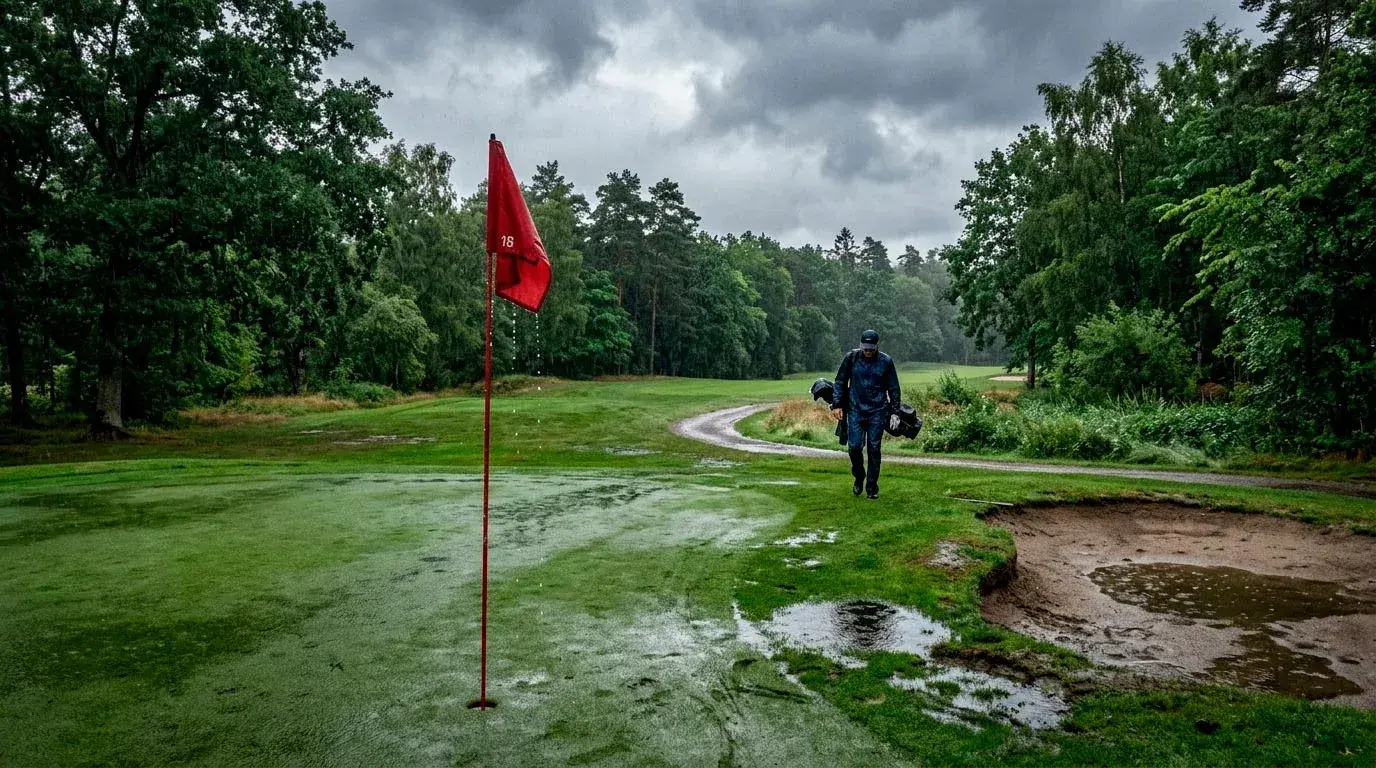
Rain deserves a separate note. Steady rain softens the course, reducing roll on drives and making the ball stop faster on approach shots. This favours accurate players who hit high, controlled approach shots — they can attack pins that would be unreachable on firm, fast surfaces. Rain also makes putting surfaces more receptive and slower, which narrows the gap between great putters and average ones. In heavy rain, the course plays significantly longer, which shifts the advantage toward players with length off the tee who can still reach par fives in two and hit mid-irons rather than long irons into par fours.