The Rule That Catches Every Golf Punter Off Guard
The first time dead-heat rules cost me money, I did not even realise what had happened. I had backed a player at 14/1 to finish top 10, he finished tied for ninth, and my payout was roughly half what I expected. I assumed the bookmaker had made an error. They had not. I simply did not understand dead heats, and that ignorance cost me real money on what should have been a winning bet.
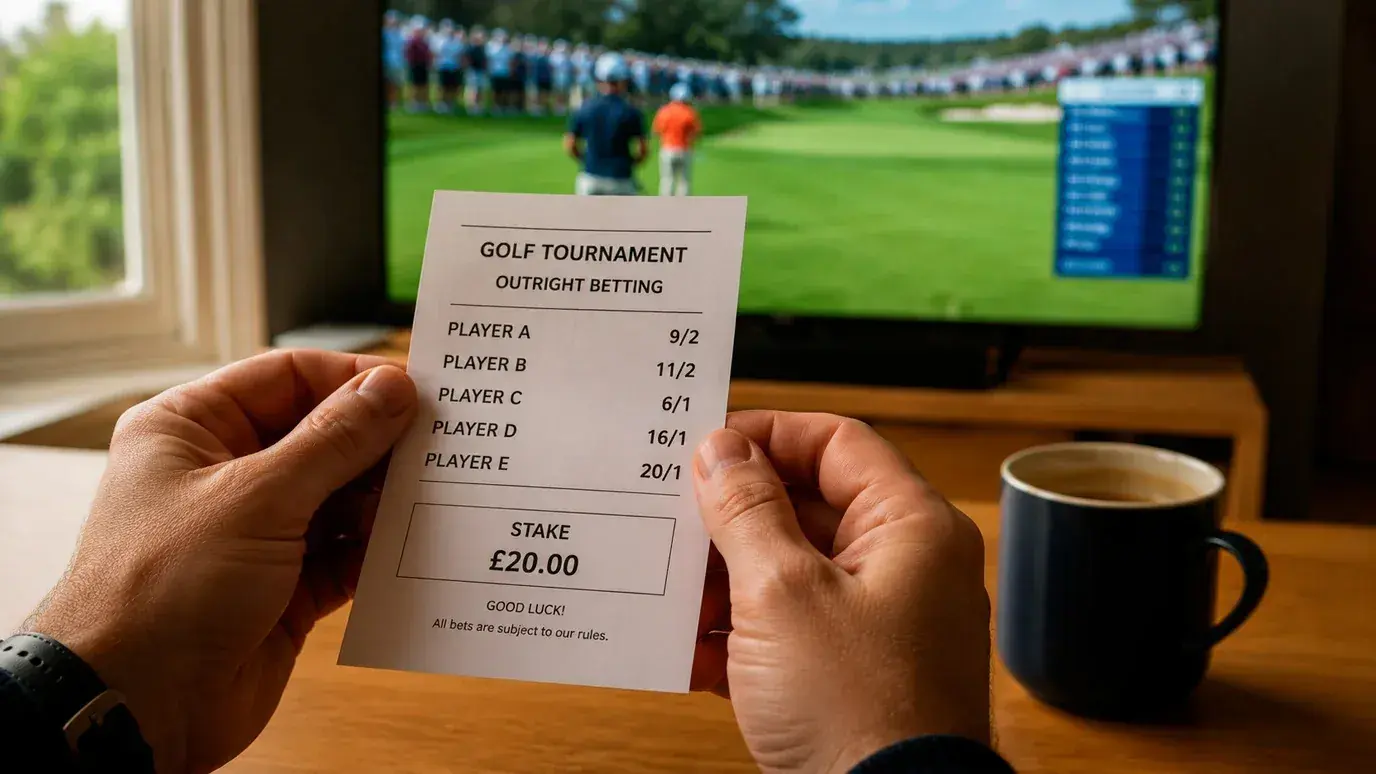
Dead heats are one of golf betting’s most misunderstood mechanics, and they are far more common in this sport than in any other. With outright markets accounting for 95% of UK golf betting volume and the majority of the remaining 5% concentrated in positional markets where ties occur regularly, understanding dead-heat settlement is not optional — it is fundamental. Every golf punter who bets on top-finish, first round leader, or place markets will encounter a dead heat. The question is whether you price that risk in advance or discover it in your returns.
This article works through the dead-heat formula, identifies which markets carry the highest exposure, and provides worked examples that make the settlement logic intuitive rather than mysterious.
The Dead-Heat Settlement Formula
Dead-heat settlement in golf betting follows a straightforward formula, but the way it interacts with your stake can feel unintuitive until you have seen it applied a few times.
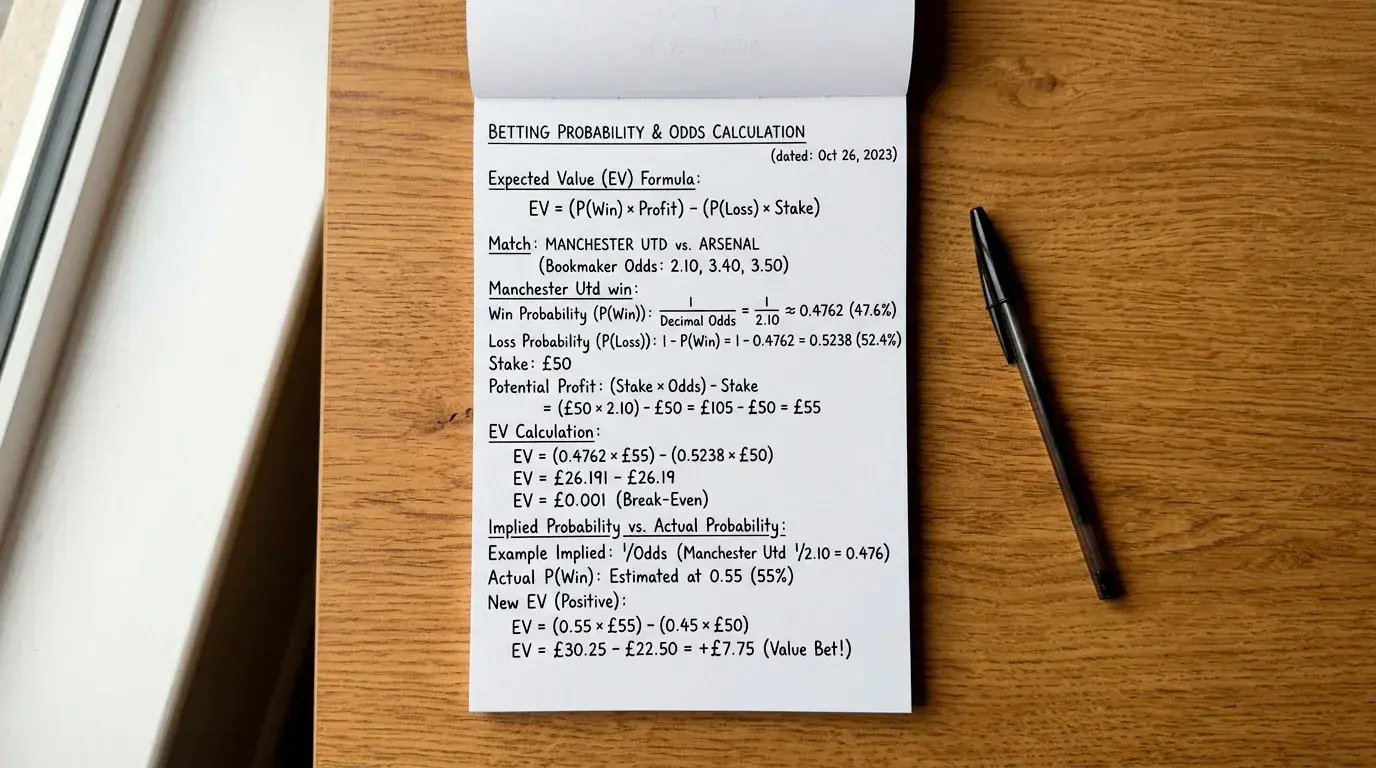
The core principle is this: when more players tie for a position than there are available places at that position, your stake is divided proportionally. The formula is: Payout = (Stake / Number of tied players) x (Number of places available to tied players) x (Odds + 1). In practice, the calculation is simpler than it appears. If two players tie for first and you backed one of them outright, your effective stake is halved. If three players tie for tenth and only one top-10 spot remains, your effective stake becomes one-third of your original wager.
Let me walk through a concrete scenario. You place a GBP 10 bet on a player at 20/1 to win a tournament outright. He ties for first with one other player. No playoff occurs for settlement purposes in most bookmaker terms — the dead-heat rule applies. Your effective stake is GBP 10 / 2 = GBP 5. Your payout on the winning portion is GBP 5 x 21 (20/1 + your stake) = GBP 105. Your total return is GBP 105, compared to the GBP 210 you would have received as a sole winner. The difference — GBP 105 — is the dead-heat cost. It is not a penalty or a fee; it is the mathematical consequence of sharing a position with another player.
The formula becomes more complex when applied to each-way bets, because both the win part and the place part can be affected by separate dead heats. If your player ties for first on the win portion and also triggers a dead heat on the place portion (because the number of tied players exceeds the number of remaining place spots), both components are reduced independently. I have seen scenarios where the combined dead-heat reductions on an each-way bet reduced the payout by 70% or more compared to a clean win, turning a seemingly excellent result into a marginal return.
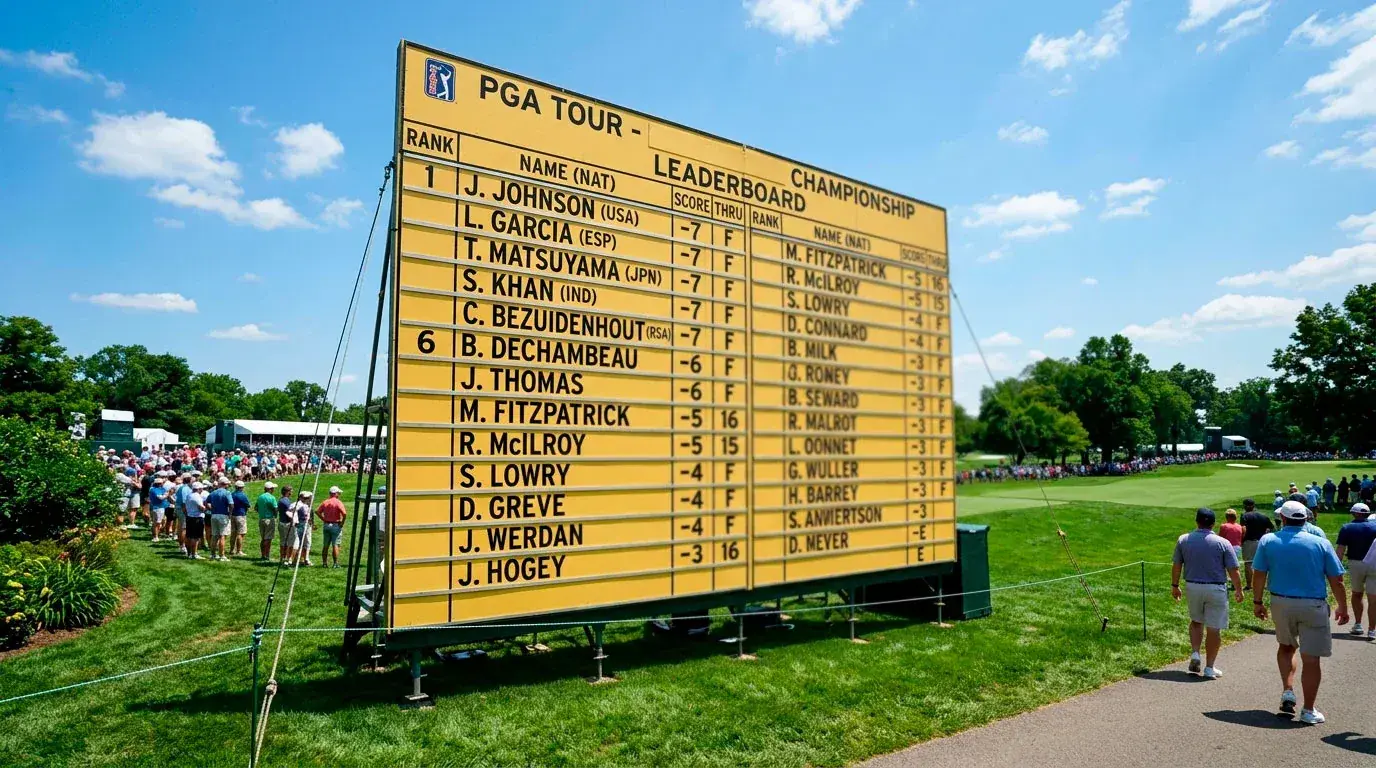
The critical insight for punters is that dead heats are not random bad luck. They are a structural feature of golf scoring, and their frequency is predictable. At any PGA Tour event, the probability of a tied lead after 72 holes is roughly 15% to 20%, depending on field strength and conditions. For positional markets (top 5, top 10), the probability of a dead heat at the boundary is even higher — I estimate 30% to 40% based on my database of results.
Markets with the Highest Dead-Heat Risk
Not all golf markets carry equal dead-heat exposure. The risk varies dramatically depending on the market structure, and knowing where the risk concentrates allows punters to price it accurately.
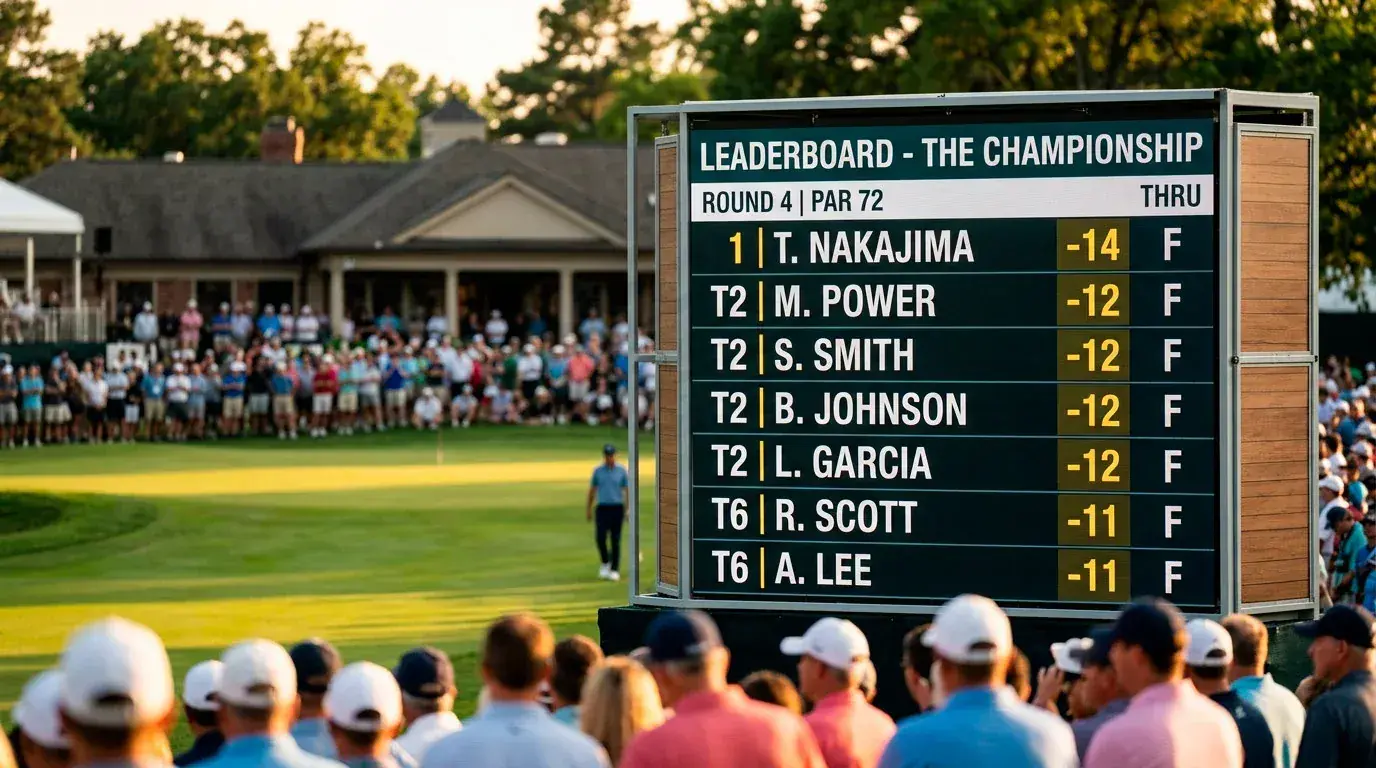
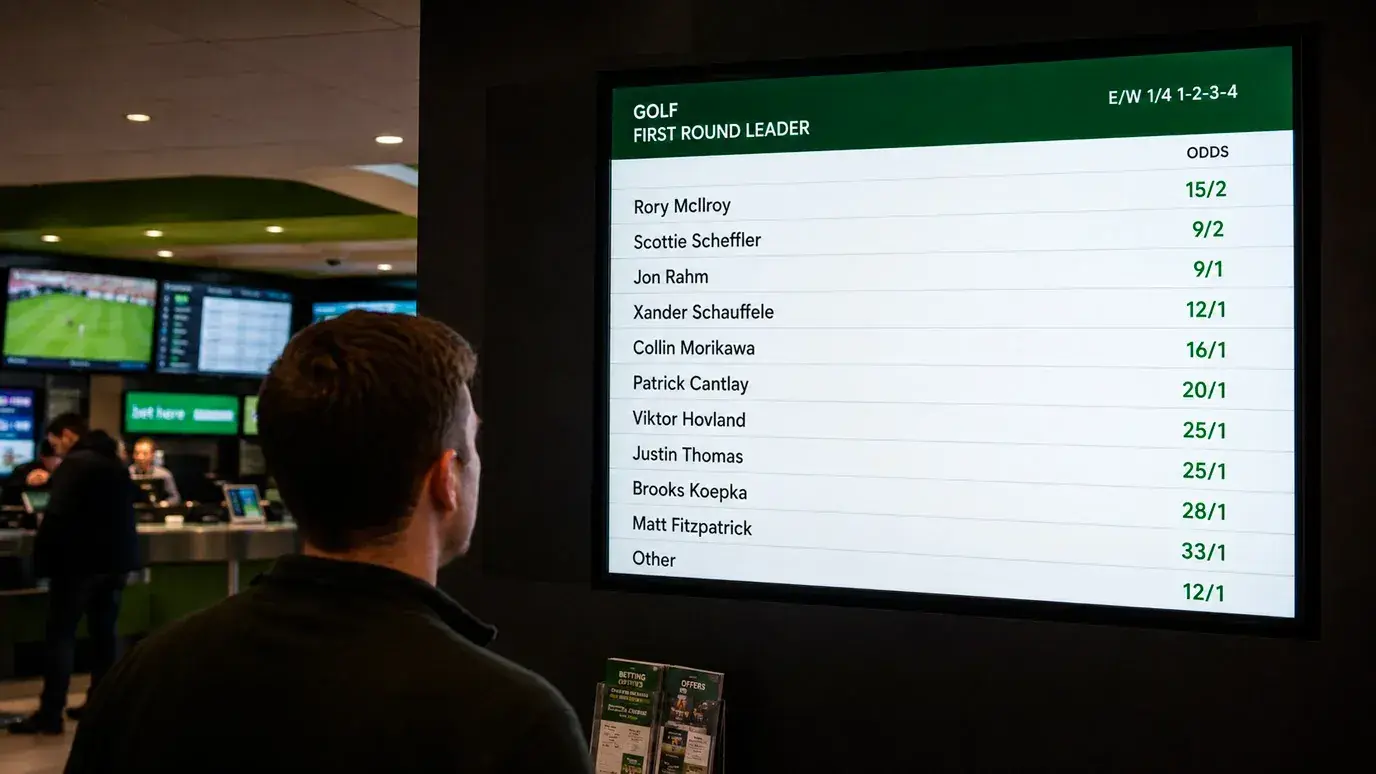
First round leader markets carry the highest dead-heat frequency of any golf market. As I noted in my FRL analysis, approximately 35% to 40% of PGA Tour first rounds produce a shared lead. This is because 18 holes provides far less scoring separation than 72 holes, and the field is large enough that multiple players shooting identical low scores is statistically expected. Major championship FRL markets are particularly exposed because the stronger fields produce tighter scoring distributions. The Masters generates 40% of all major-championship wagers, and its FRL market is among the most dead-heat-prone because Augusta’s par fives create clustering at the top of the leaderboard after round one.
Top-5 and top-10 finish markets are the second most exposed category. The boundary effect — where the cutoff for “top 5” or “top 10” falls on a specific position — creates dead-heat risk whenever players tie at that boundary. In my tracking, roughly one in three top-10 bets that “win” are affected by a dead heat at the boundary, with the average payout reduction sitting around 30% to 40% of the expected full-odds return.
Outright markets carry the lowest dead-heat risk because tied finishes at the top of a 72-hole leaderboard are resolved by playoffs in the actual tournament. However, bookmaker settlement rules typically do not follow the playoff result — they settle the outright market on the 72-hole score, applying dead-heat rules regardless of who wins the playoff. This catches many punters by surprise. You can back a player who wins a tournament in a playoff and still receive only half the payout because the bookmaker settled the market as a dead heat based on the regulation score.

Worked Dead-Heat Examples
Let me put numbers to the three most common dead-heat scenarios in golf betting, because abstractions are less useful than seeing the actual settlement in pounds and pence.
Example one: outright dead heat. You back Player A at 40/1 for GBP 10. He ties for first with Player B after 72 holes. Dead-heat settlement: (GBP 10 / 2) x 41 = GBP 205. Without the dead heat, the full payout would be GBP 410. The dead heat costs you exactly GBP 205 — half your expected return. The bookmaker does not care who wins the playoff; the 72-hole tie triggers the dead-heat reduction.
Example two: top-10 dead heat. You back Player C at 3/1 for a top-10 finish, staking GBP 20. Three players tie for ninth, with only two top-10 spots available among them. Dead-heat settlement: (GBP 20 x 2/3) x 4 = GBP 53.33. Without the dead heat, the full payout would be GBP 80 (GBP 20 x 4). The dead-heat reduction costs GBP 26.67 — a one-third reduction because two of three places were available to the tied players.
Example three: each-way dead heat. You back Player D each-way at 50/1 (GBP 10 win, GBP 10 place, total stake GBP 20). Place terms are 1/5 odds, paying five places. Player D ties for fifth with two other players, and only one place spot remains. The win part loses entirely (no dead heat on the win). The place part: (GBP 10 / 3) x (10/1 + 1) = GBP 36.67. Your total return from a GBP 20 total stake is GBP 36.67 — a profit of GBP 16.67. Without the dead heat, the place part alone would have returned GBP 110 (GBP 10 x 11). The dead-heat reduction turned a strong result into a modest one.

These examples illustrate a consistent pattern: dead heats always reduce your return but never eliminate it entirely (unless your stake is reduced to zero, which only happens when zero places are available to your selection among the tied players). The key takeaway for punters is to build dead-heat risk into your probability estimates before placing the bet, not to discover it after settlement.
