


The Market That Turns Golf Into a Two-Horse Race
I spent my first three years betting on golf exclusively through outright markets, and the losing streaks nearly broke me. Then a sharp punter I respected told me something that changed my approach entirely: “You don’t have to beat 155 players to make money from golf.” That was my introduction to matchup betting, and it remains the market where I find the most consistent edge.
Golf sits as the third most popular betting sport in the United Kingdom, with 15% of active bettors placing wagers on it. Yet the vast majority of that money flows into outright markets. Matchup bets — where you simply pick which of two or three golfers will finish higher in a tournament or round — represent a sliver of overall volume but a disproportionate share of opportunity. The reason is straightforward: when you reduce a 156-player puzzle to a contest between two individuals, the analytical task becomes dramatically more manageable. You are no longer guessing who wins the whole event. You are answering a much simpler question: which of these two players will play better this week?

That simplicity attracts analytical punters for good reason. Form analysis, Strokes Gained comparisons, and course-fit profiling become sharper tools when applied to a binary outcome. And unlike outright betting, where a single bad round from your selection sends you home empty-handed, matchup bets reward relative performance. Your player can shoot a mediocre 73 and still win the bet if his opponent shoots 75.
Two-Ball Versus Three-Ball Matchups
Not all matchup bets are built the same, and understanding the structural differences between two-ball and three-ball markets is essential before you place a single pound.
A two-ball matchup pairs two golfers against each other. You pick the one you believe will post the lower score over the specified period — typically a single round or the full tournament. The pricing resembles a tennis match: one player is favourite, the other the underdog, and the draw (a tied score) is sometimes offered as a third option. When a tie is included, the odds on both players lengthen because the probability is split three ways. When the tie is excluded, bookmakers apply dead-heat rules if the players finish level, and you receive half your stake multiplied by the full odds — an outcome that always feels like a partial loss even when the maths says it is fair.
Three-ball matchups add a third golfer and shift the probability structure. Instead of a roughly 50/50 proposition, you now need your selection to beat two opponents. The favourite in a three-ball typically sits around 6/5 to 6/4, with the underdog drifting out to 5/2 or longer. The dead-heat dynamic becomes more complex because three-way ties, while rare, do occur. More commonly, two of the three players will tie, and the dead-heat reduction applies to your payout.

My preference leans heavily toward two-ball matchups. The analytical clarity of a binary comparison suits data-driven methods far better than trying to model three-way interactions. When you isolate two players and compare their Strokes Gained profiles against a specific course’s demands, you can build a genuine probability estimate. With three balls, the additional variable introduces noise that I find difficult to model with confidence. That said, three-ball markets occasionally throw up value when the pricing on an underdog is lazy — when a bookmaker simply splits the residual probability evenly between the two non-favourites despite one of them being a clearly stronger fit for the course.

Round Matchups Versus Tournament Matchups
When I first started betting matchups, I assumed tournament-long head-to-heads were always superior because they gave the better player more time to assert his quality. Four rounds should smooth out the variance, right? In theory, yes. In practice, the distinction between round matchups and tournament matchups creates entirely different betting dynamics, and both have a place in a well-constructed betting strategy.
Round matchups settle after 18 holes. One round, one winner. The volatility is higher because a single bad hole can swing the outcome. A plugged lie in a bunker, a three-putt from nowhere, a wind gust on a par three — any of these random events can override the skill gap between two players. But that volatility is also what creates value. Bookmakers must widen their margins to account for single-round unpredictability, and those wider margins sometimes produce prices that overcompensate for the risk. With 290 million online bets placed monthly across UK sportsbooks, the sheer throughput of round-matchup markets means they are constantly being priced and repriced, creating windows of inefficiency for punters who move quickly.

Tournament matchups unfold over 72 holes and reward sustained quality. The better player wins more often, which is why favourites convert at a higher clip in tournament matchups than in round matchups. The catch is that withdrawal rules add a layer of complication. If one player misses the cut and the other survives, the surviving player typically wins the bet regardless of final position. But if both miss the cut, settlement rules vary between bookmakers — some void the bet, others settle based on the lower 36-hole total. Reading the small print before placing a tournament matchup bet is not optional.
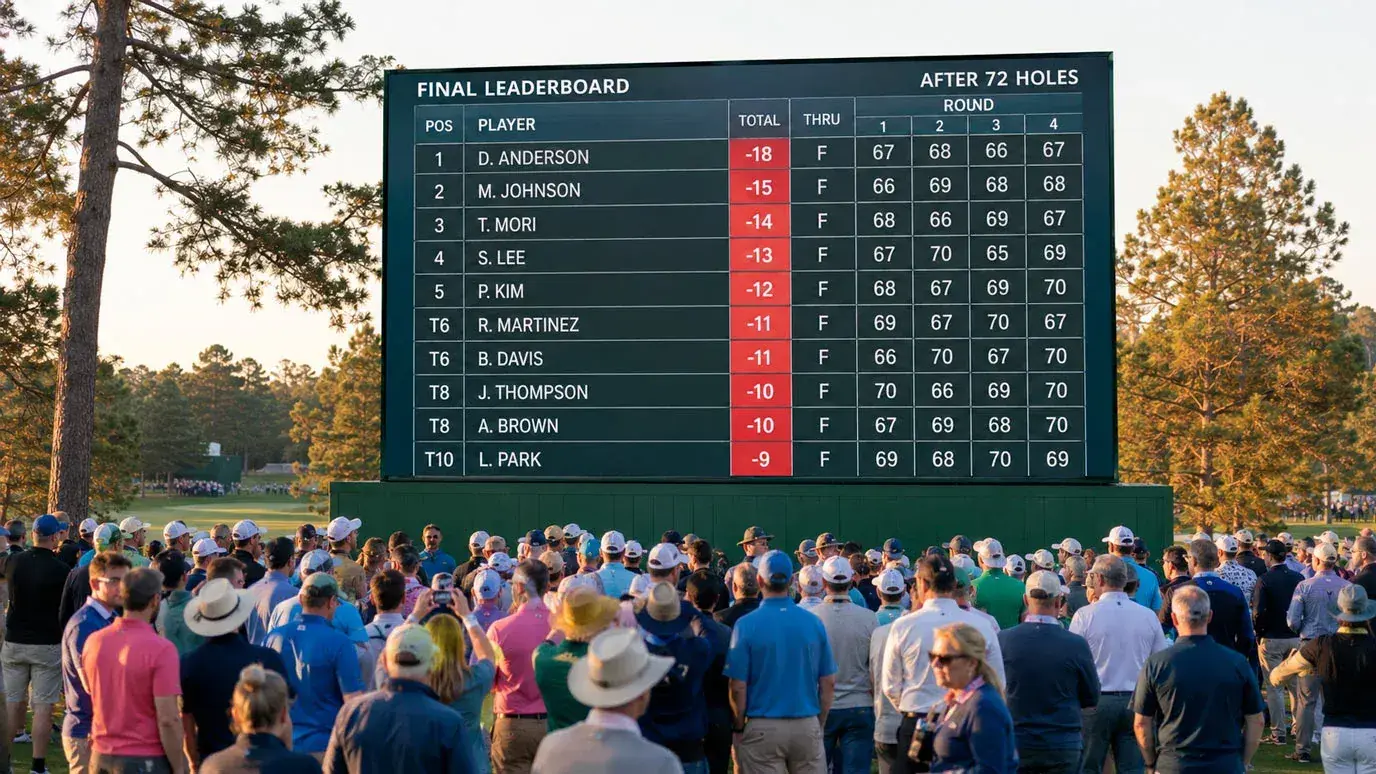
I allocate roughly 60% of my matchup activity to round bets and 40% to tournament bets. Round bets offer faster turnover and more opportunities per week, while tournament bets give me a chance to capitalise on larger skill gaps that become more reliable over four rounds. The mix keeps my exposure balanced and my analysis varied.
Building an Analytical Edge in Matchup Betting
The real power of matchup betting lies in how neatly it lends itself to structured analysis. I have a repeatable process for every matchup I assess, and it takes about 15 minutes per pairing.

First, I pull the Strokes Gained data for both players over their last 12 to 16 rounds. I focus specifically on the SG categories that matter most for the course in question. If the venue is a tight, tree-lined course that punishes wayward driving, SG: Off-the-Tee becomes the dominant factor. If it is a course with large, undulating greens that demand precision iron play, SG: Approach takes priority. I compare the two players on these course-relevant categories and form a preliminary view of who holds the statistical advantage.
Second, I check course history. A player with three consecutive top-25 finishes at a specific venue has demonstrated an ability to handle that track’s demands under tournament pressure. That track record adds weight to a statistical advantage or provides a reason to override a marginal statistical deficit. Third, I factor in current form — not just results, but the quality of ball-striking within those results. A player who finished 40th last week but gained two strokes on approach against a strong field is in better form than a player who finished 20th while losing strokes on approach against a weaker field.
Finally, I convert my assessment into a probability estimate and compare it to the bookmaker’s implied probability. If I rate Player A at 58% to beat Player B, and the bookmaker’s price implies Player A at 50%, I have identified value and I bet. If the gap is smaller than five percentage points, I pass. This discipline has kept me profitable in matchup markets over the last six seasons, even through stretches when my outright bets were bleeding red. For punters looking to extend matchup analysis to larger groups, golf group betting markets apply many of the same principles across three to ten player fields.
