

The Market That Settles on Friday
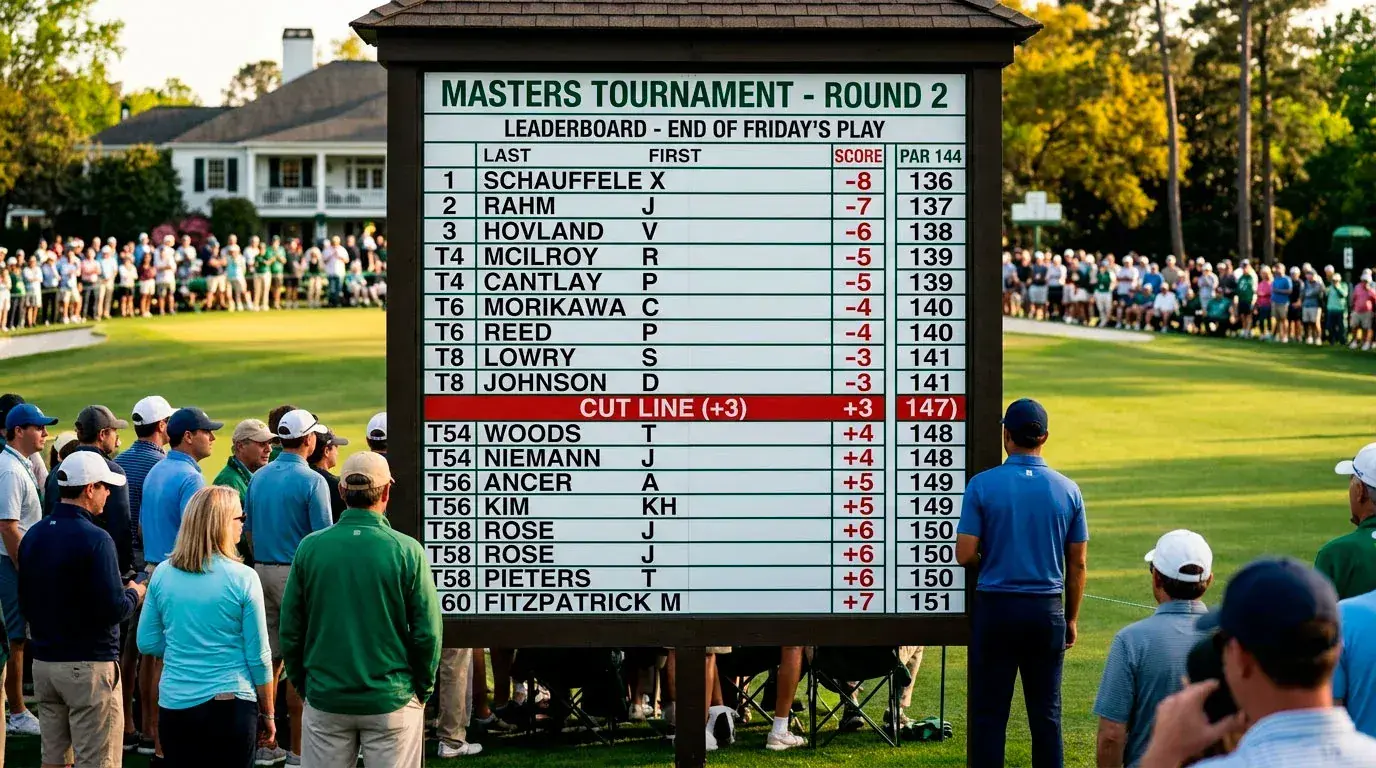
My introduction to make-the-cut betting was accidental. I had backed a player at 80/1 to win a PGA Tour event, and by Friday afternoon he was four over par and heading home. While reviewing his round-two scorecard, I noticed the cut line was projected at +3 — meaning a different player I had been considering, a steady ball-striker who rarely contended but almost never missed cuts, had been available at 4/7 to make the cut and had duly collected. That was the moment I realised there was a market where my knowledge of reliable, unglamorous players could generate consistent returns without needing anyone to win anything.
Outright markets account for 95% of all golf wagers in the UK, which means the make-the-cut market exists in the 5% shadow where analytical punters can operate with less competition and less bookmaker attention. Cut betting asks a fundamentally different question from outright betting: not “who will win?” but “who will survive?” The skill set required to answer that question overlaps with outright analysis but is not identical, and the pricing reflects a market that is smaller, less scrutinised, and — in my experience — less efficient.
This guide explains how cut markets are priced, which statistics best predict cut-making, and how to use this market strategically. For the statistical foundations that underpin cut analysis, golf betting statistics covers the relevant metrics in depth.
How Cut Markets Are Priced
The cut in professional golf eliminates roughly half the field after 36 holes. On the PGA Tour, the standard cut takes the top 65 players and ties after rounds one and two. Major championships vary slightly: the Masters uses the top 50 and ties, The Open and PGA Championship use the top 65 and ties, and the US Open has recently aligned with the 65-and-ties standard. The combined prize funds of the four majors exceeded $77 million in 2025, which ensures that the financial incentive to make the cut — even without contending for the title — is substantial.
Bookmakers price make-the-cut markets using a combination of world ranking, recent cut-making history, and course-specific form. A top-twenty player with a strong record at the tournament venue might be priced at 1/6 to make the cut — implying an 86% probability. A player ranked outside the top 100 with no course history might be 5/4 or longer, implying roughly 44%. The margin on cut markets tends to be tighter than on outright markets because the binary nature of the outcome — make or miss, no positions in between — makes the market more transparent and easier for sharp money to police.
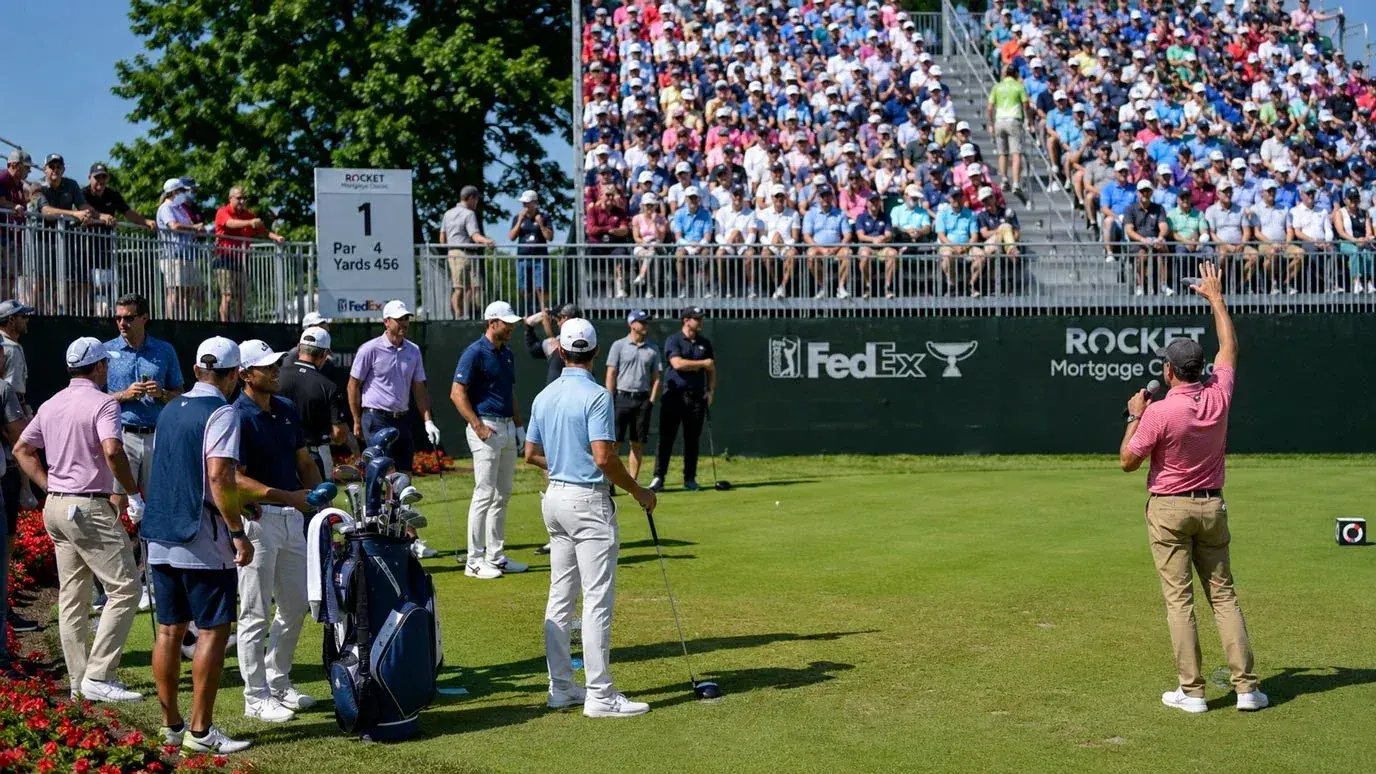
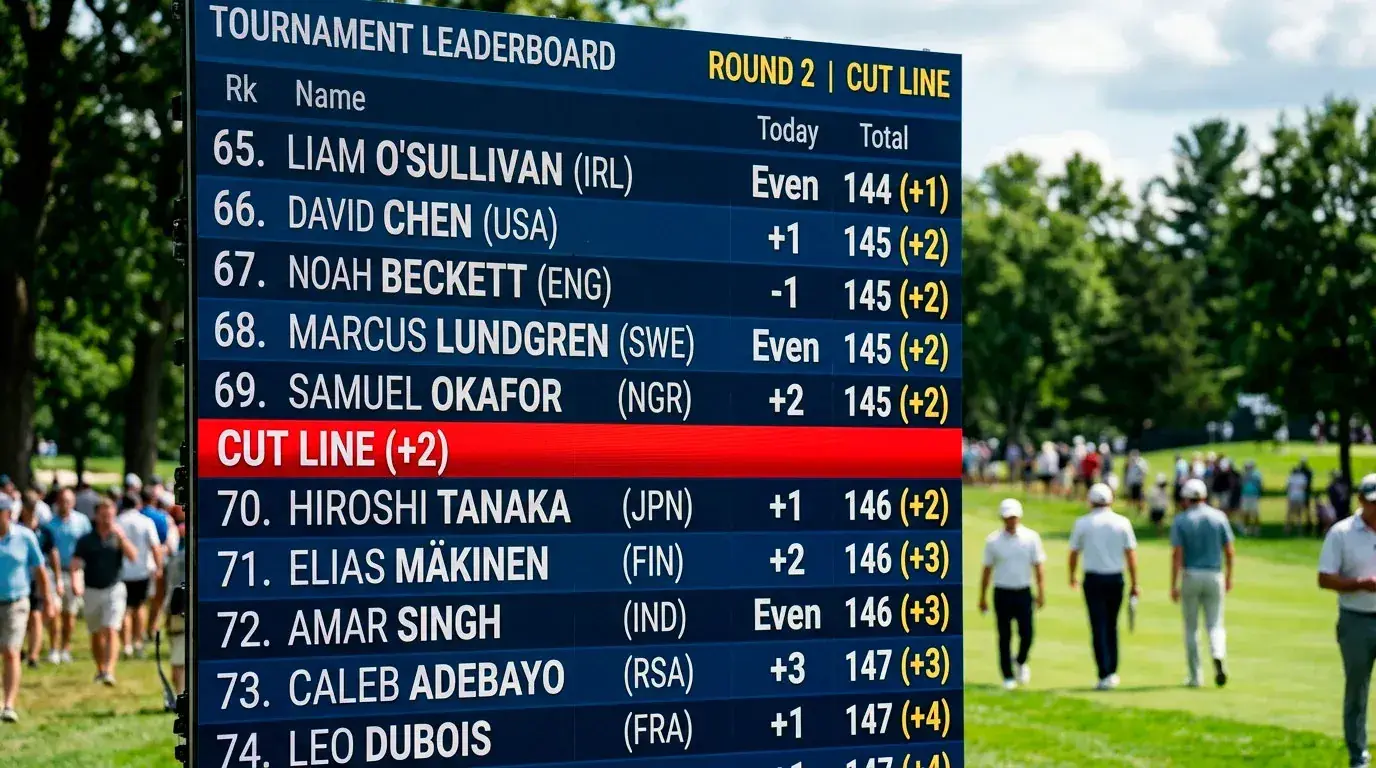
The projected cut line is the variable that drives the market. At a standard PGA Tour event on a soft, receptive course, the cut might fall at one or two under par. At a major championship on a demanding setup, the cut might be at even par or one over. At an extreme setup — a US Open where the USGA pushes conditions to the edge — the cut can fall at five or six over par. The higher the projected cut line, the easier it is for mid-tier players to make the cut, which compresses the pricing gap between favourites and outsiders.
Field strength directly affects cut probability. At an invitational event with 120 players, most of whom are highly ranked, the competition for 65 cut spots is fierce. At a regular tour event with a weaker field, where 20-30 players have limited tour experience, the cut spots are less contested and reliable ball-strikers have an easier path through Friday. My cut models weight field strength significantly — the same player might be a 75% cut probability at a weak-field event and a 60% cut probability at the Players Championship, even though his skill level has not changed.
Stats That Predict Cut-Making
The UK Gambling Commission publishes annual reports on gambling participation, with Chief Executive Andrew Rhodes noting that these reports help the regulator “understand children and young people’s exposure to, and involvement in, all types of gambling in Great Britain.” That regulatory attention extends to market integrity across all betting products, including cut markets. But the analytical challenge for punters is not integrity — it is identifying which performance metrics best predict a binary outcome that hinges on two rounds of golf.
Greens in regulation is the single strongest predictor of cut-making in my models. A player who consistently hits 65% or more of greens in regulation creates enough birdie and par opportunities to stay on the right side of the cut line in most field compositions. GIR is more stable than scoring average across small samples — two rounds is a small sample — because it measures a repeatable skill (approach play accuracy) rather than an outcome (score) that is influenced by putting variance, chip-ins, and other high-noise factors.

Bogey avoidance is the second-most predictive metric, and it captures something distinct from GIR. A player can hit a high percentage of greens but still make bogeys through three-putts or poor lag putting. Bogey avoidance reflects the ability to avoid mistakes — not just to create opportunities but to prevent damage. On demanding course setups where pars are valuable, bogey avoidance is often more predictive than birdie rate for cut-making purposes.
Round-one scoring is disproportionately important for cut prediction because the cut occurs after round two, and a poor first round leaves limited recovery window. A player who shoots 75 in round one needs a significantly better round two just to make the cut at even par. Players with strong round-one tendencies — those who start tournaments well, who are comfortable with Thursday morning nerves and course setup uncertainty — make cuts at higher rates than their overall skill level would predict. Round-one Strokes Gained, where available, is the most direct measure of this tendency.

Course history matters more for cut prediction than for outright prediction, in my experience. A player who has made the cut in four of his last five visits to a course carries genuine signal — he has demonstrated, repeatedly, that his game translates to this specific venue. The comfort factor of familiarity with the course layout, green complexes, and strategic demands contributes to consistent two-round performance even when the player’s overall form is modest.
Strategic Uses of Cut Bets
Cut bets serve three strategic purposes in a golf betting portfolio, and understanding all three explains why this market deserves more attention than it receives.
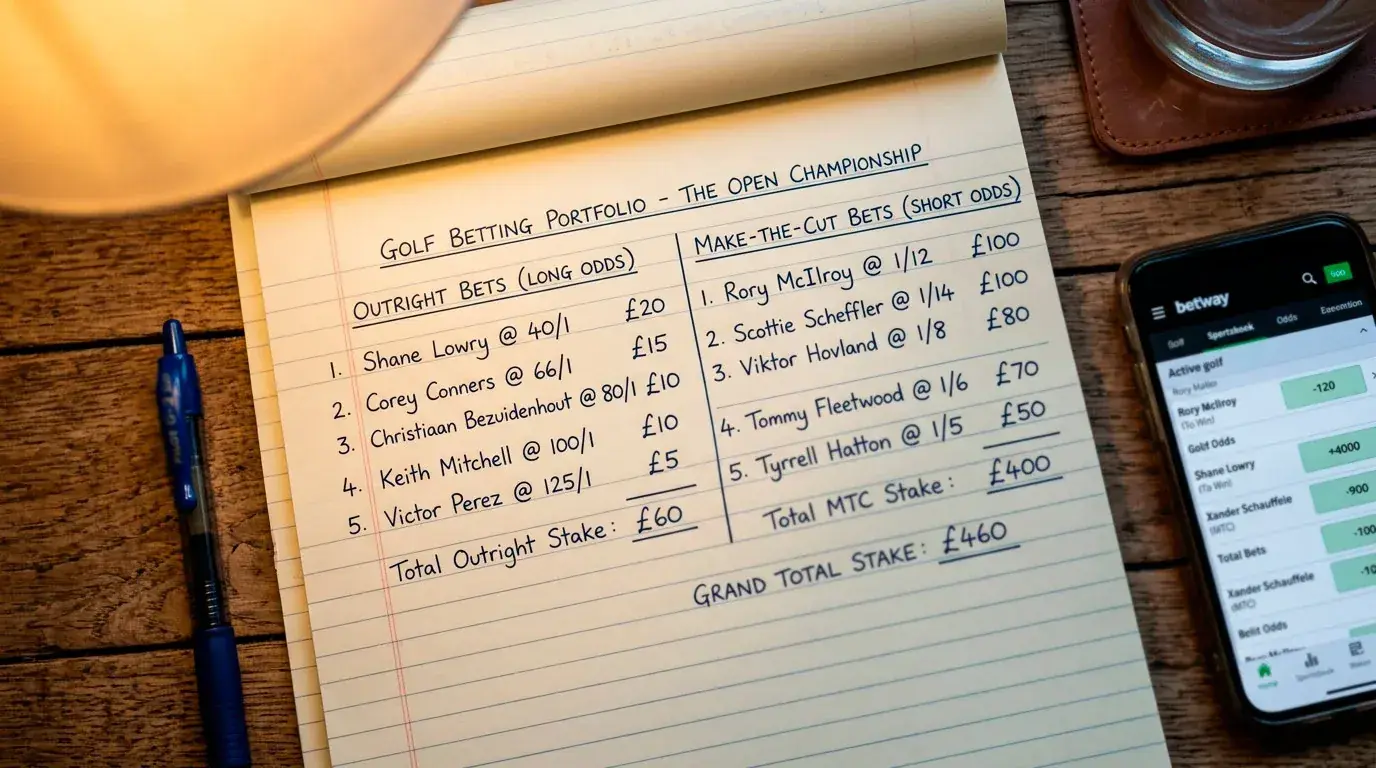
First, cut bets provide low-variance income. Outright golf betting is inherently high-variance — even the best selections win at rates of 5-15% depending on the price range. Cut bets on strong players win at rates of 70-85%, producing frequent small returns rather than infrequent large ones. For bettors who find the week-to-week variance of outright betting psychologically taxing, a portfolio that blends outright long-shots with reliable cut bets smooths the equity curve and makes the inevitable losing streaks more tolerable.
Second, cut bets create hedging opportunities. If you have backed a player at long odds to win the tournament and he is struggling after round one, a “miss the cut” bet on the same player at an appropriate price can recover part of your outright stake. This is not a strategy I recommend routinely — the margin cost of two opposing bets is significant — but in situations where a player is on the cut bubble with specific circumstances (injury, equipment issues) that your outright price did not account for, the hedge has mathematical justification.
Third, “miss the cut” bets — backing a player not to survive Friday — are an under-explored market for analytical punters. The public overwhelmingly bets on players to make the cut, which means bookmakers must balance their books by offering relatively generous prices on the miss-cut side. Players with poor course history, declining form, and statistical profiles that clash with the course setup can be genuine value bets to miss the cut at prices of 7/4 to 5/2. This is contrarian, it feels uncomfortable betting against someone, but the maths does not care about sentiment.

The practical limitation is stake size. Cut markets are low-liquidity relative to outright markets, and most UK sportsbooks cap stakes at modest levels — particularly on miss-cut selections where the bookmaker’s exposure on a single outcome is binary and immediate. Building a meaningful position often requires spreading bets across multiple operators, which adds administrative overhead but also takes advantage of price discrepancies between platforms.
