
Standard Versus Extended Place Terms
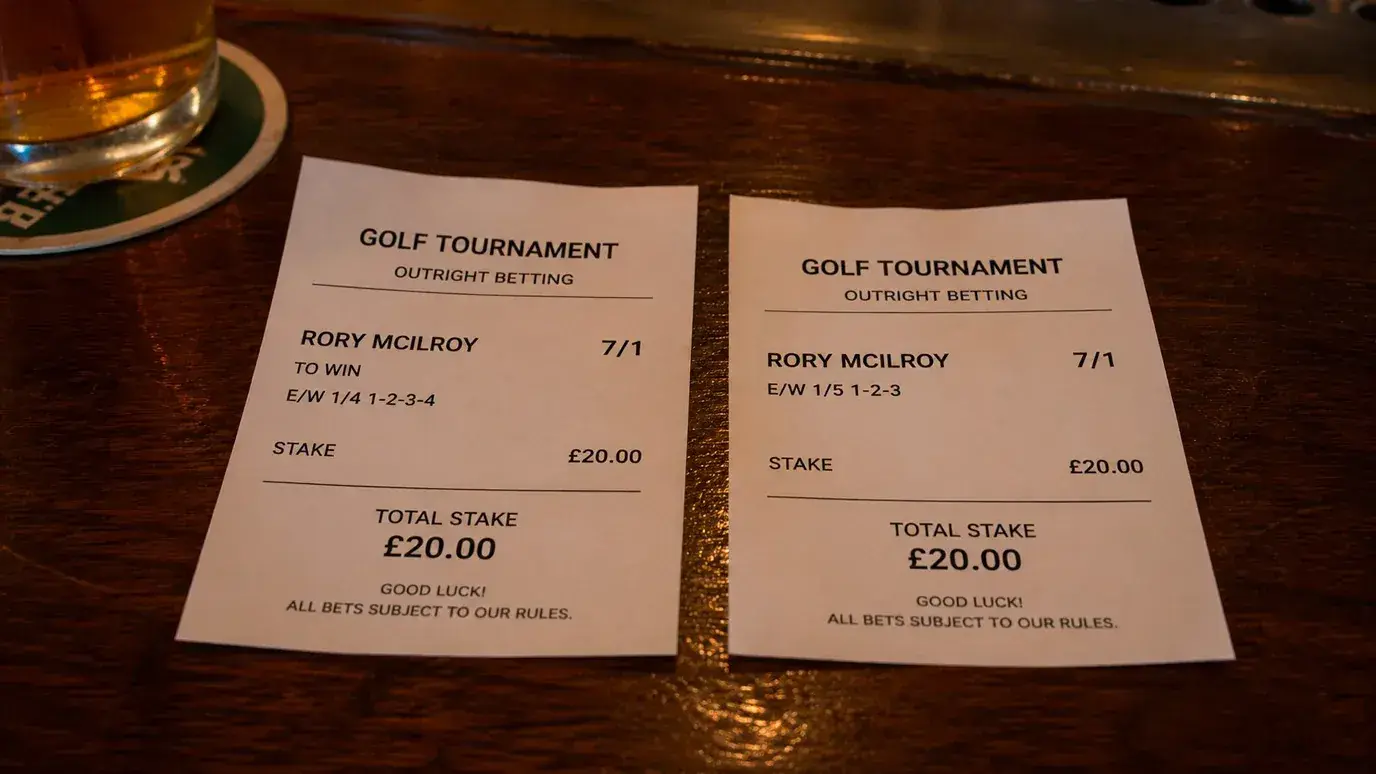
Standard place terms in golf vary by field size. For a full-field PGA Tour event with 156 runners, the typical UK bookmaker pays four or five places at 1/5 the outright odds. Some operators default to 1/4 odds on the place fraction for major events, which is more generous. The number of places paid increases as the field grows, but the relationship is not linear — it follows industry convention rather than mathematical logic.

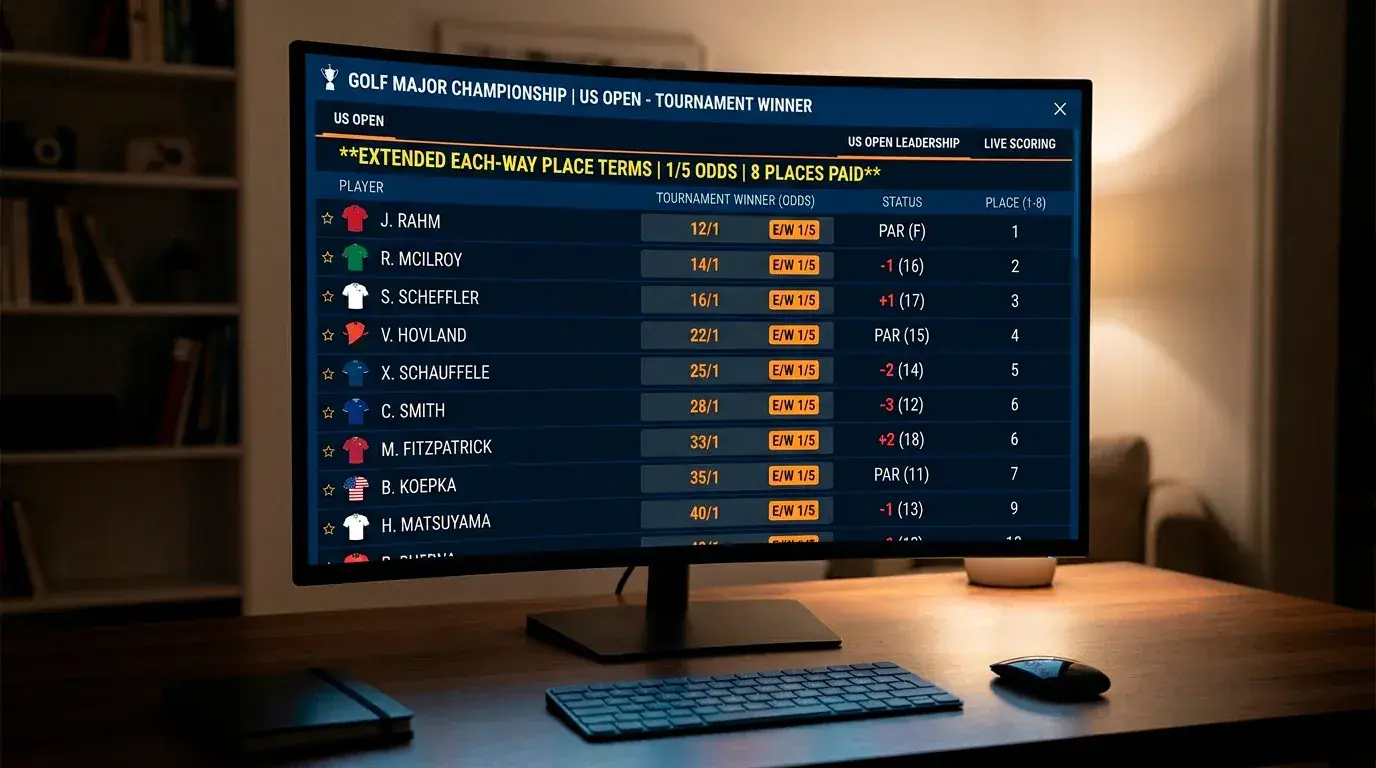
Extended place terms increase the number of qualifying positions beyond the standard allocation. During major championships and high-profile events, bookmakers routinely extend to six, eight, or even ten places. A bookmaker offering eight places at 1/5 odds during the Masters is paying place returns on nearly twice as many finishers as a competitor offering five places at the same fraction. For a player priced at 50/1, the difference between five and eight places can shift the expected value of the each-way bet from negative to positive.
Golf ranks as the third most popular betting sport in the UK, with 15% of bettors participating. Within that group, each-way betting is the default format for casual and experienced punters alike. Yet many punters accept whatever place terms their primary bookmaker offers without comparing alternatives. This is a mistake. The variation between operators on place terms for the same event can exceed 20% in expected-value terms, making it one of the single largest edges available to punters who are willing to hold accounts at multiple sportsbooks.

I maintain accounts with at least four UK bookmakers specifically to exploit differences in golf place terms. Before every major and most regular PGA Tour events, I compare the place offerings across my accounts and place each bet with the operator offering the most places. The time investment is minimal — perhaps five minutes per bet — but the cumulative impact over a season of 40-plus events is substantial.
How Extra Places Shift Expected Value
Pamela Maldonado, ESPN’s sports betting analyst, once said that the sharper approach to golf betting is “building a card with intention and direction” rather than spraying bets indiscriminately. That principle applies directly to place-term optimisation: every extra place you secure through operator comparison is an intentional, measurable improvement to your expected return.
The maths behind extra places is straightforward but powerful. Consider a player priced at 40/1 each-way. The place part pays 8/1 (40/1 x 1/5). At five places, the probability of a place return depends on the player finishing in positions one through five. Extend to eight places, and the probability jumps because the player now qualifies by finishing anywhere from first to eighth. If my model estimates that the player has a 25% chance of finishing top 8 versus a 18% chance of finishing top 5, the eight-place terms have increased my place-part expected value by roughly 39% without any change to the price.
The impact scales with odds length. For a 20/1 shot, the difference between five and eight places adds meaningful value but does not transform the bet. For a 100/1 longshot, the same extension can shift the each-way bet from a clear negative-EV proposition to a marginally positive one, because the place part — paying 20/1 at 1/5 odds — becomes the primary source of return, and every additional place dramatically increases the probability of that return landing.

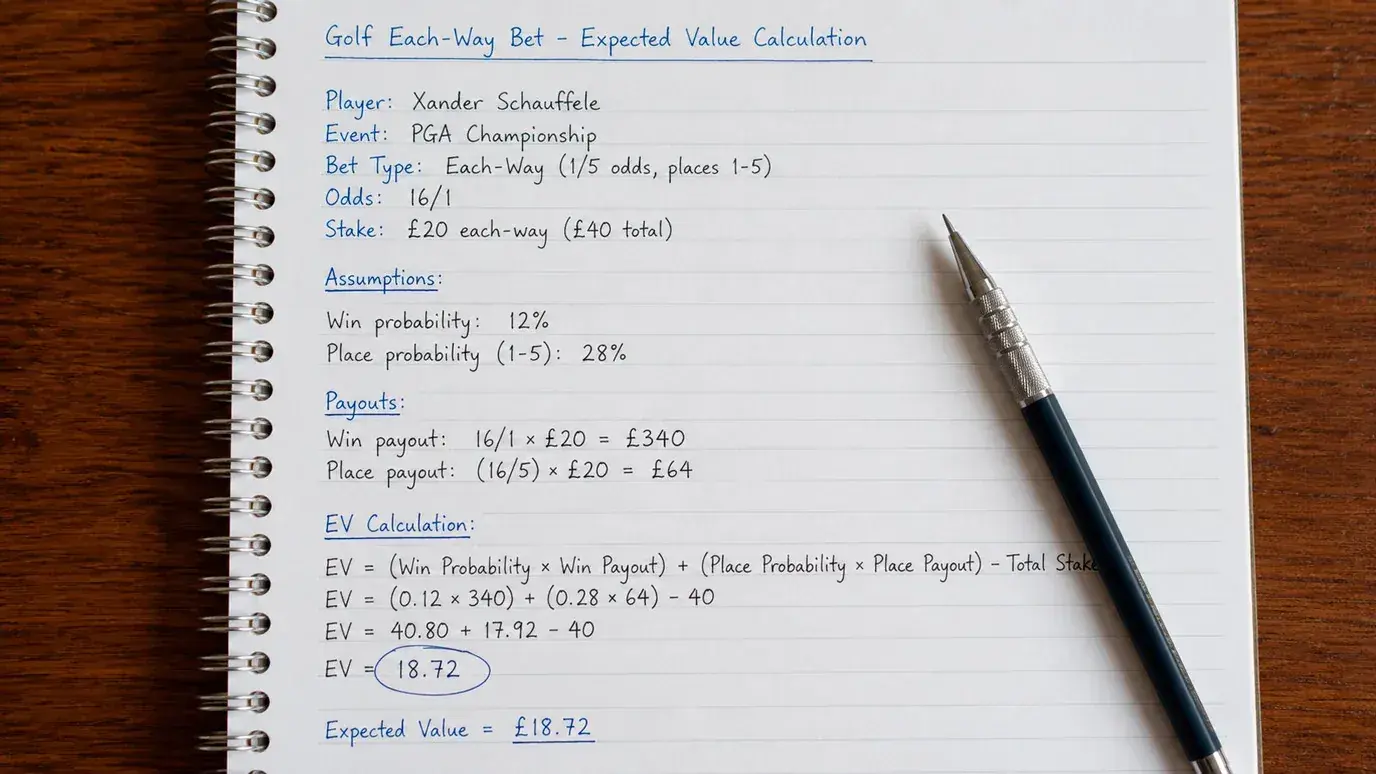
I calculate an adjusted expected value for every each-way bet I place, factoring in the specific place terms offered by the operator I am using. The formula is simple: (Win probability x Win payout) + (Place-only probability x Place payout) – Total stake. “Place-only probability” means the probability of finishing in a place position but not winning. Any bet where this adjusted EV is positive gets placed; any bet where it is negative gets passed. Place terms are the single largest determinant of whether that EV is positive or negative for mid-range and longshot selections.
Comparing Operator Place Terms
The UK market includes a dozen or more bookmakers who offer golf each-way betting, and their place terms vary more than most punters realise. During a typical PGA Tour event, the standard offering is four or five places at 1/5 odds. During majors, the range expands dramatically: some operators offer five places at 1/5, others offer eight places at 1/5, and a few extend to ten places at 1/4 or 1/5 as a promotional enhancement.
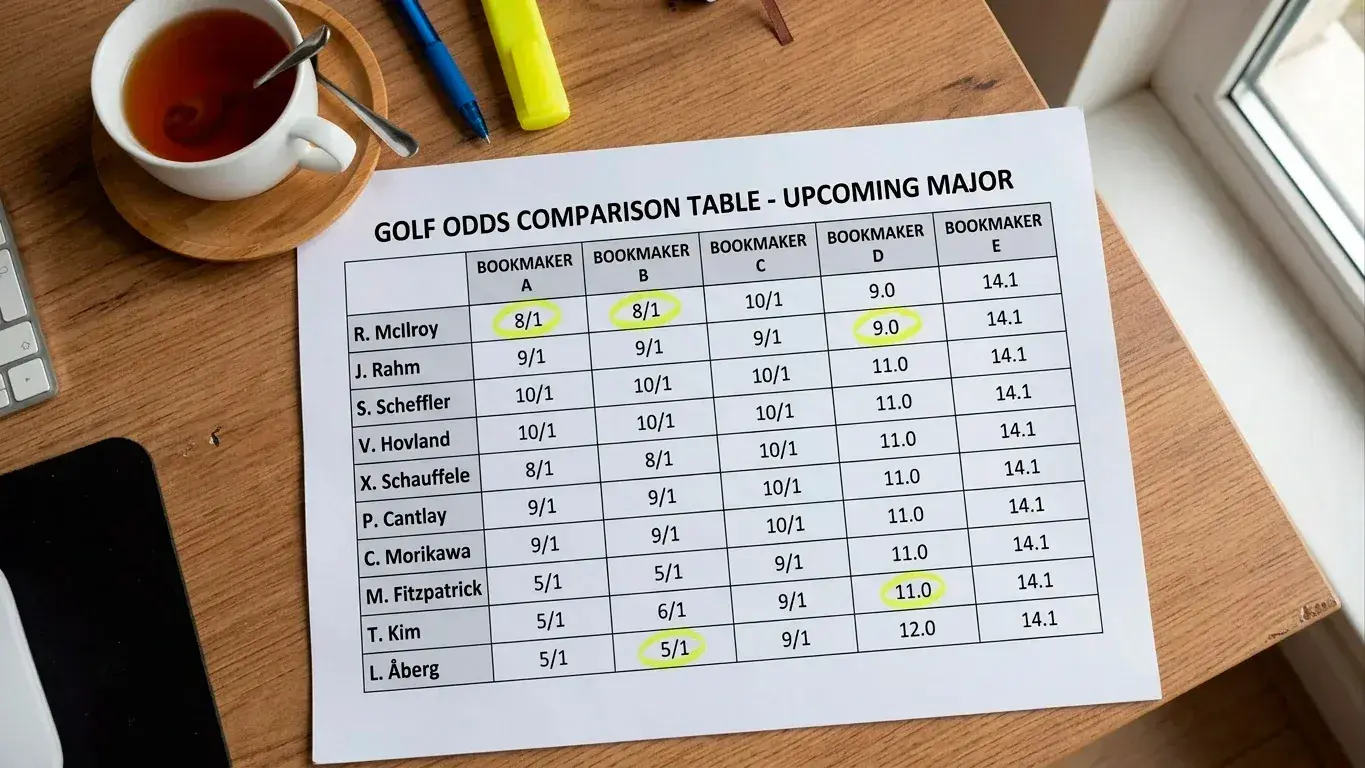
My approach is to build a simple comparison table each week. I list the event, then record the place terms from each of my bookmaker accounts. The operator offering the most places at the best fraction gets my bet. In the event of a tie on the number of places, the fraction determines the winner — 1/4 odds on the place part is always superior to 1/5 at the same number of places. If all operators offer identical terms, I place the bet with the operator whose outright price is longest, since a higher outright price also increases the place-part payout.
One pattern I have noticed over the years is that operators who offer aggressively extended place terms during majors often compensate by shortening the outright odds on popular players. The extended places attract volume, but the shorter outright price claws back some of the value. Smart punters check both the number of places and the outright price before placing, ensuring that the combined expected value of the each-way bet is genuinely superior at the operator offering the extended terms.