

Britain’s Major and Why It Bets Differently
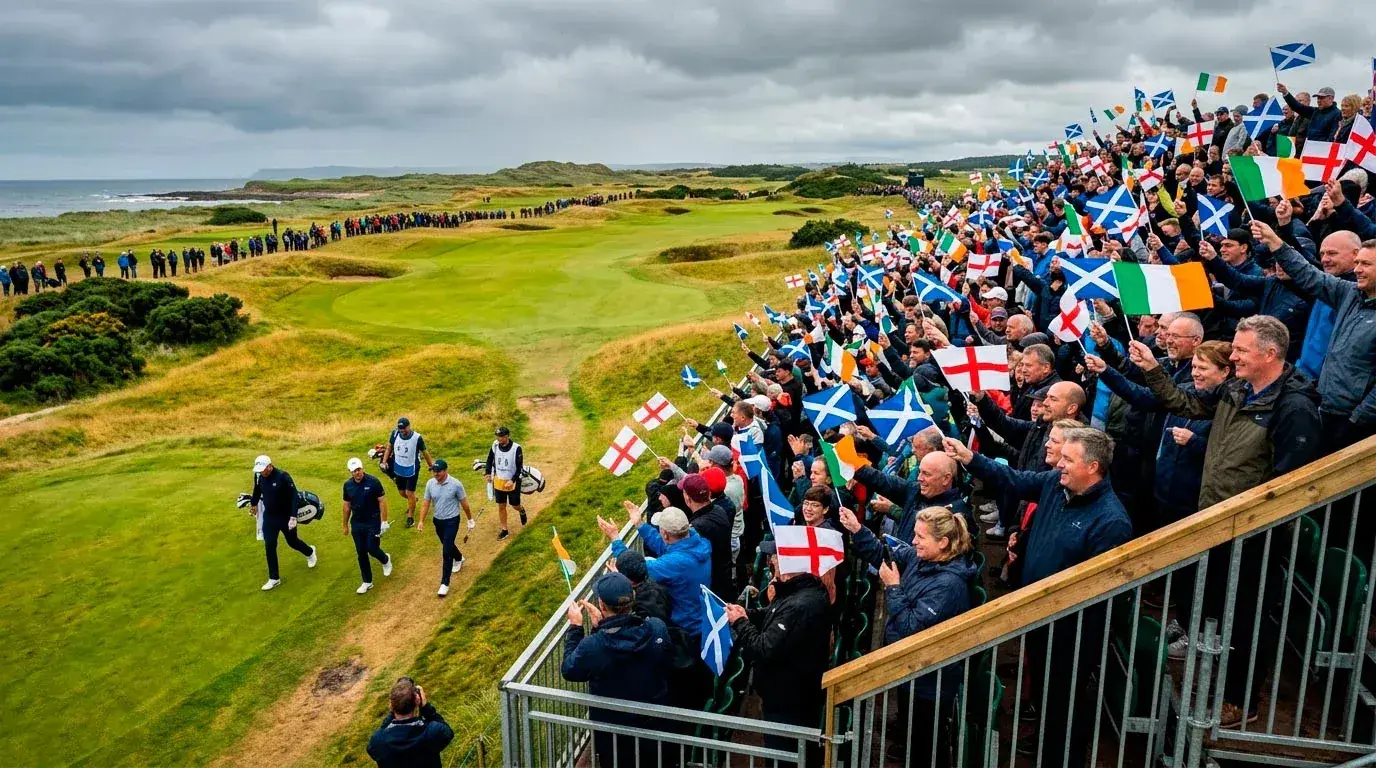
I stood on the 17th tee at Royal Liverpool during a practice round before The Open in 2023, and the wind was blowing so hard I could barely hold my umbrella upright. The professional teeing off ahead of me hit a driver that travelled 220 yards, a full 80 yards shorter than his normal carry. That moment crystallised what every golf bettor must understand about The Open: this is the one major where the course is not the primary obstacle — the weather is.
The Open Championship occupies a unique position in the golf betting calendar. Its prize fund reached $17 million in 2025, the first time the purse had not increased since 2012, a decision that reflected The R&A’s broader financial balancing act. That stable prize fund sits within a collective major-championship pool exceeding $77 million across all four events. For UK punters, The Open carries a sentimental weight that no other tournament matches — it is played on home soil, on links courses that bear no resemblance to the manicured parkland layouts of American tour stops, and the conditions create chaos that sharp bettors can exploit.

Links golf is a different game. It demands a different analytical framework, different statistical filters, and a fundamentally different approach to market timing. Punters who apply their standard PGA Tour models to The Open without adjusting for the links variables are leaving money on the table.
Links Golf and Its Betting Implications
Mark Darbon, Chief Executive of The R&A, has spoken about the responsibility to balance The Open’s commercial ambitions with global golf development, and that broader perspective is relevant to bettors because it explains why The Open rotates between a curated rota of links courses rather than chasing the biggest venue or the flashiest market. Each rota course — Royal Liverpool, Royal Troon, St Andrews, Royal Portrush, Carnoustie, and others — has a distinct character that demands specific skills.
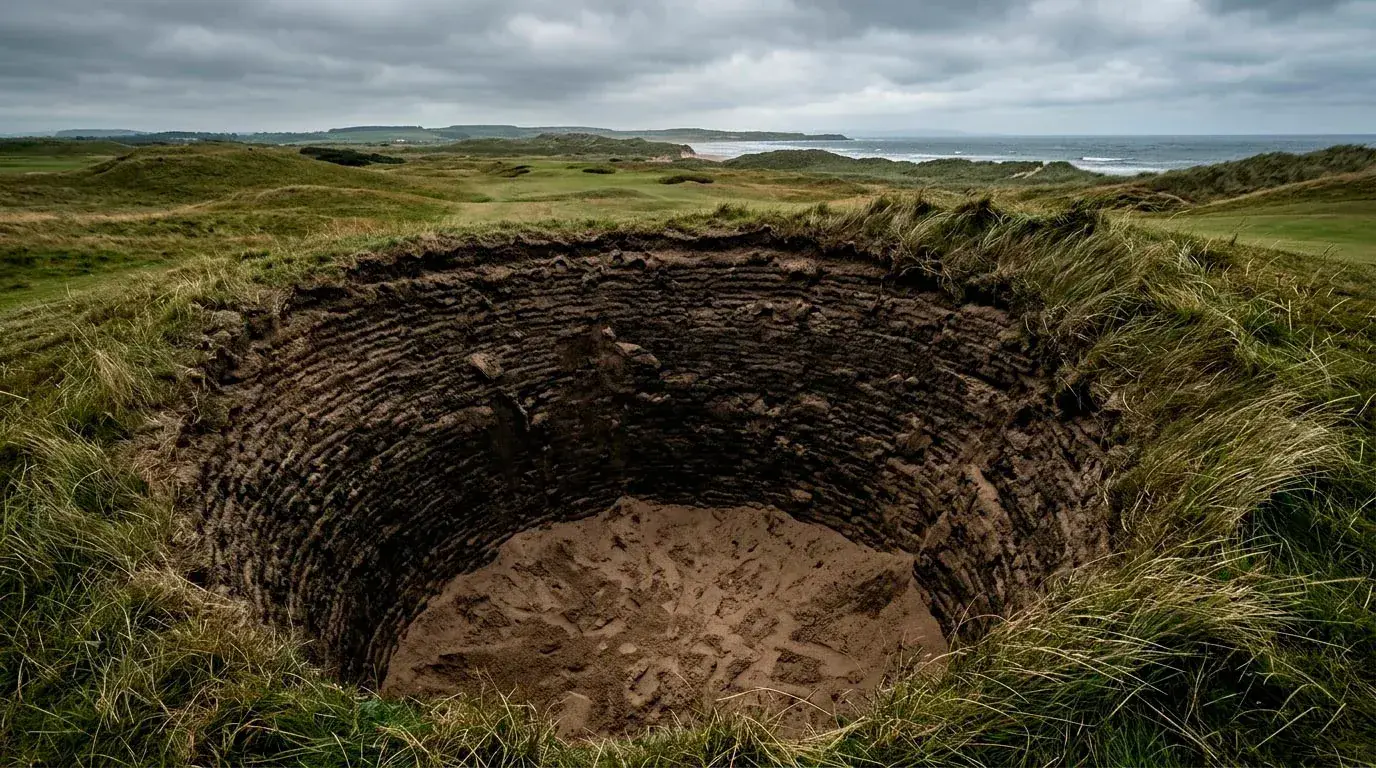
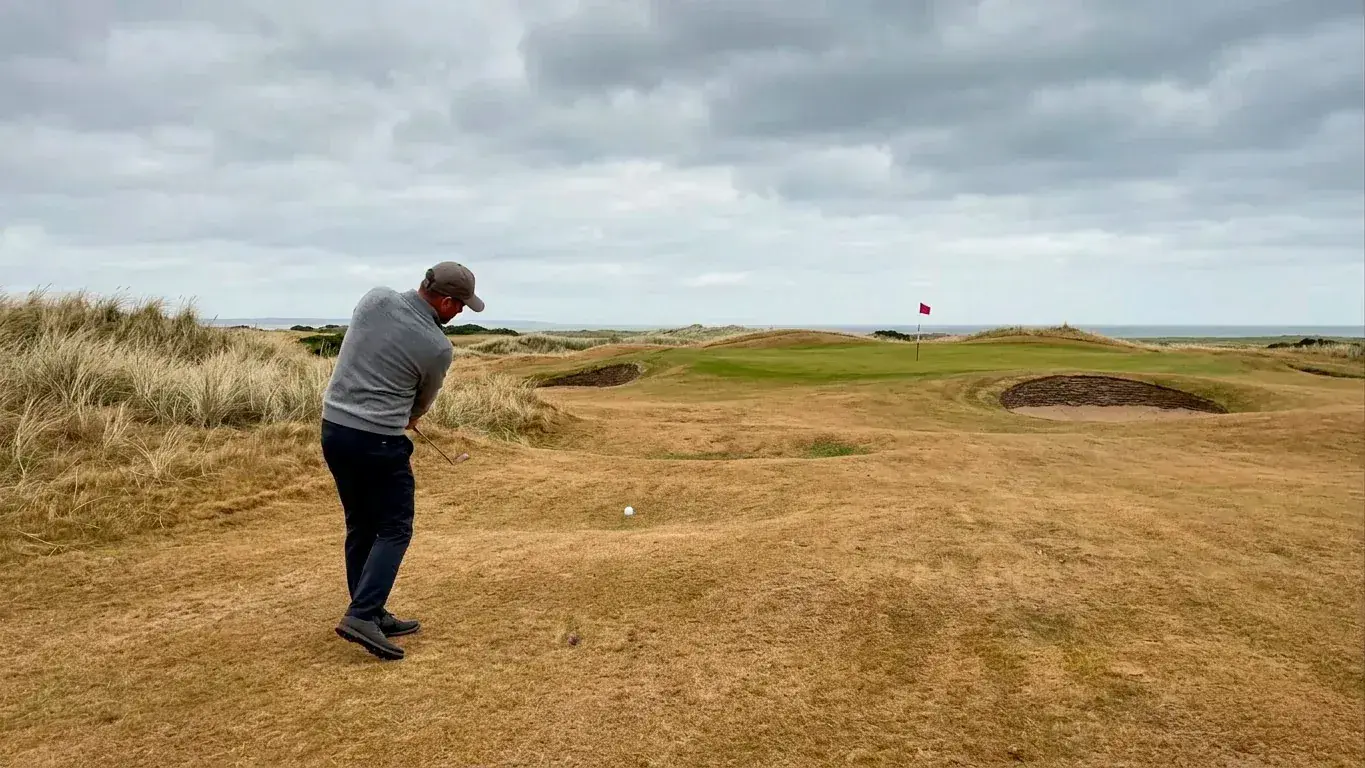
Links courses share several features that separate them from parkland and desert layouts. The ground is firm and fast, meaning drives roll significantly further than on softer courses, which compresses the distance advantage of long hitters. The greens are more receptive to bump-and-run approaches than aerial attacks, rewarding players with creativity and low-trajectory iron skills. The rough is thick, tangled fescue that penalises wayward driving far more severely than the first cut at an American venue. And the bunkers — deep pot bunkers with vertical faces — can add a full stroke or more to a hole if a player finds one.
For betting purposes, these characteristics shift the weight of my analysis away from the metrics that dominate at other majors. SG: Off-the-Tee remains relevant, but the emphasis shifts from raw distance to driving accuracy. Players who keep the ball in the fairway on links courses gain a structural advantage because the penalty for missing is so severe. SG: Around-the-Green becomes more important than at any other major because the run-off areas, tight lies, and unpredictable bounces near links greens demand exceptional short-game skill. The combined prize pool of all four majors exceeds $77 million, and The Open’s share is won by the player who best adapts to these specific demands rather than the one who overwhelms the course with power.
Course form at the specific Open venue is a stronger predictor here than at any other major. A player who has contended at Royal Troon before understands the blind tee shots, the prevailing wind patterns, and the local knowledge that saves strokes. I weight course history at The Open more heavily than at any other event — a top-20 finish at the same venue within the last two rotations is worth as much as a top-10 form line at a completely different course.
Weather as the Decisive Variable
At most PGA Tour events, I check the weather forecast once on Wednesday evening and adjust my selections accordingly. For The Open, I check it three times daily starting from the Monday of tournament week. The difference in approach reflects the difference in impact — weather at The Open is not a background factor; it is the single most influential variable in determining the outcome.
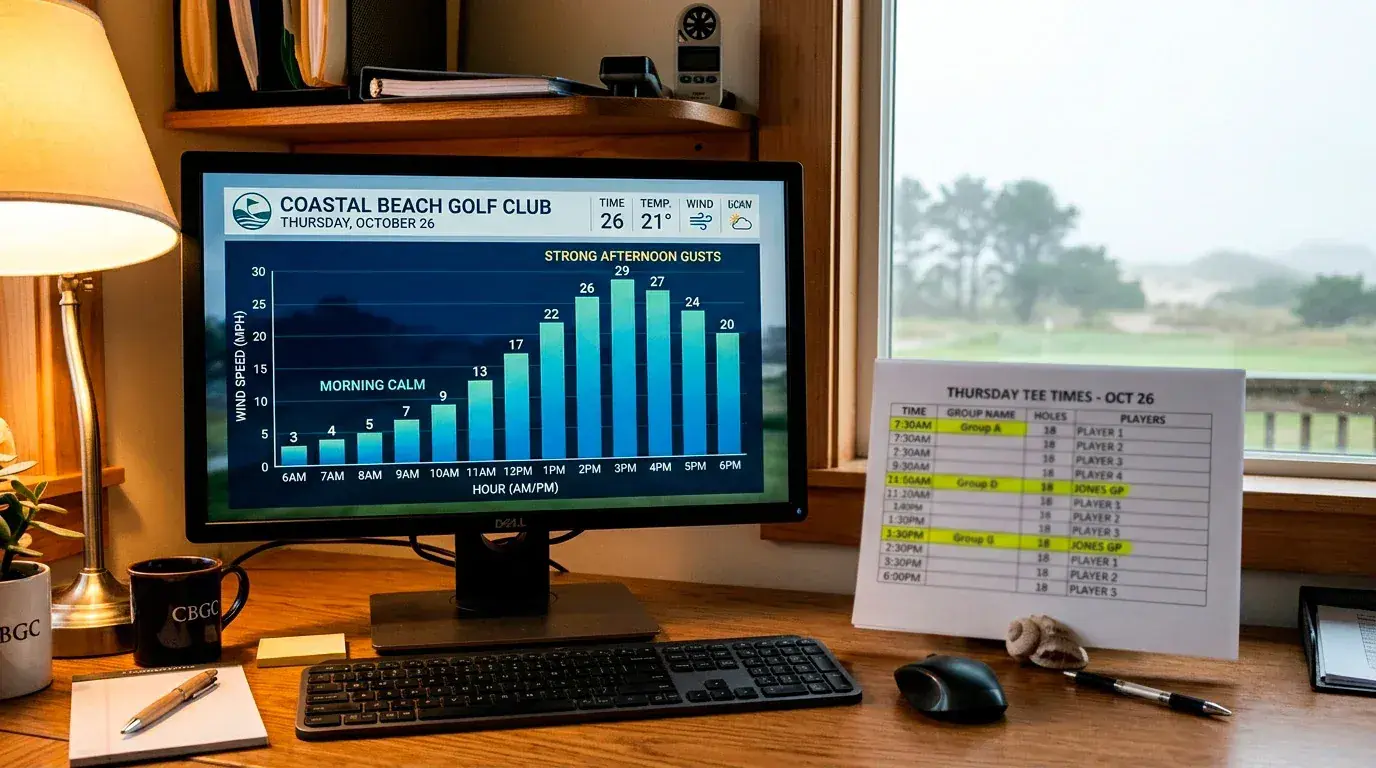
Wind is the primary force. Links courses are coastal, exposed, and designed to play differently depending on wind direction. A 10 mph breeze has minimal effect. A 25 mph wind transforms the course entirely, turning par fours into par fives and making certain greens unreachable in regulation. I track wind speed forecasts in three-hour intervals and map them against tee times to identify which players will face the worst conditions. The draw bias at The Open — the scoring differential between morning and afternoon waves — can exceed three strokes when wind patterns shift during the day.

Rain complicates matters further. Light rain softens the greens and reduces the bounce-and-roll that is fundamental to links scoring, which tends to benefit aerial players. Heavy rain can slow the greens and make pot bunkers even more penal as they fill with standing water. But rain at The Open also shifts betting value because it narrows the scoring spread — in wet, calm conditions, more players can contend, which lengthens the odds on favourites and creates value further down the market.
My approach is to delay my primary Open betting until Wednesday evening, once the tee-time draw and the Thursday-Friday weather forecast are both available. Backing a player ante-post at 40/1 who then draws the worst wave on Thursday is a scenario I have learned to avoid. The price erosion from Monday to Wednesday is typically small enough that waiting does not cost significant value, and the information gained from knowing the draw and the weather more than compensates.
The Open-Specific Markets for UK Punters
The Open offers several market features that are either unique to the event or more significant here than at other tournaments. Extended each-way terms are standard during Open week, with most operators paying five to eight places at 1/5 odds. The larger number of places reflects both the size of the field and the promotional intensity around Britain’s home major.
Top nationality markets attract enormous interest, particularly the “top British player” and “top European player” propositions. These markets effectively create a tournament-within-a-tournament, and the analysis is straightforward: compare the Strokes Gained profiles and links experience of the eligible players, then evaluate the prices. I have found consistent value in the “top Irish player” market, which typically features three to five realistic contenders, making it a smaller and more analysable pool than the broader British or European fields.
Session betting — wagering on the outcome of a specific round or half of a round — is more popular at The Open than at any other major because the weather-driven volatility creates more extreme scoring distributions. Backing “over 72.5” for the field scoring average in an afternoon wave facing 30 mph winds is not glamorous, but it has been profitable for me in four of the last six Open Championships.