


The Tour on Your Doorstep
I grew up watching the European Tour — long before the DP World Tour rebrand — and my earliest golf bets were on events at Wentworth, The Belfry, and Crans-sur-Sierre. Those events felt local in a way PGA Tour stops never did, and that proximity shaped my early understanding of golf betting in ways I did not appreciate until much later. When you know the course, recognise half the field, and have watched the weather forecast on your local news, you carry an information advantage that PGA-focused bettors simply do not have for these events.
PGA Tour betting volume runs roughly 100 times higher than LIV Golf, but the DP World Tour sits in its own distinct space — bigger than LIV in liquidity, smaller than the PGA Tour, and structured in ways that create both opportunity and frustration for UK punters. 108 million people worldwide are now engaged with golf in R&A-affiliated countries, with nearly three million joining since 2023 alone. That growth has strengthened the European tour’s commercial position, but the betting markets around DP World Tour events remain thinner and less sophisticated than their American counterparts.
This guide explains how DP World Tour betting markets differ from what you are used to on the PGA Tour, where field depth creates overlooked value, and how to work around the data limitations that define European tour analysis. If you are also curious about the other alternative circuit, LIV Golf betting presents a different set of challenges entirely.
How DP World Tour Markets Differ
The first time I bet seriously on a DP World Tour event after spending a full season focused on the PGA Tour, the difference in market structure was immediately obvious. The outright market was thinner — fewer bookmakers pricing it, wider spreads between operators, and less consistency in place terms for each-way bets. But the matchup markets were the real gap. A PGA Tour event might generate thirty or more head-to-head matchups across major UK sportsbooks. A mid-tier DP World Tour event might produce eight to twelve.
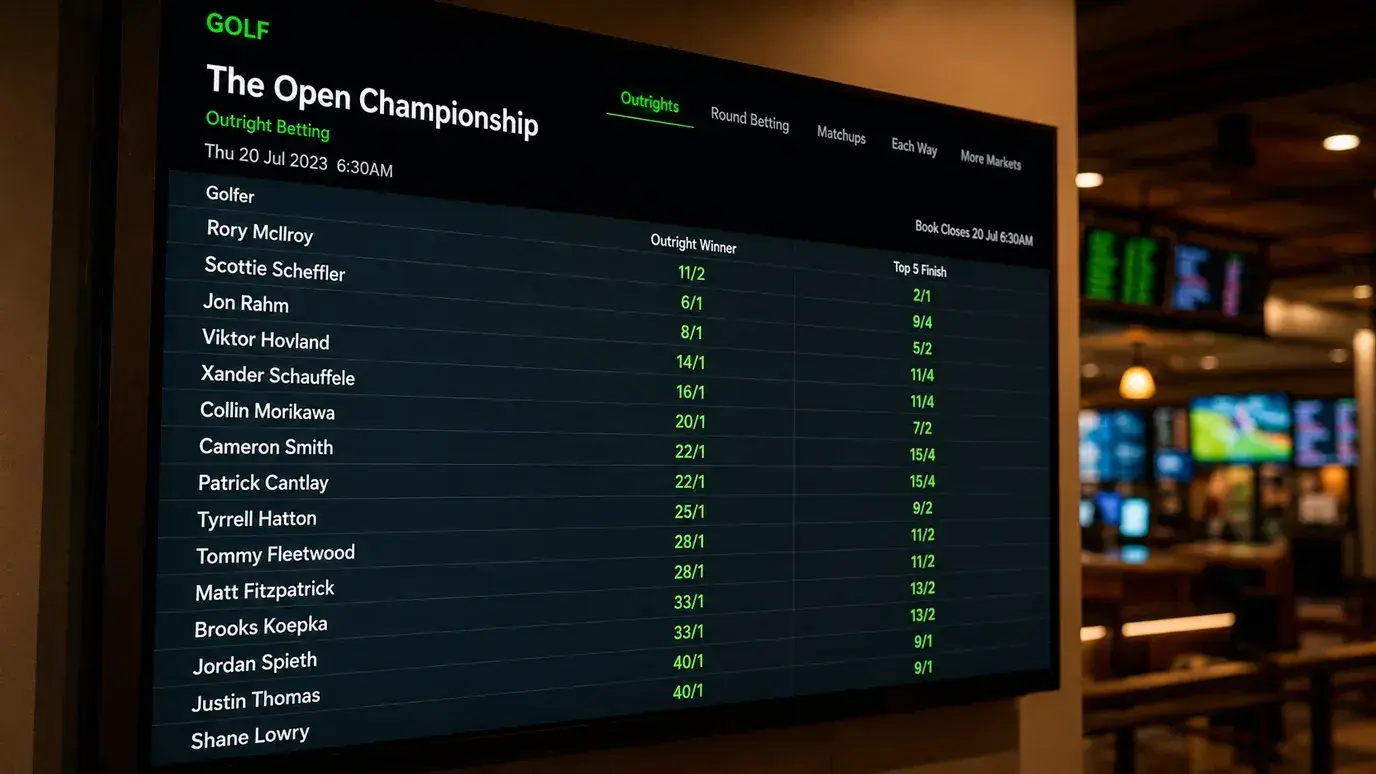
Field size is the primary structural difference. PGA Tour events typically field 120 to 156 players, while many DP World Tour events — particularly co-sanctioned events and those in the Rolex Series — run with smaller fields of 60 to 78 players. Smaller fields compress the outright market: the favourite is shorter, the tail is shorter, and the each-way value shifts because fewer players means fewer place positions. Some operators reduce each-way terms to four places for small-field DP World Tour events, compared to the standard five or six on full-field PGA Tour stops.
108 million people engaged in golf across R&A-affiliated nations means the European tour has a broad audience, but betting handle does not scale proportionally with participation. The concentration of betting activity on the PGA Tour — driven by American media coverage, ShotLink data, and marquee player appeal — leaves DP World Tour markets relatively underserved. For the analytical punter, underserved markets are where mispricings live longest.
Race to Dubai markets offer a season-long dimension that has no direct PGA Tour equivalent of comparable prominence for UK bettors. You can back players to win the season-long rankings, to finish in the top five, or to qualify for the Tour Championship at Jumeirah Golf Estates. These markets open early in the season with wide spreads and contract as the schedule progresses, creating timing-dependent value that rewards punters who engage with the full European calendar rather than dipping in only for flagship events.
Field Depth and Value Opportunity
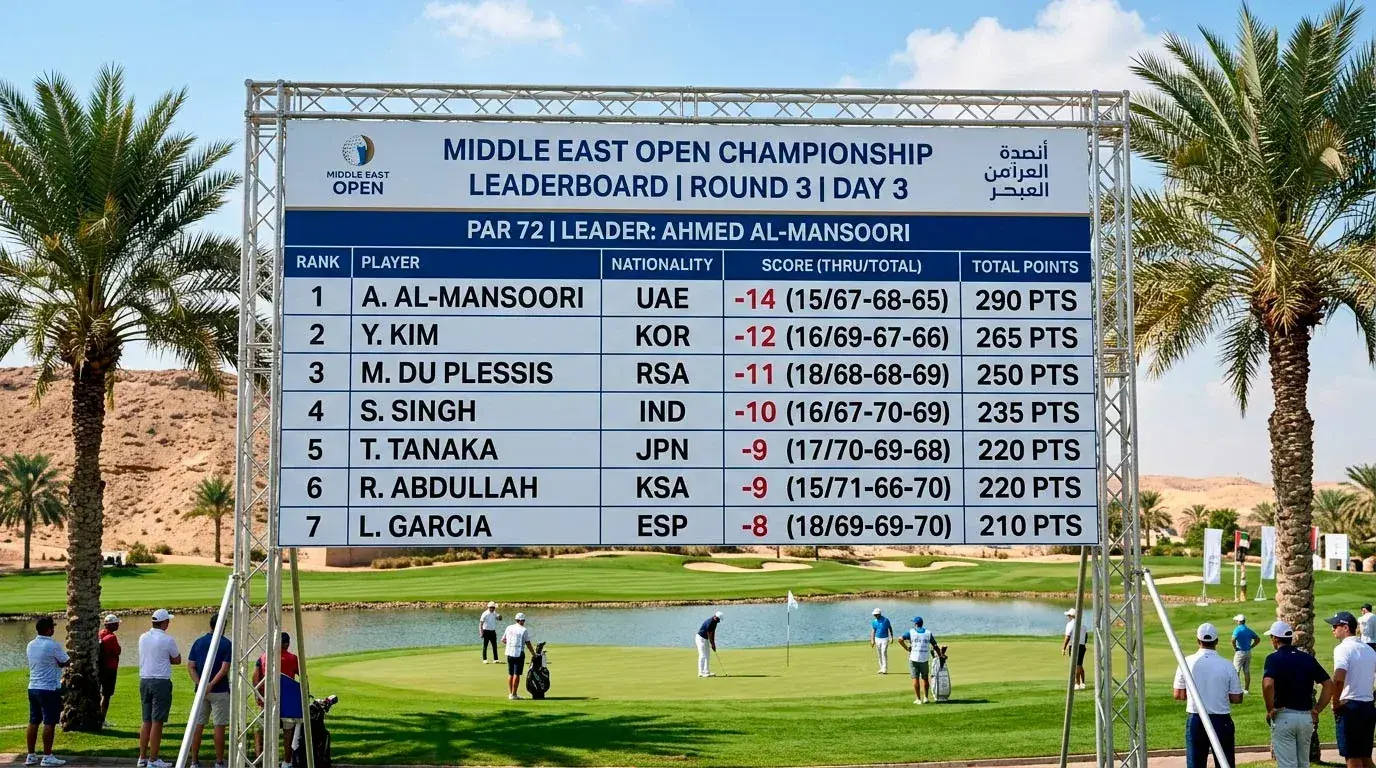
My best calendar year of golf betting returns came in 2022, and more than half of those profits originated from DP World Tour events. Not because I analysed them better, but because the markets analysed them worse. A European tour event in South Africa or the Middle East, with a field of 66 players where only three or four have significant PGA Tour experience, presents pricing opportunities that simply do not exist at a PGA Tour event where every player has deep data history and high public visibility.
Weaker fields concentrate probability. When the top five players in a DP World Tour field hold a combined outright probability of 35-40%, the remaining field is priced as though its quality is more uniform than it actually is. Players ranked 20th to 40th in the field often include form horses — European regulars with strong recent results on similar courses — who are priced as longshots because the bookmaker’s model treats them as interchangeable mid-tier names rather than individual talents with specific course-fit profiles.
International swing events create particular opportunities. When the DP World Tour visits unfamiliar courses in Asia, the Middle East, or southern Africa, the pricing models rely more heavily on generic tour-level performance metrics because course-specific data is scarce. Punters who have watched previous editions of the tournament, who understand the course designer’s tendencies, or who simply pay attention to the practice-round reports are operating with information the market has not absorbed.

The co-sanctioned model — events counting on both the DP World Tour and PGA Tour rankings — creates a different dynamic. These events attract stronger fields, which tightens the market and reduces the pricing edges available on European specialists. The Scottish Open, the Genesis Scottish Open, and several Middle Eastern events fall into this category. For betting purposes, co-sanctioned events behave more like PGA Tour markets despite carrying the DP World Tour label.

Data Gaps and Workarounds
The single biggest frustration of DP World Tour betting is the data. PGA Tour events benefit from ShotLink — a comprehensive shot-tracking system that captures every stroke and feeds directly into Strokes Gained calculations. The DP World Tour has no equivalent system with the same depth. Strokes Gained data for European tour events is available for some tournaments through the tour’s own statistical platform, but the coverage is inconsistent and the granularity is shallower.
This means that the Strokes Gained approach that works so well for PGA Tour analysis needs modification for European events. Instead of pulling clean SG:Approach or SG:Off-the-Tee numbers from a comprehensive database, you are working with cruder metrics — driving accuracy, greens in regulation, putting averages — that provide directional signals rather than precise measurements. The gap is narrowing year by year as the DP World Tour invests in statistical infrastructure, but in 2026 it remains a meaningful handicap.

My workaround has three parts. First, for players who compete on both tours, I use their PGA Tour Strokes Gained data as a proxy and adjust for course conditions. A player who gains 0.5 strokes per round on approach on PGA Tour bermudagrass probably gains slightly less on European fescue, but the relative ranking holds. Second, for European-only players, I rely more heavily on recent finishing positions and scoring averages relative to the field — not ideal, but better than ignoring the form data entirely. Third, I weight course history more heavily for DP World Tour events than I would for PGA Tour events, because the smaller fields and less efficient markets mean that a player with three top-ten finishes at a course is carrying actionable signal, not just noise.
Free data sources for DP World Tour analysis include the official tour website’s statistics section, the European Tour’s historical results archive, and general golf statistics platforms that aggregate both tours. None of these replaces a proper Strokes Gained database, but together they provide enough to build a working model that outperforms the bookmaker’s generic approach to European events.